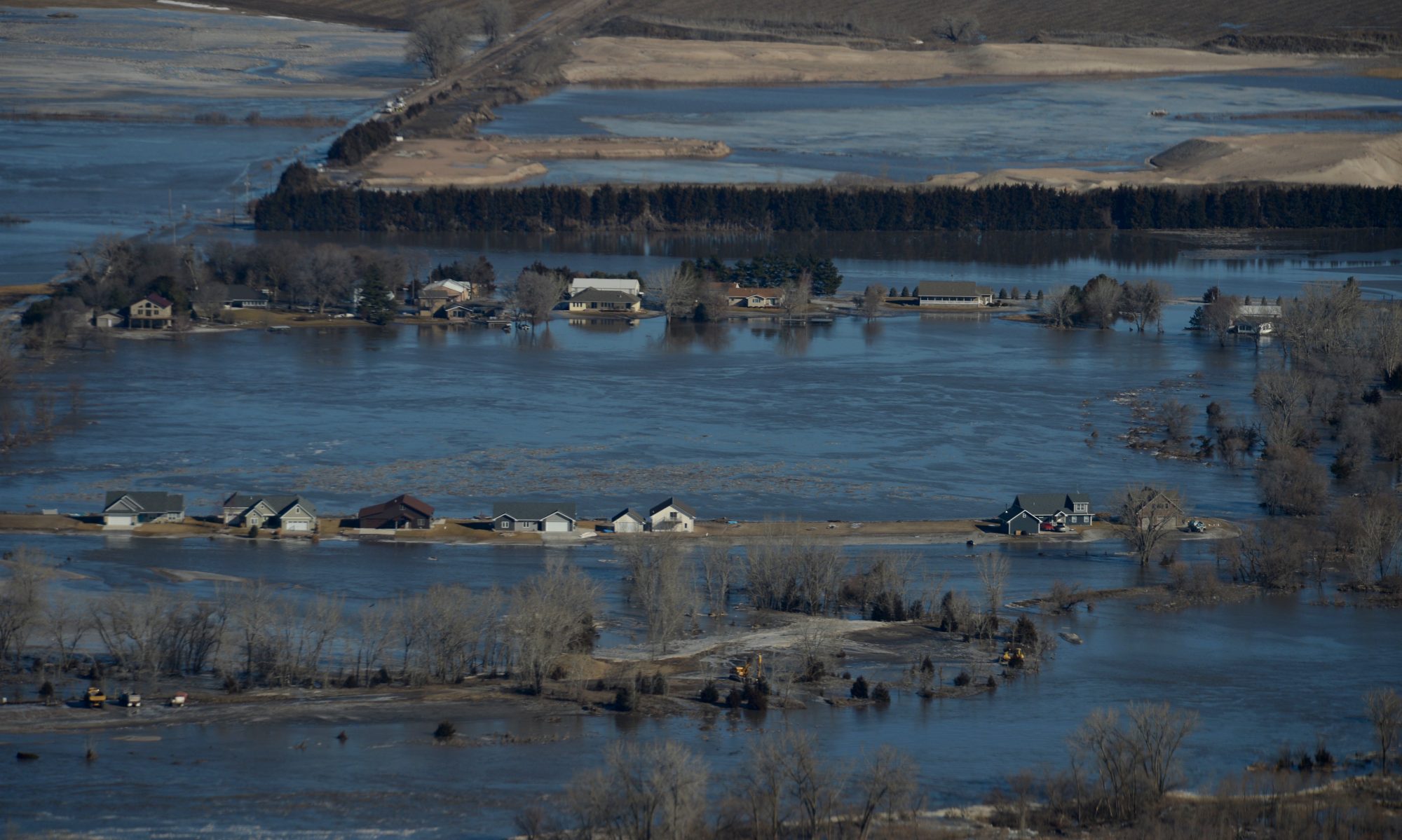
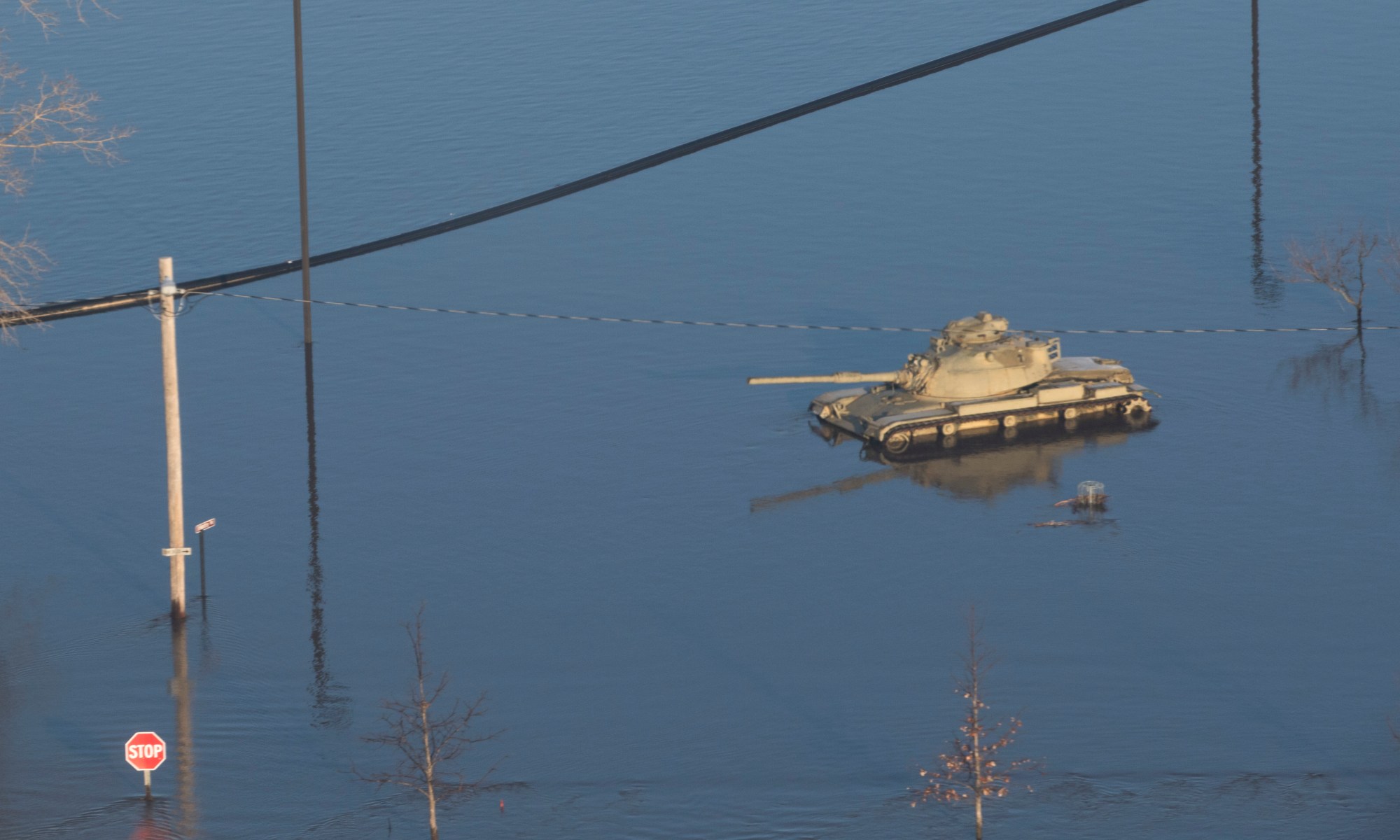
When Camp Ashland began to flood in 2019, the cadre followed the training site’s standard operating procedure for evacuating students, staff, materials and equipment safely and quickly to the closest armory in Mead, Nebraska. The SOP – which was updated after the Salt Creek flooded the training site in 2015 – included installing flood doors on all the ground-level buildings; lifting items off the floor and placing them on top of desks and cabinets; and moving vehicles to higher-ground, including to the levee on the far side of the camp along the Platte River.
Unfortunately, the amount of flooding in 2019 was completely unanticipated with more than just overflow from the Salt Creek inundating the camp. Instead, the Platte River levee failed, essentially bringing the river right into the camp, causing floodwaters to rise well above the flood doors, and to pour into the ground-level buildings through the windows and other crevices.
“This historic flooding, really produced a historic event for us,” said Col. Shane Martin, Nebraska Construction and Facilities Management Officer during an October 2020 interview.
Following the SOP from 2015 was the best course of action, Martin said, and in doing so, the Nebraska National Guard safely evacuated more than 200 students and continued to complete their essential basic leadership training to standard.
“We had a great flood plan that was in place, and a great coordination was made ahead of time… and we had very innovative Soldiers,” said Martin, who was also the commander for the 209th Regiment, Regional Training Institute located at Camp Ashland. “A little extra management, and a lot of extra leadership, but it worked well.”
By moving the vehicles to higher-ground on the levee, the Nebraska Army National Guard also saved what would have been hundreds of thousands of dollars in lost equipment.
Floodwater damaged 51 of 62 buildings at the Camp Ashland Training Site, with only the buildings on stilts unscathed. After initial damage assessments were made, the Nebraska National Guard decided to seek additional funding to help rebuild the camp, this time with all its buildings on stilts.
“Besides being strategically located between Lincoln and Omaha – two major airports; besides being on 11,000 acres of training ground; the location, the space available and the amount of infrastructure that’s currently there made it very logical to go ahead and rebuild, especially with understanding the concepts of what will withstand any sort of future flood, should that ever occur,” Martin said.
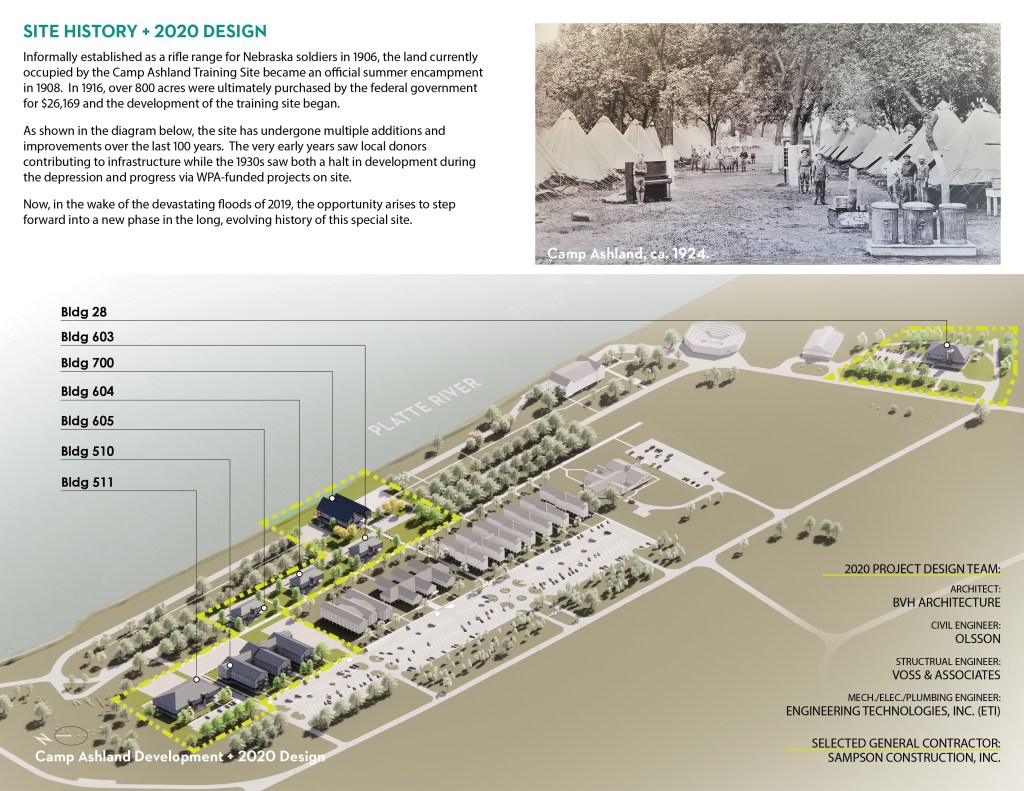
With the additional funds, the Nebraska National Guard plans to maintain the same square footage, but will consolidate more than 20 older buildings into seven new, connected and stilted buildings that will be more conducive to today’s technologically advanced training requirements. The camp already has its own sewer treatment plant and water treatment plant which were built above flood grade, and are fully intact.
Martin said the Nebraska National Guard is also working closely with U.S. Army Corps of Engineers to shore up the levee with multiple layers of protection. Martin said he believes reinforcing the levees should protect Camp Ashland from any future flooding, but should the camp receive water from any direction, there shouldn’t be any damage because all the buildings will be “raised up, and very safe, dry and secure.”
“Think ahead, and expect the absolute worst,” Martin said when asked about his best advice for others in his position. “We kind of thought we did when we put the short flood gates in, but we didn’t think big enough, I guess.”
In his role, he has to plan for emergency response preparations for all Nebraska Army National Guard facilities in the state. He said while planning, he encourages everyone to think, “What if?,” and to think big when doing so. For example, not only how can or will individuals at armories respond to a crisis, but what other ways can the facilities support others across the state?
“These floods and other major emergencies really make you think about how do you do that,” he said.
For more reflections by Col. Shane Martin, watch his full interview here:
 Good Life, Great Strength