BY: LISA JODEAN CRAWFORD
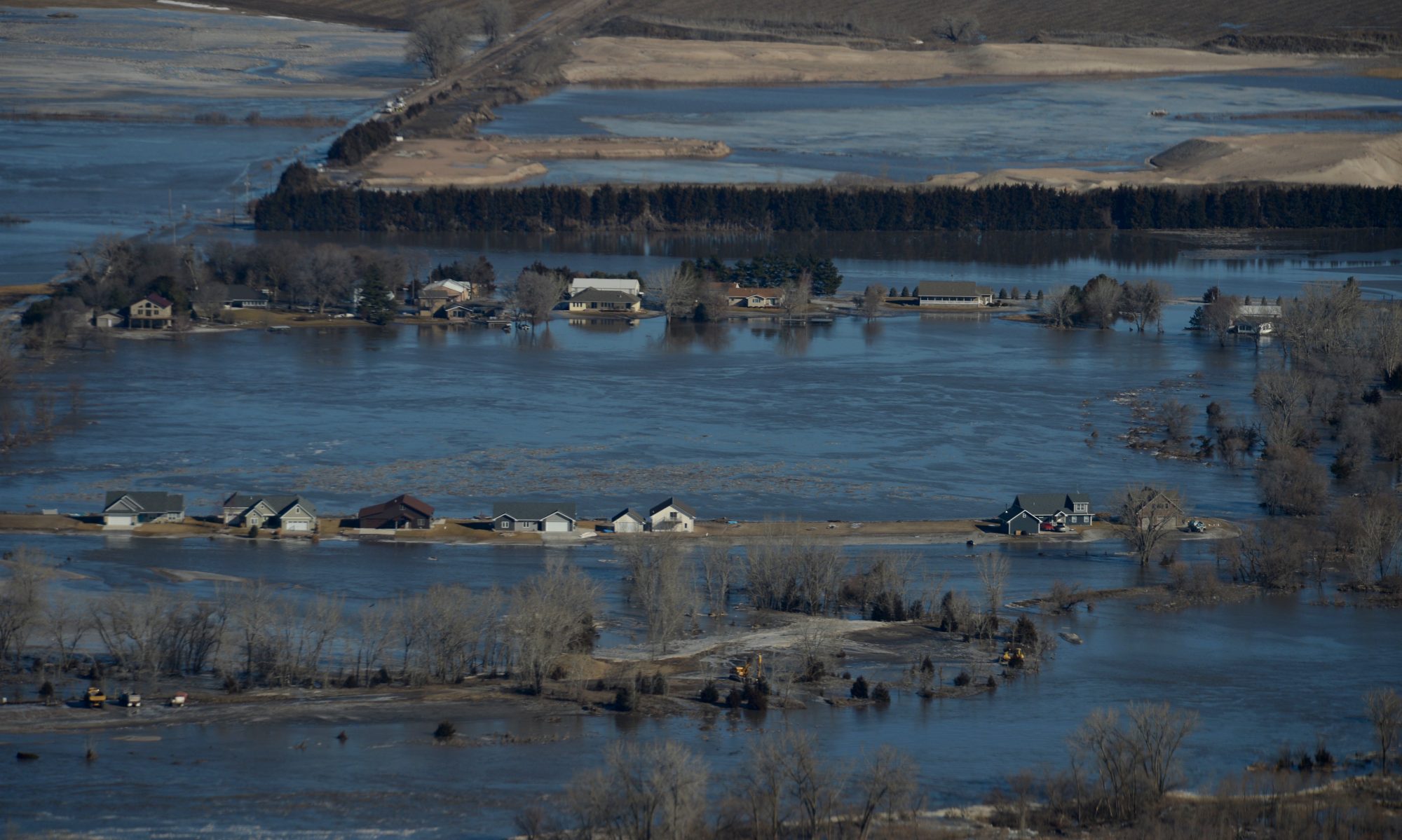
On the late afternoon of March 14, 2019, instead of shutting down my computer and preparing to head home for the night, I found myself standing in a small conference room on the lowest level of Joint Force Headquarters listening to both military and civilian emergency management leaders diligently – yet calmly – discuss life-saving procedures as flood waters rose in the Columbus, Nebraska area.
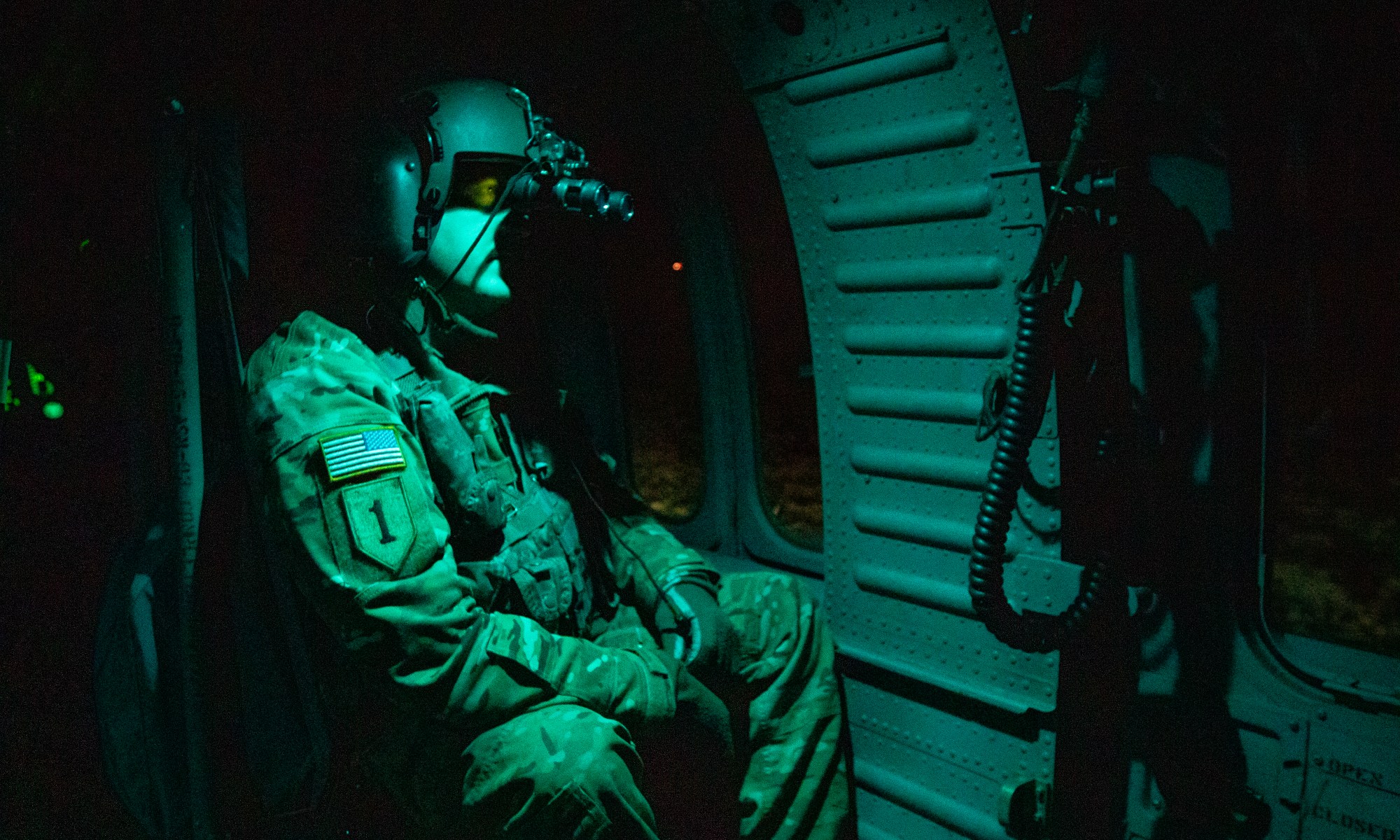
Because I chose to stay, to listen and observe, as conversations flurried around me, I was present when our lead aviation officer announced they were spinning up two UH-60 Blackhawk helicopters to recon a submerged home which local first-responders had been unable to reach by swift water rescue crafts.
I don’t remember thinking through any of the details – the temperature, the water, the timing, I just simply asked, “Can I go?” Less than 10 minutes later I was on the first helicopter out of the Nebraska National Guard air base in Lincoln, with my camera, headed in the direction of the distress call near Columbus with the search and rescue crew.
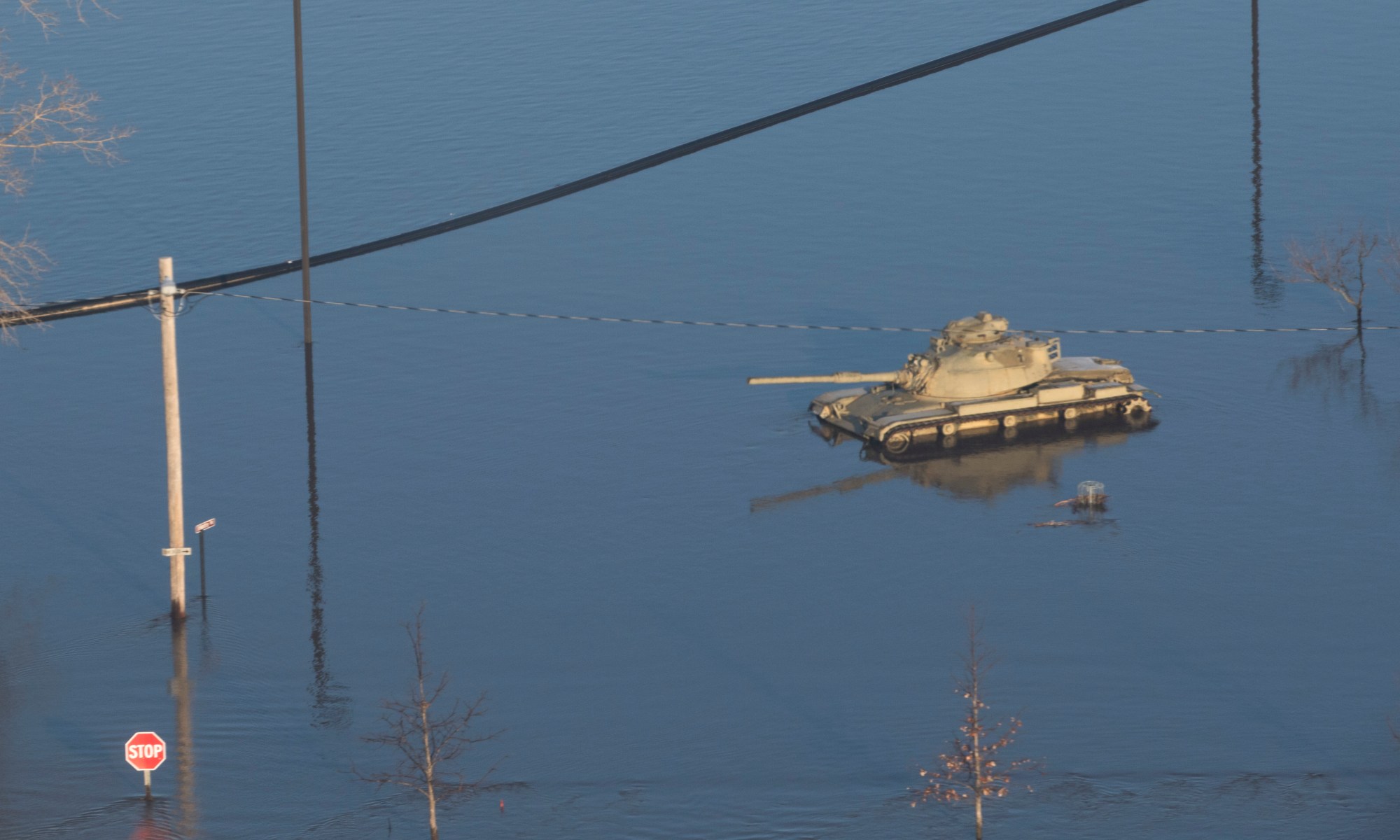
I flew over flood waters in Florida in 2017 after Hurricane Irma, but this was entirely different. The strong winds battered the helicopter back and forth, and when we flew in closer to the submerged homes, the water whipped up against the windows.
Between the trees, the powerlines, the high winds and racing water current, the severity of the situation quickly set in, and I listened intently to the communications on the head-set. This wasn’t Florida. This was my backyard. The water was still rising, the situation was dangerous for civilians and emergency responders alike, and the sun was going to set in a few hours.
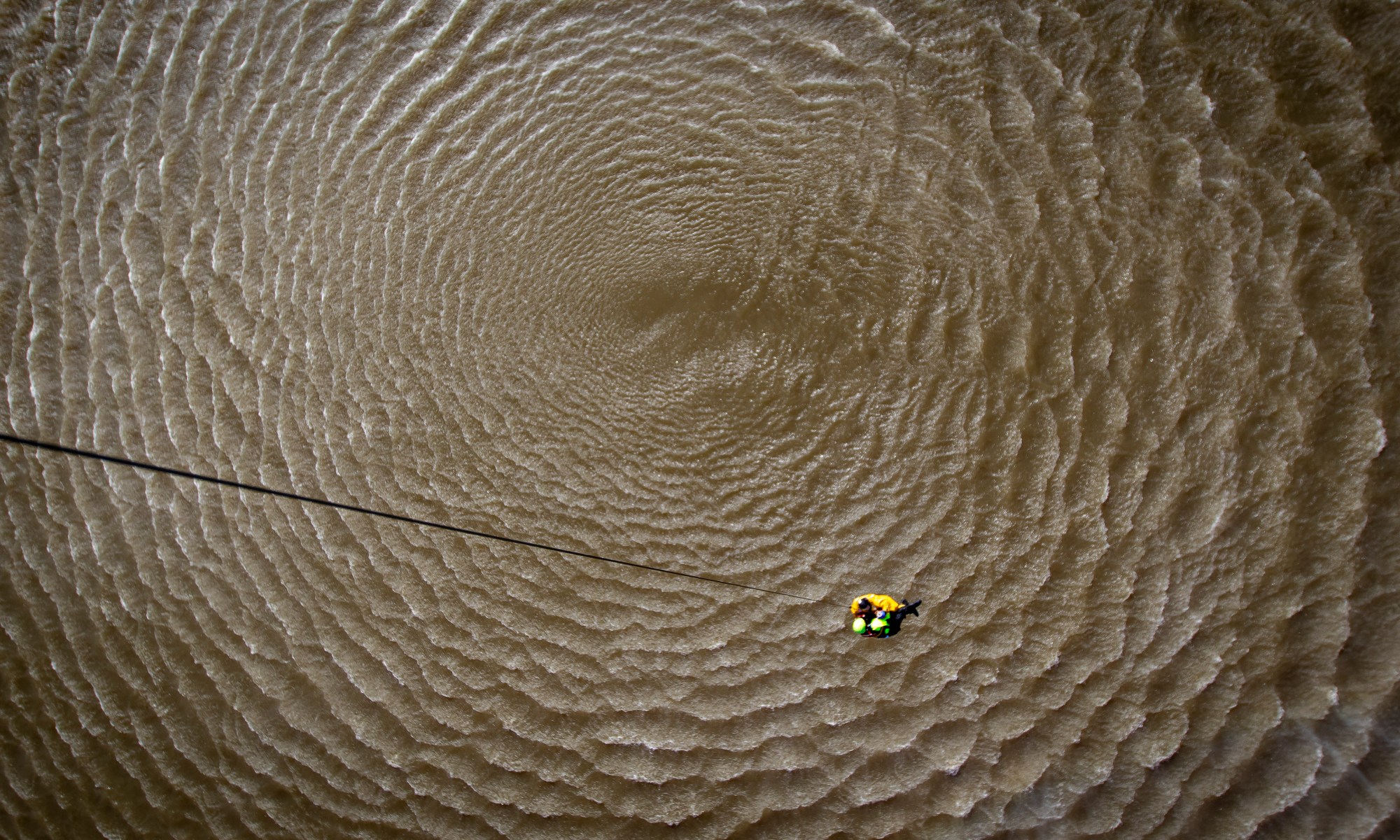
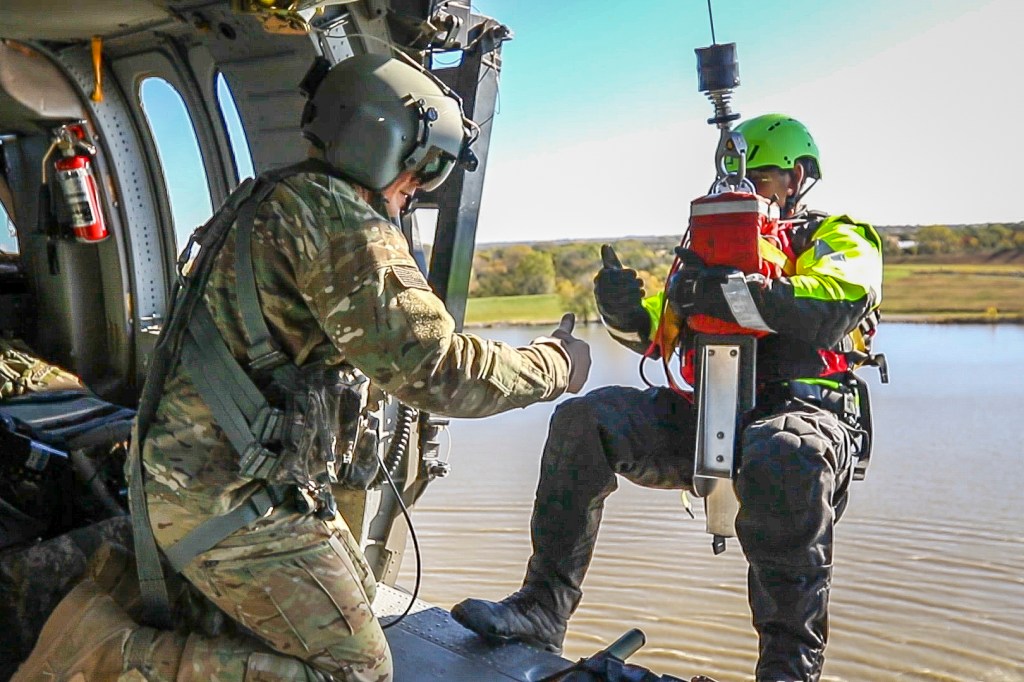
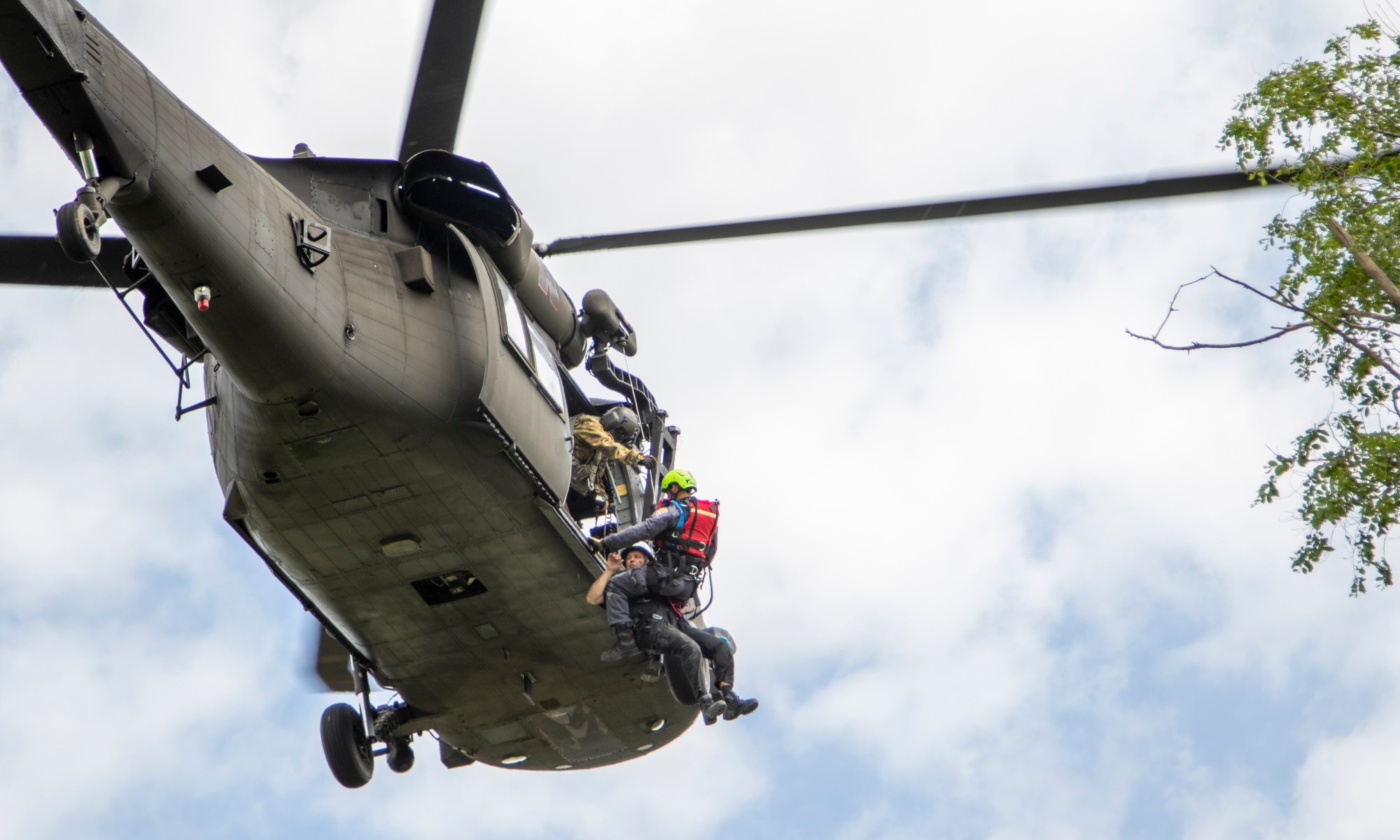
Eventually, the air crews found a house deemed safe for the air crews to attempt an extraction. The crew chief used the hoist to lower a Soldier down onto the roof of the house below. I watched the events unfold through the viewfinder of my camera, recording every moment.
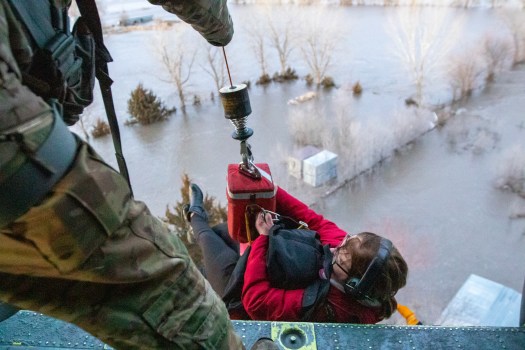
But when the first civilian came into view, clutching to the hoist with terrified eyes and with the winds twisting her about in the air as the crew chief struggled to reel her into the helicopter, I felt compelled to do something completely foreign to me: I put my camera down.
I unbuckled from my seat and reached out to help pull the woman onto the floor of the helicopter. With the crew chief, I assured her that she was safe, helped loosen her panicked grip from the hoist and eventually moved her to her seat. As I went to fasten her seatbelt, I realized the bag she had placed on the front of her body had our second rescue passenger inside – a small dog. I latched the belt gently around the bag and tried my best to calm her down. She may not have been able to hear my words over the roar of the helicopter blades, but I hoped my smile would set her at ease.
After that first house, we hoisted up two other individuals before flying back to a large parking lot in Columbus – ironically belonging to a water park. I ended up riding back in the crew chiefs’ seat as he sat on the floor. When we landed and helped the civilians off the Blackhawk, the woman reached back in toward me, grabbed my arm hard and mouthed the words, “Thank you,” – the terror in the eyes now turned to gratitude, a visual I had never seen before.
Our helicopter picked up another 10 people and three dogs that night. I took some photos and some video, but it was darker than I was used to and I spent most of the night acting in a supportive role: helping to pull the hoist onto the helicopter’s floor, securing the passenger into a seat and calming them and the dogs, as best I could.
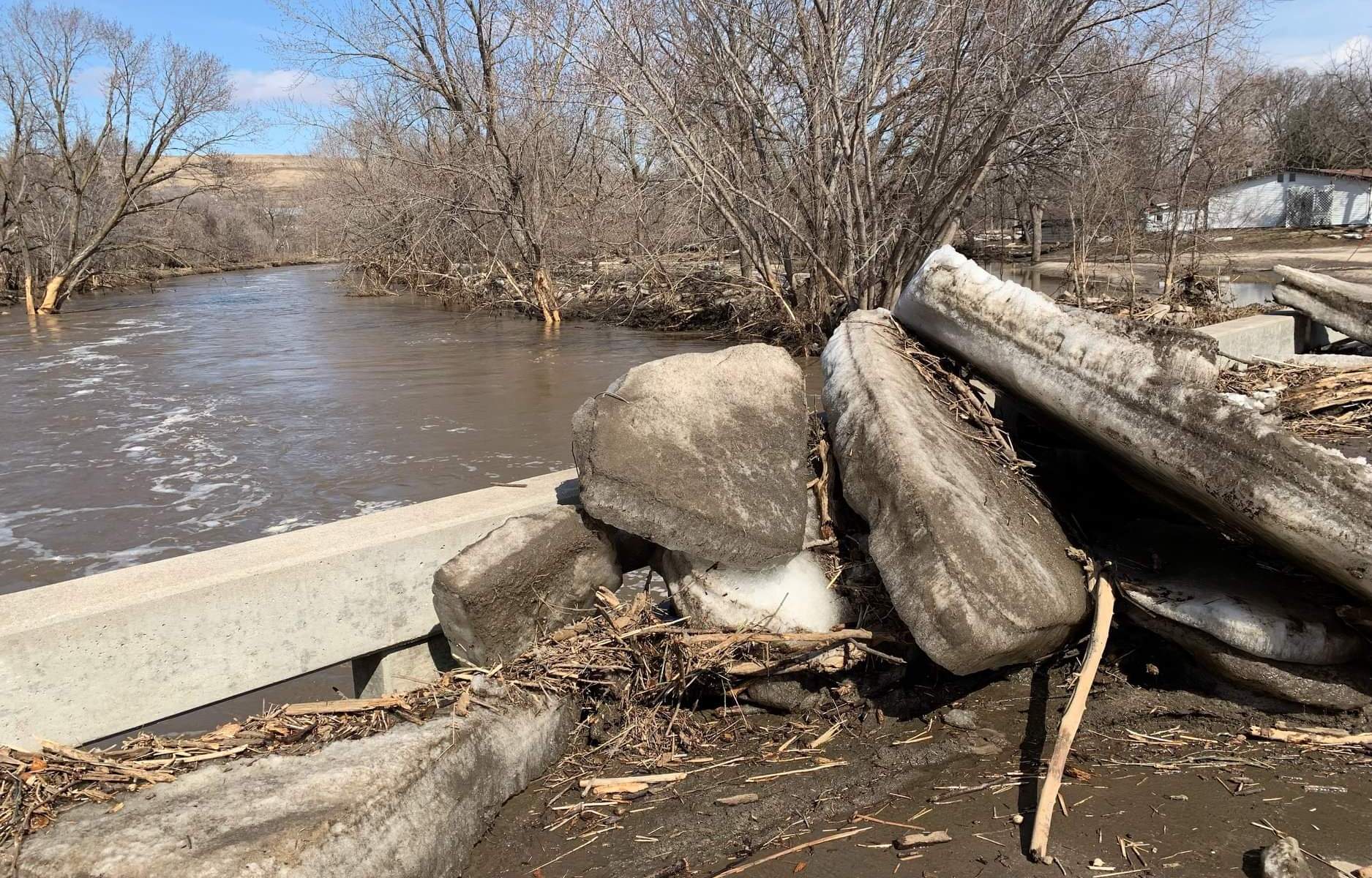
The helicopter returned to the air base shortly after midnight that evening, and when I stepped off, I felt the night’s events as my knees were sore from crawling around, securing the passengers and my muscles ached from being blasted by 50 mile per hour winds over raging icy waters, even though the doors were only open a few moments. I was physically and emotionally exhausted having seen firsthand the devastation water can do. I was still trying to wrap my brain around knowing that this wasn’t a coastline or swampland under siege by tropical storms or hurricanes, but humble Midwestern communities overtaken by floods never before seen in this part of the country.
As a journalist, I know the power of photography, videography and storytelling. “Strength Through Truth” is the motto of the Defense Information School at Fort Meade, Maryland, where all military mass communication specialists are trained. My job is to collect the images and the stories – the truths – and share them with the world. That is why I asked to be on that first helicopter out, to capture those moments for the world.
I am also a Soldier – and a Citizen Soldier at that. Regardless of our job title, we are always told to remember that we need to be “Soldiers first.” That first day of the flood, in the helicopter, being a Soldier and doing my job, meant lending a helping hand and a reassuring smile to neighbors, instead of staying behind my camera.
Overall, the Nebraska National Guard public affairs team was successful in documenting the flood response efforts. The Nebraska Broadcasters Association honored us with the Chairman’s Award this year for the visual documentation and media access provided in the early stages of the flood which helped mobilize relief efforts. But that first day in the helicopter – that “Thank you,” – was why I proudly wear a uniform every day. Being a photojournalist with the Nebraska National Guard – documenting the brave men and women of my home state as they help my neighbors – has been the most rewarding experience of my life, and sometimes that’s worth putting a camera down for.

 Good Life, Great Strength