On March 12, 2019, Nebraska Governor Pete Ricketts in consultation with the Nebraska Emergency Management Agency (NEMA) issued an emergency declaration in anticipation of severe weather issues set to impact the state. The emergency declaration was issued to allow NEMA and other state agencies to address potential impacts from the impending severe winter storm expected to affect the Panhandle area, as well as anticipated flooding across other areas of the state.
The National Weather Service issued a Winter Storm Warning that same day for the Panhandle region in anticipation of a major winter weather system entering the state. The storm was likely to be dangerous and life-threatening with significant impact on transportation, utilities and agricultural producers. The National Weather Service anticipated snowfall amounts in excess of 18 to 24 inches possible and 50-60 miles per hour winds, making travel difficult to impossible.
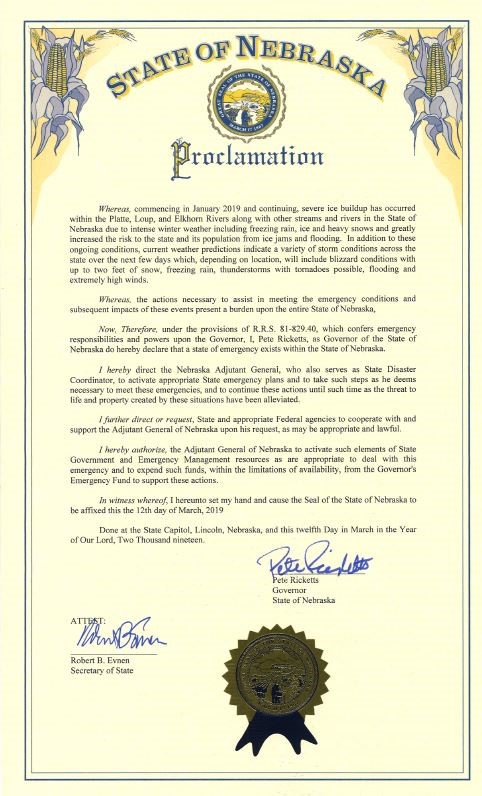
The Governor’s proclamation urged motorists to exercise care and recommended limiting travel across the state, as residents anticipated rapidly changing winter conditions with the storm system. The Governor’s Office also urged Nebraska residents and agricultural producers to take precautionary measures to protect life and property.
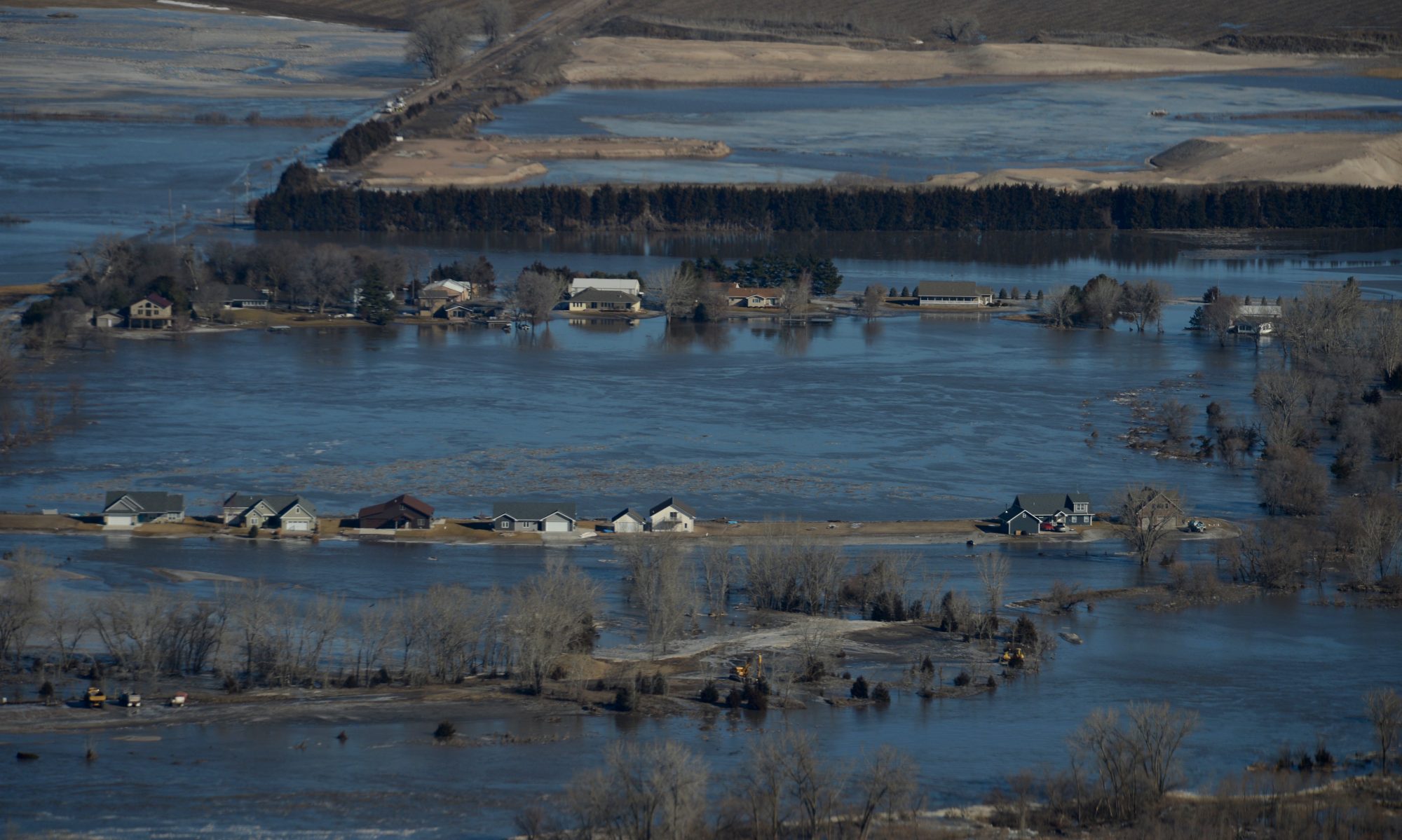
In addition, flooding was a primary concern in many areas of the state due to warmer temperatures generating runoff from snowmelt. While this storm system was expected to deliver record levels of snow in the Panhandle, it was also expected to generate 1-3 inches of rainfall in the eastern portions of Nebraska. Frozen ground and high soil saturation levels would allow snowmelt and precipitation to runoff into rivers and streams which were currently frozen. Significant flooding was thought possible along the Loup, Platte, Elkhorn, and Missouri Rivers, and ice jams in several locations would likely exacerbate flooding.






Originally, the Governor’s Office had authorized NEMA to implement ice dusting operations with support by the Nebraska National Guard on the Loup and Platte Rivers when conditions permit. The Nebraska Department of Environmental Quality had issued a permit to conduct this operation once weather conditions changed, possibly as early as Friday, March 15. The agency was preparing to pre-position coal ash material at the airports in Columbus and Wahoo to facilitate the aerial application of the material on river ice. However, the conditions never improved enough to complete the mission, and instead deteriorated rapidly across the state.
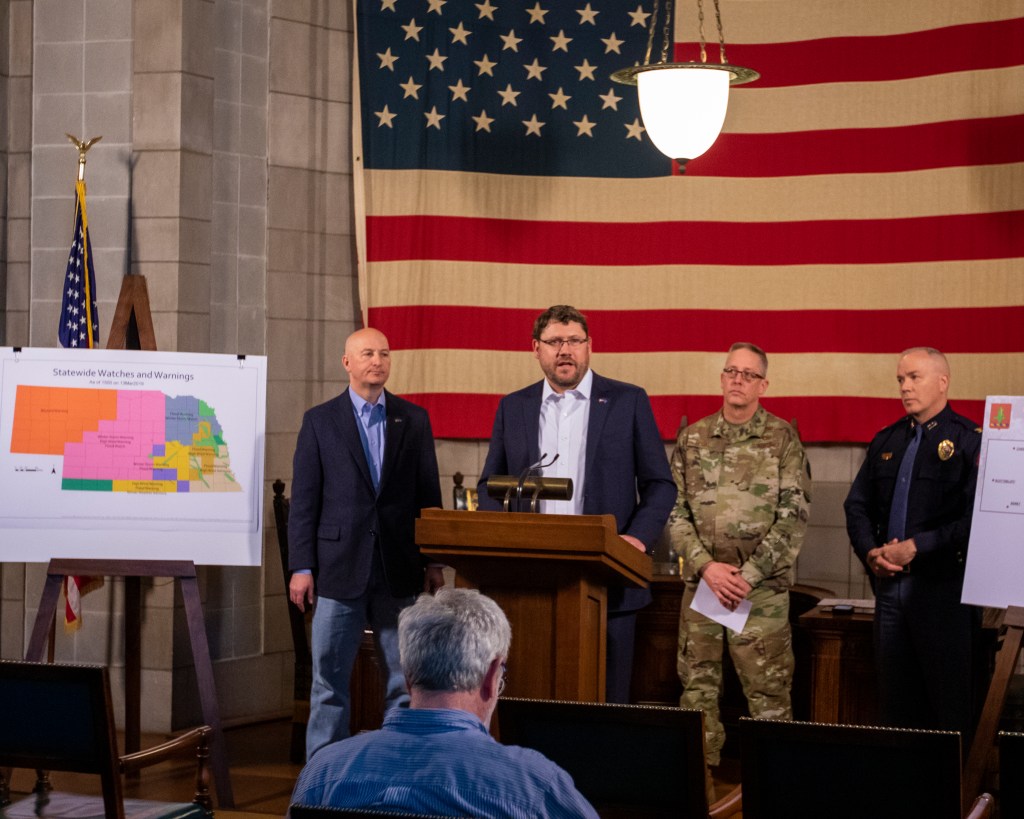
The State Emergency Operations Center (SEOC) at NEMA began a partial activation involving Emergency Support Function (ESF) Coordinators representing partner agencies, and fully activated the following day. The SEOC would ultimately remain operational for nearly a month assisting local jurisdictions with technical advice associated with response measures and providing assistance with the coordination of needed resources.
As the storm progressed, the FEMA Region VII Watch Center in Kansas City provided more details and assistance as the unprecedented weather event ravaged the state. Quickly, the Nebraska State Patrol, the Nebraska Department of Transportation, the Nebraska National Guard, and many other state agencies began coordinating personnel and equipment needed to address the rapidly changing activities.
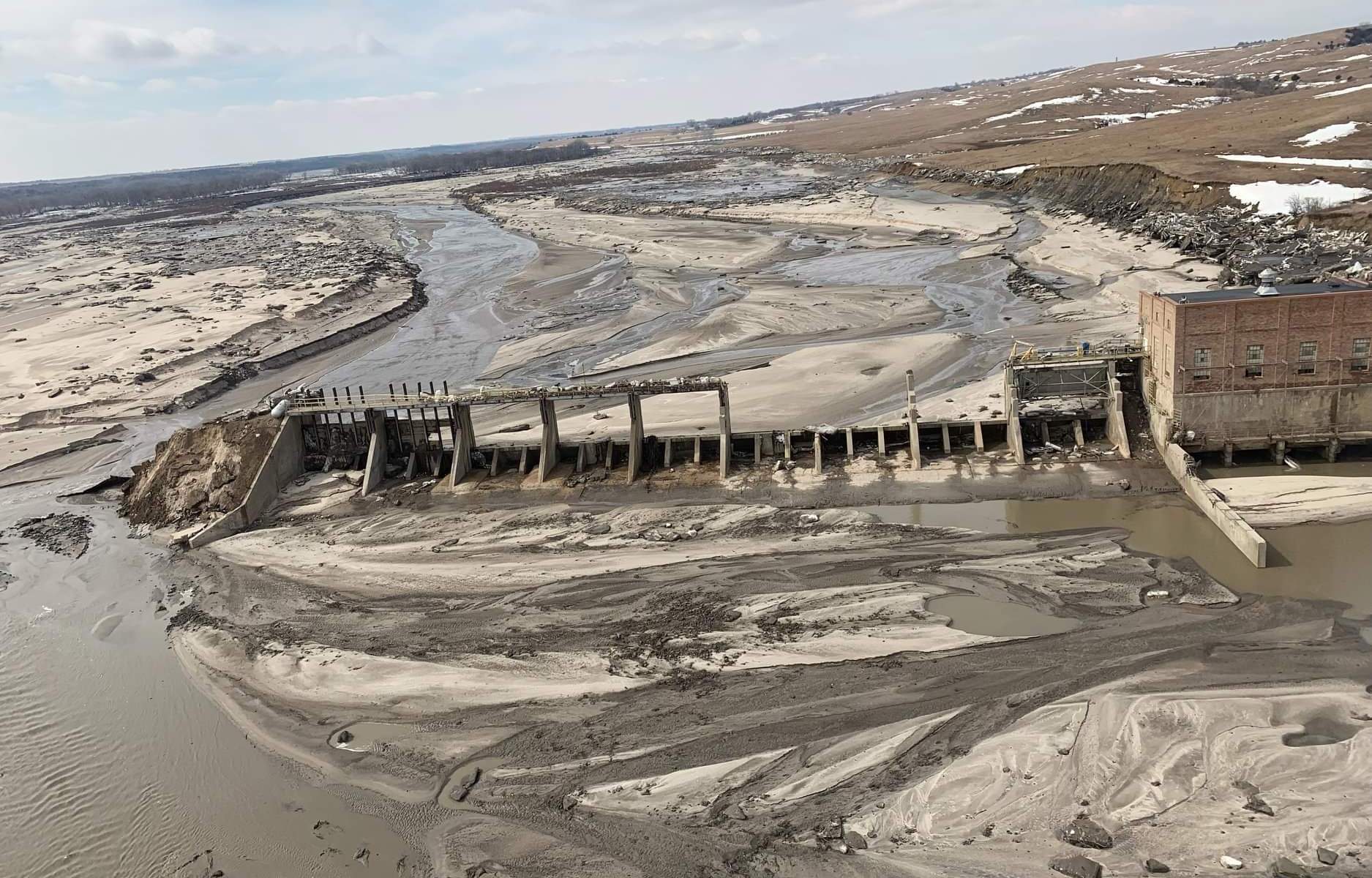
When the 93-year-old Spencer Dam on the Niobrara River failed after chunks of ice clogged its gates on the morning of March 14, 2019, it sent a massive wave of frigid water, ice chunks and debris rushing downstream.
 Good Life, Great Strength