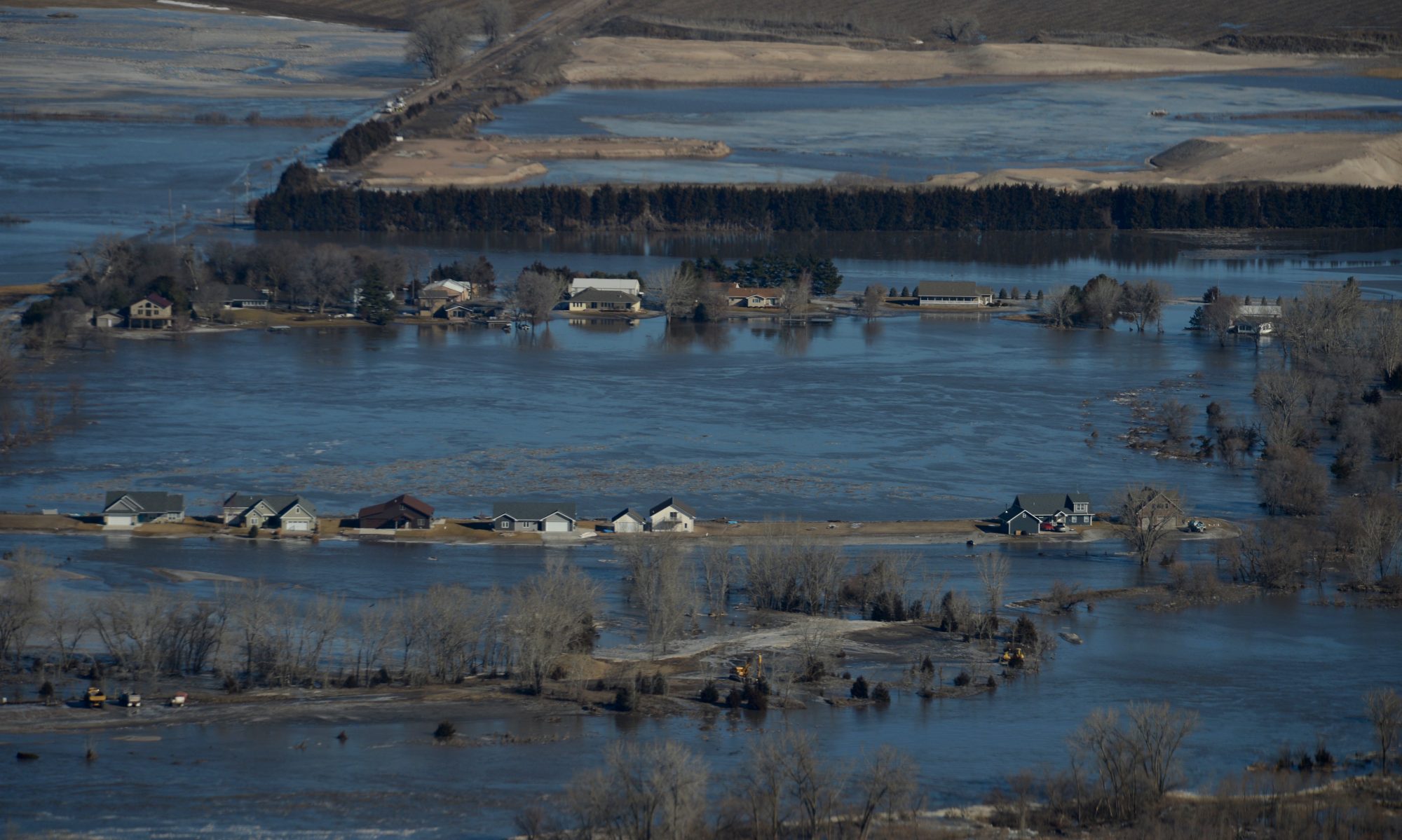
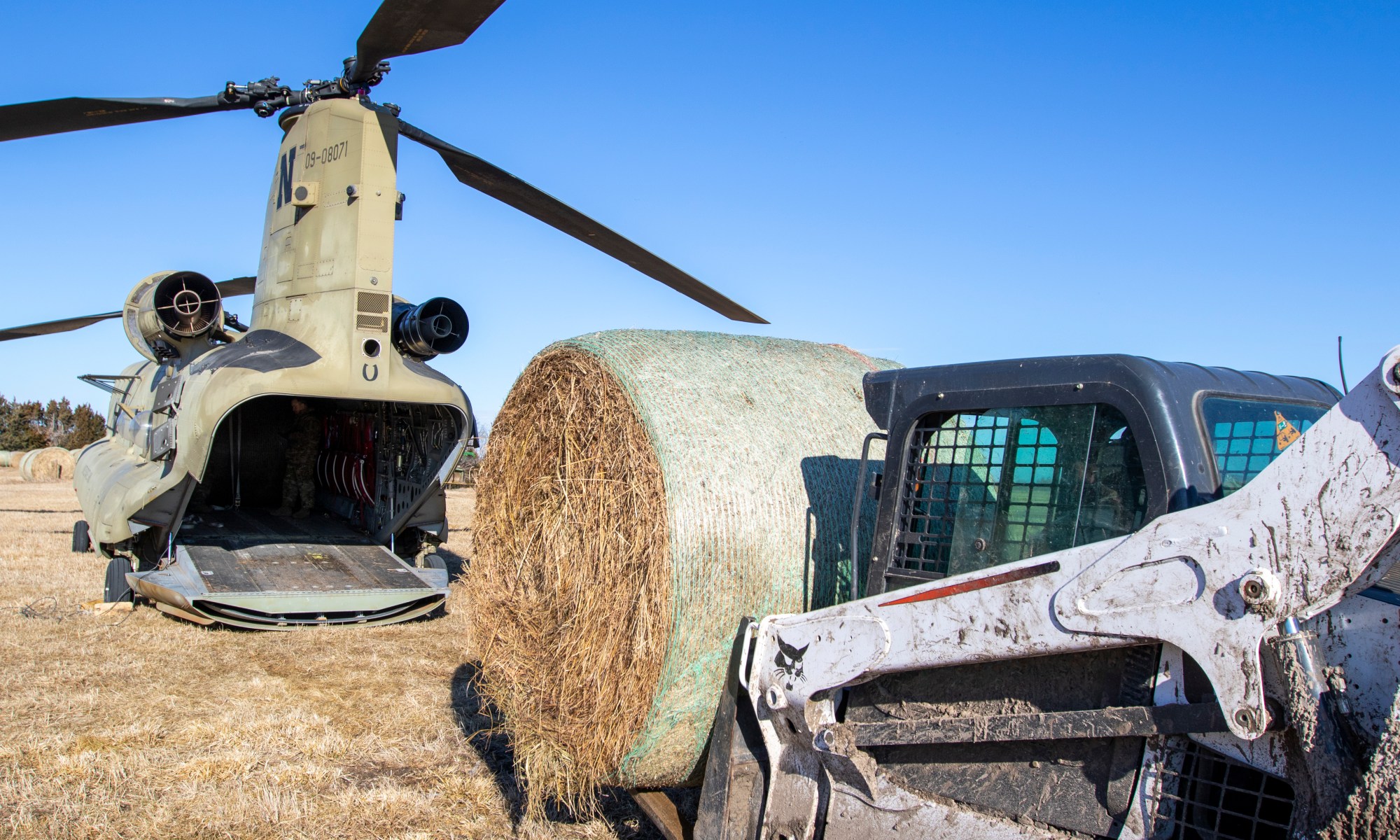
On March 20, 2019, the Nebraska National Guard made history when it used a CH-47 Chinook helicopter with Company B, 2-135th General Support Aviation Battalion, to secure and deliver 10 bales of hay, and airdrop them near Richland, Nebraska, to cattle isolated by historic flooding across the state.
Nicknamed Operation Prairie Hay Drop, the aerial hay drop took place on a fifth-generation family farm. Wende Settles, a cattle producer with Wolfe Ranch, said it’s hard to ask for help. But this time there were no other options.
“We’re used to helping other people, we’re not used to having to ask for it.” Settles said. “The (agricultural) community from one end of the state to the other end of the state has just been hit so hard … but we’re fortunate everybody got out safe … we just want to do what we can to help the animals… We calf all night long and check every two to three hours, and so not being able to get to them has just been really hard.”
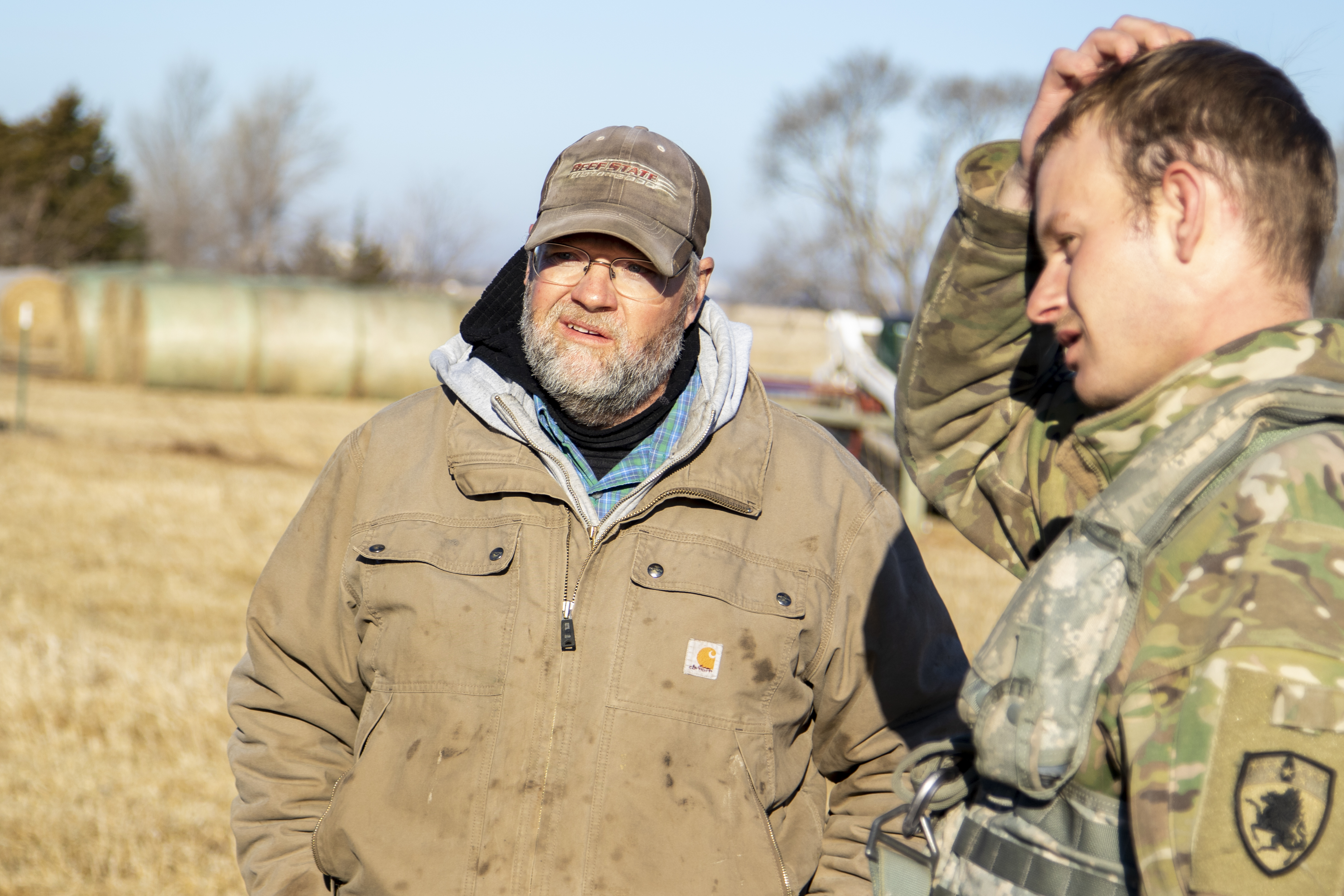
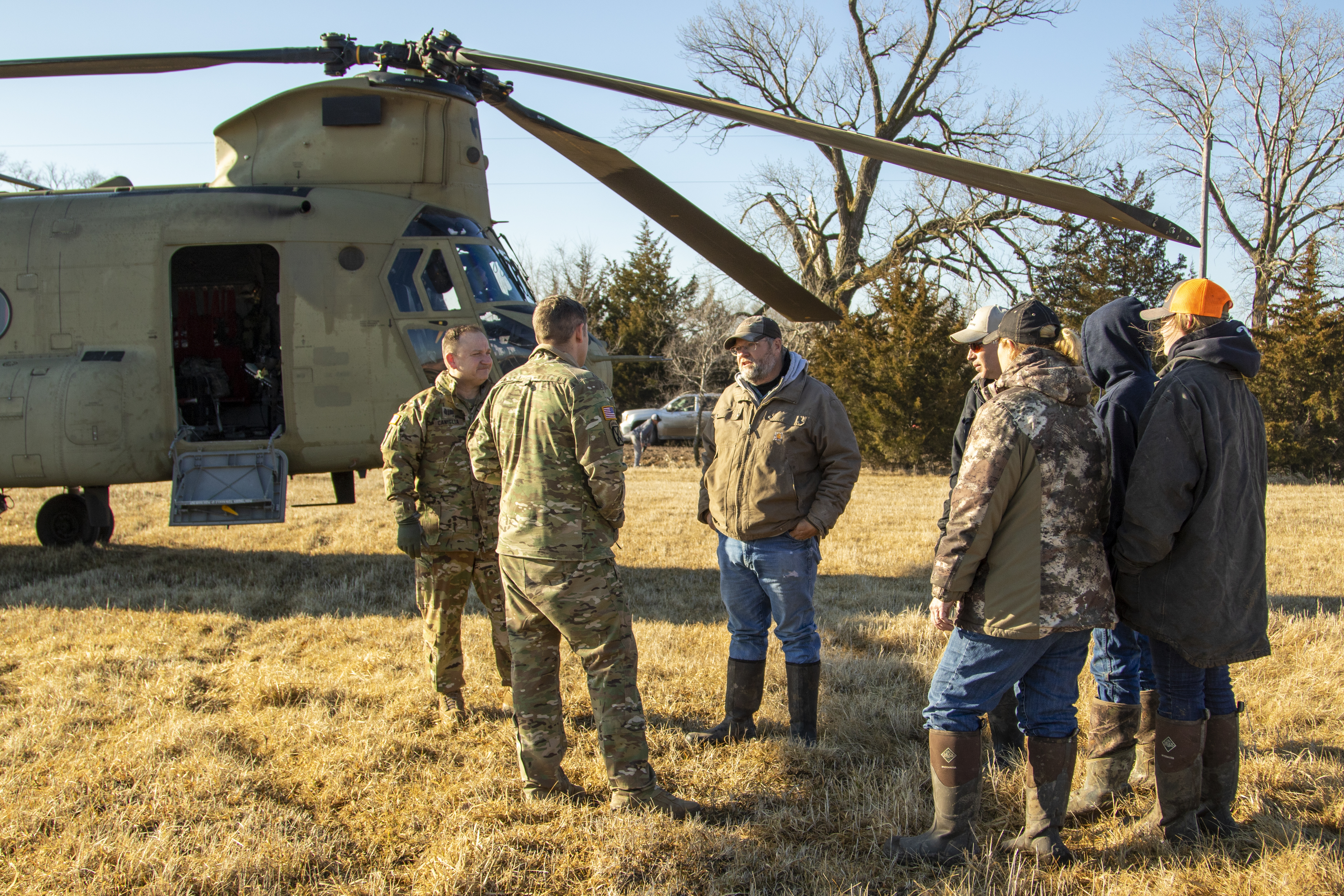
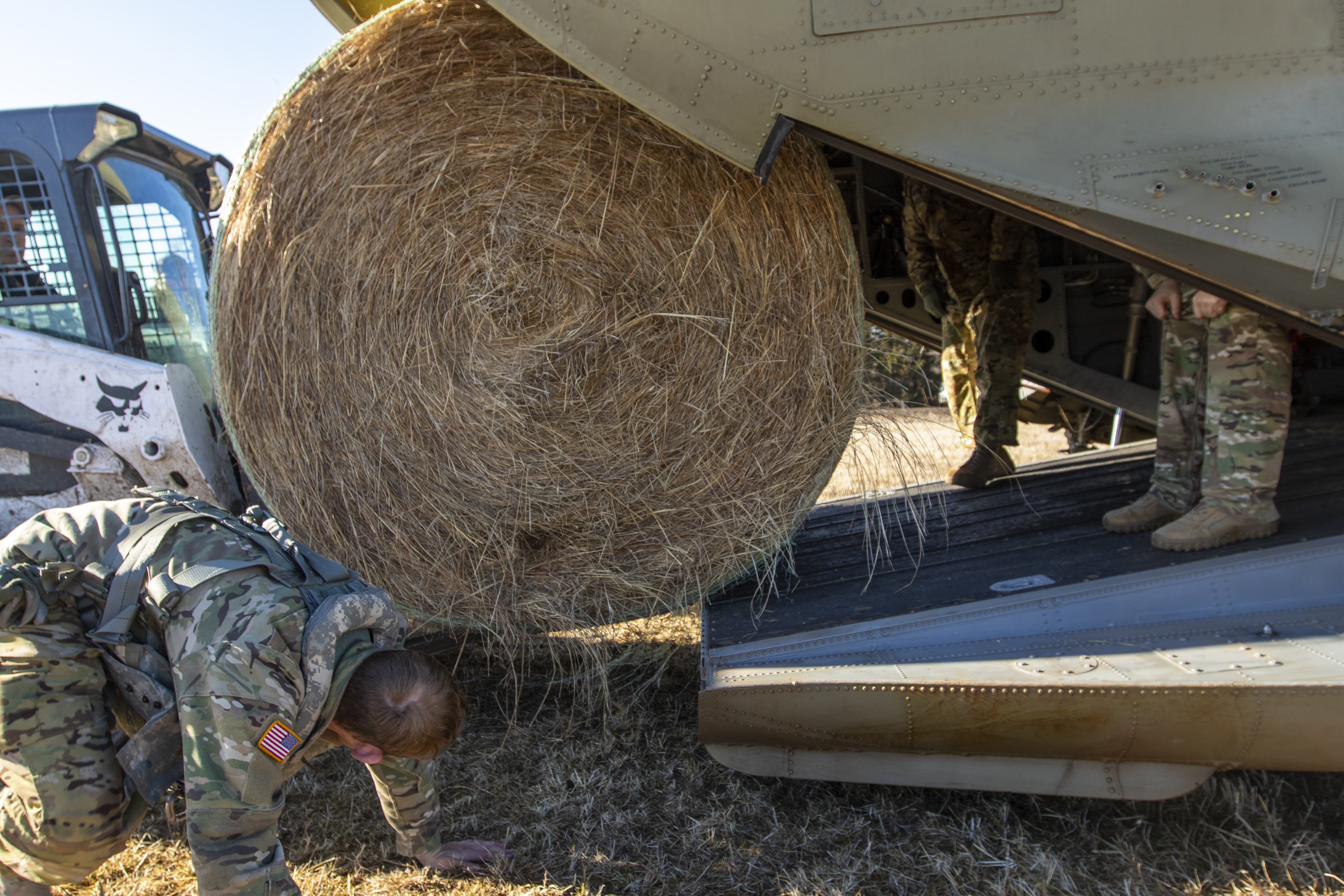
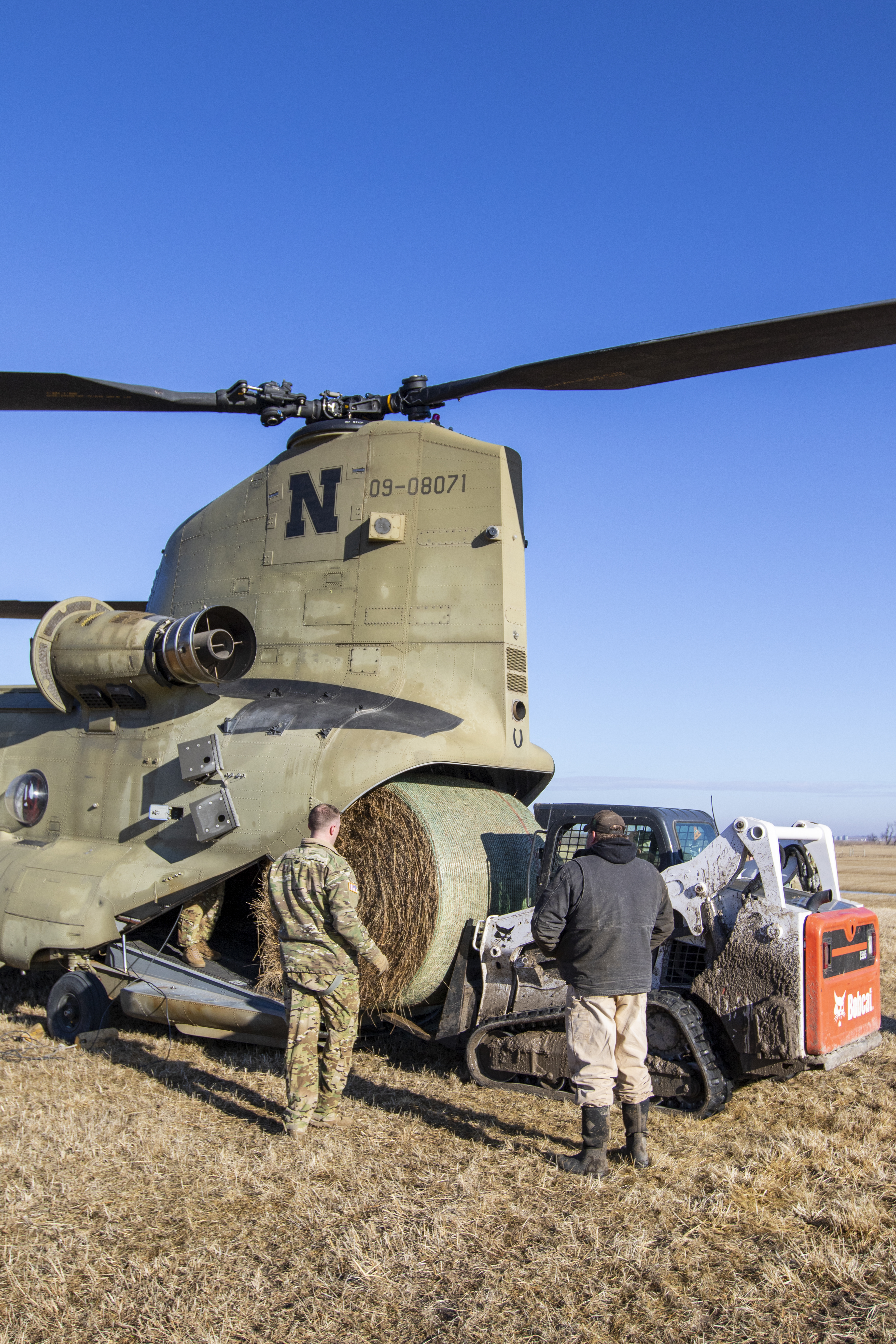
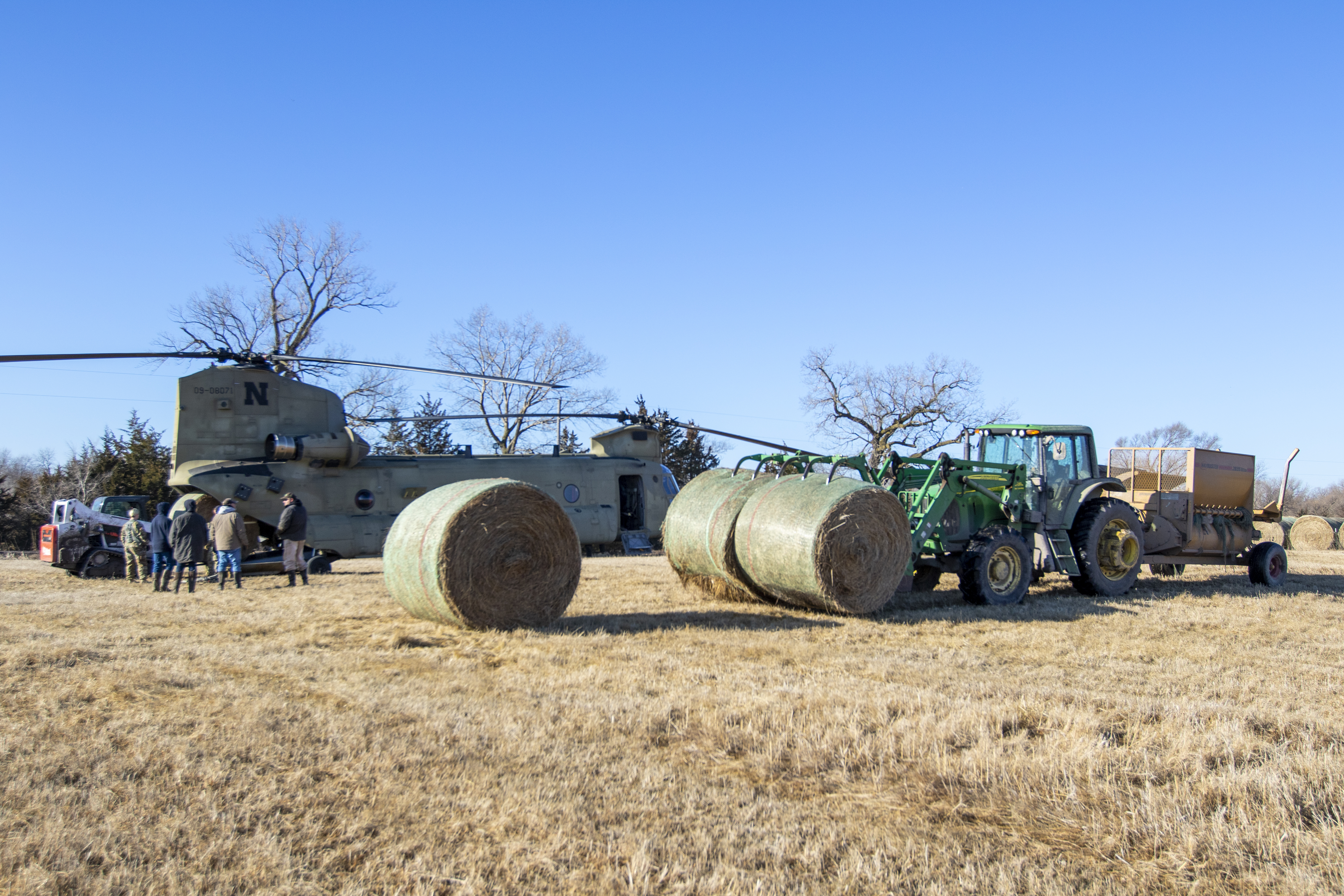
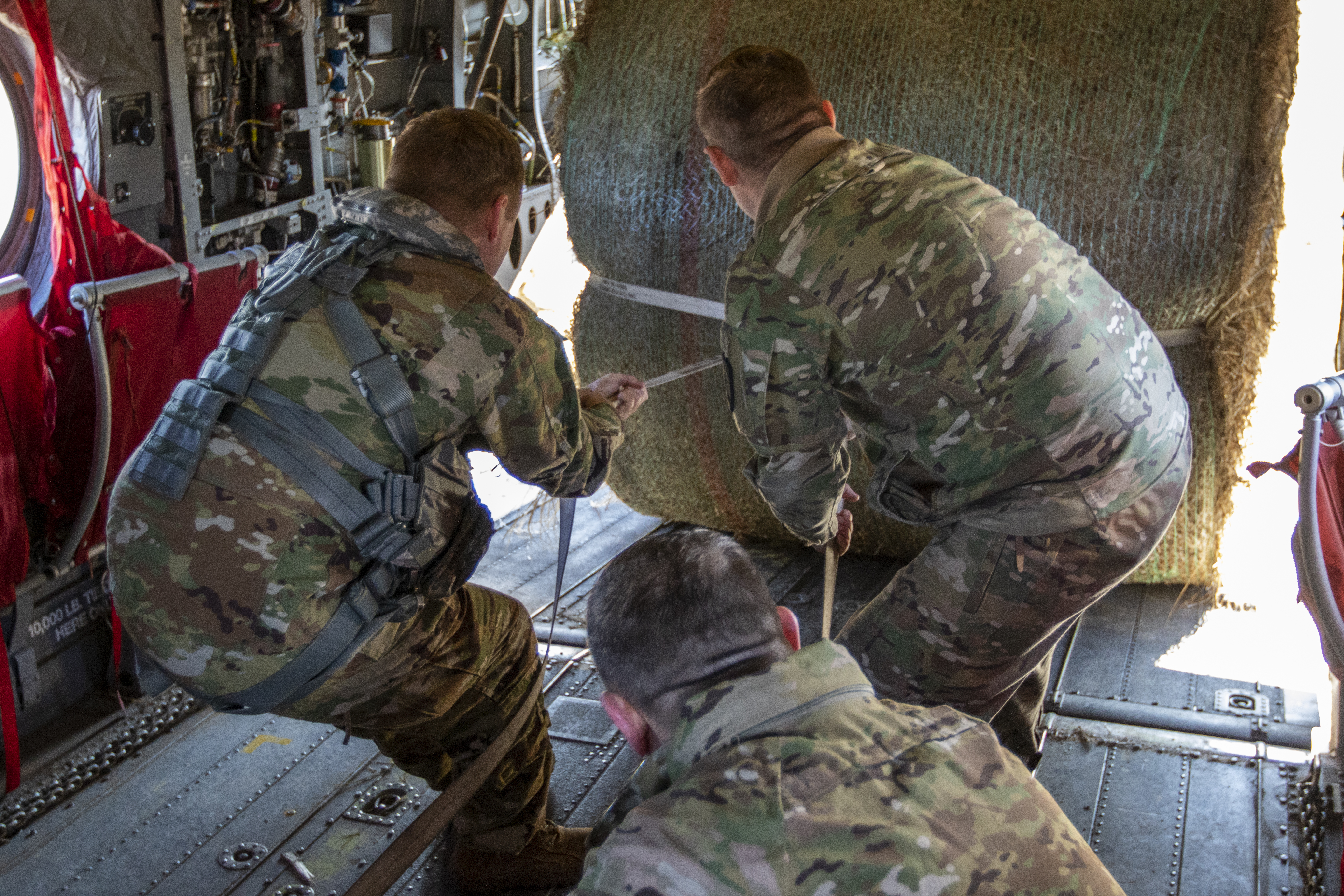
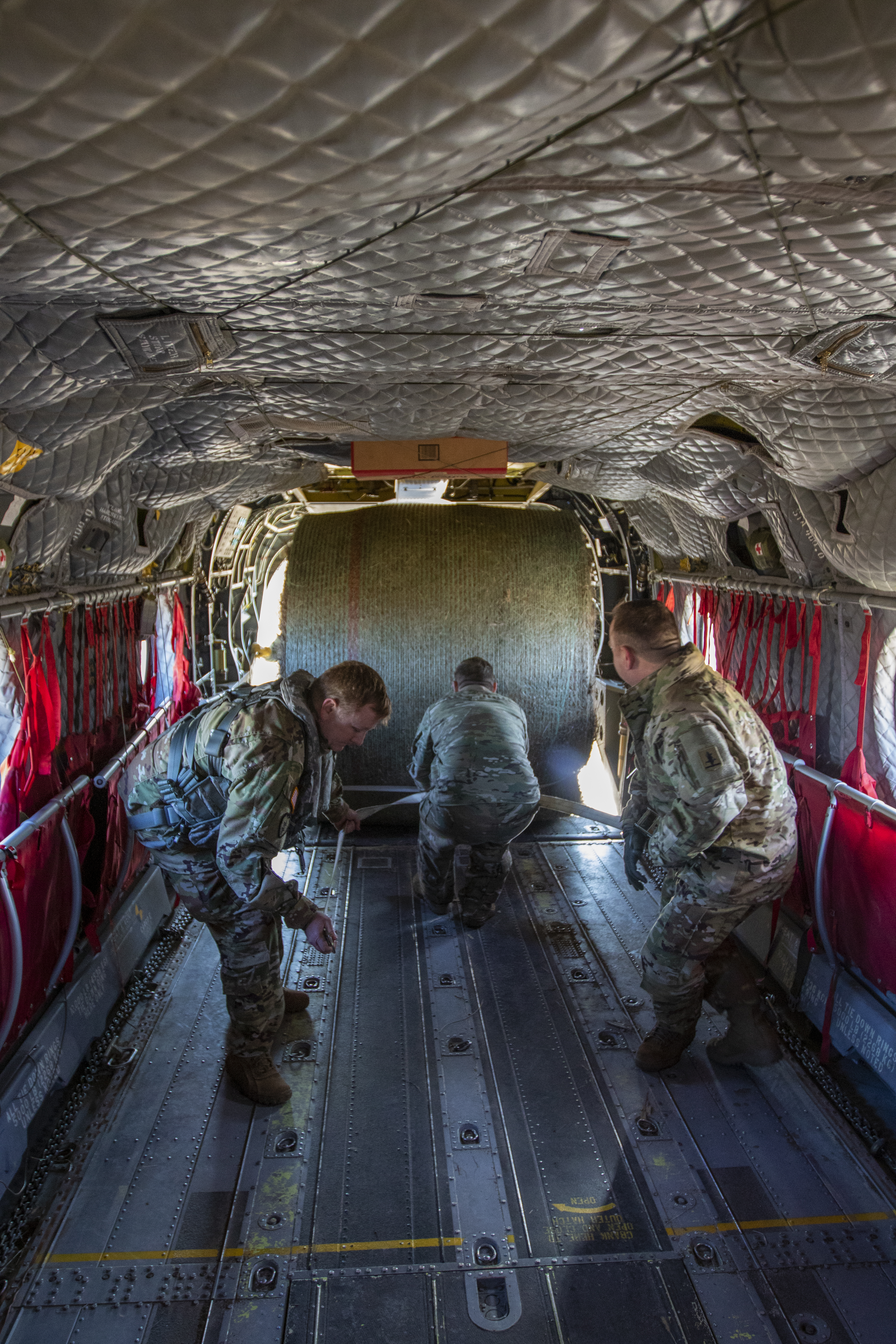
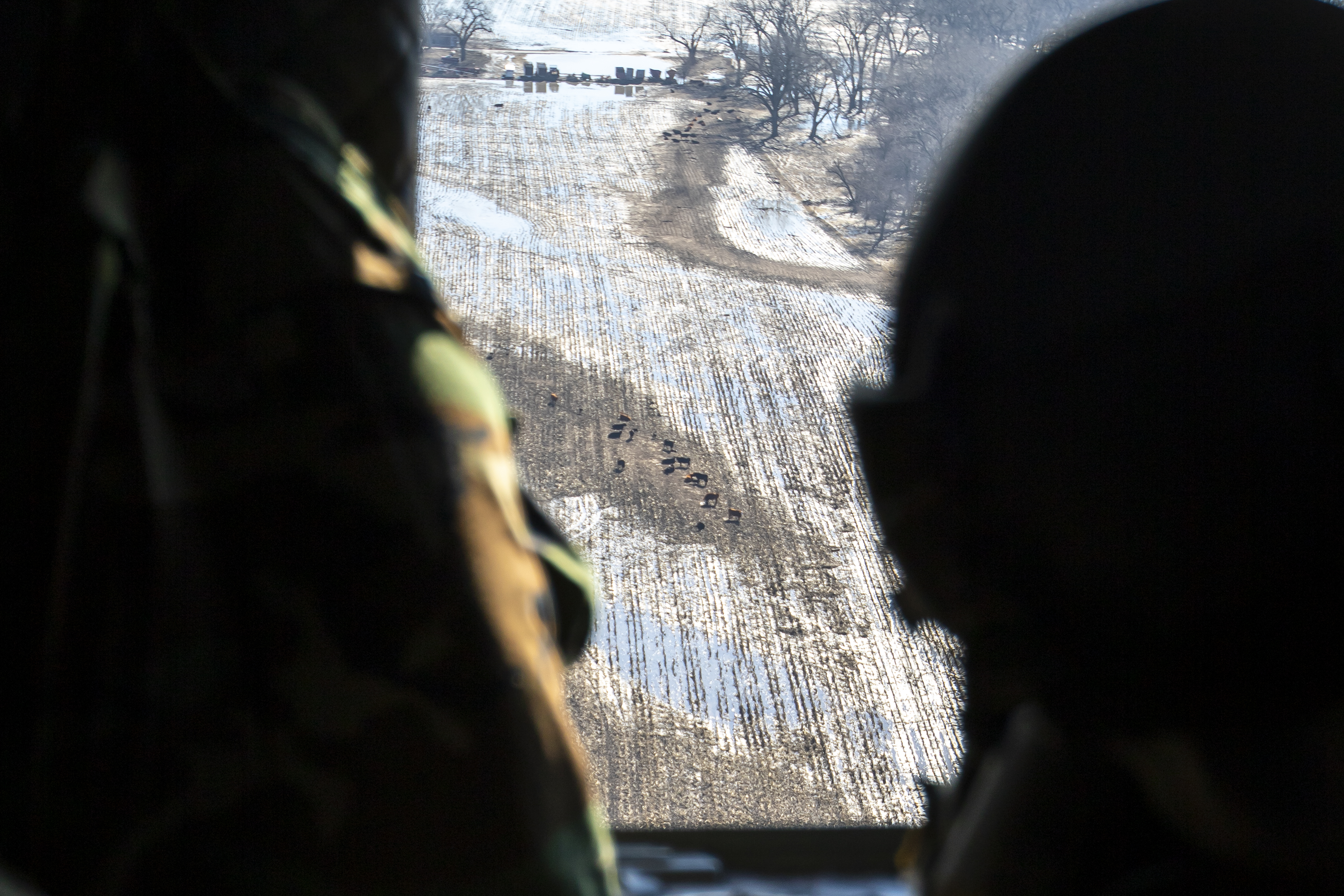
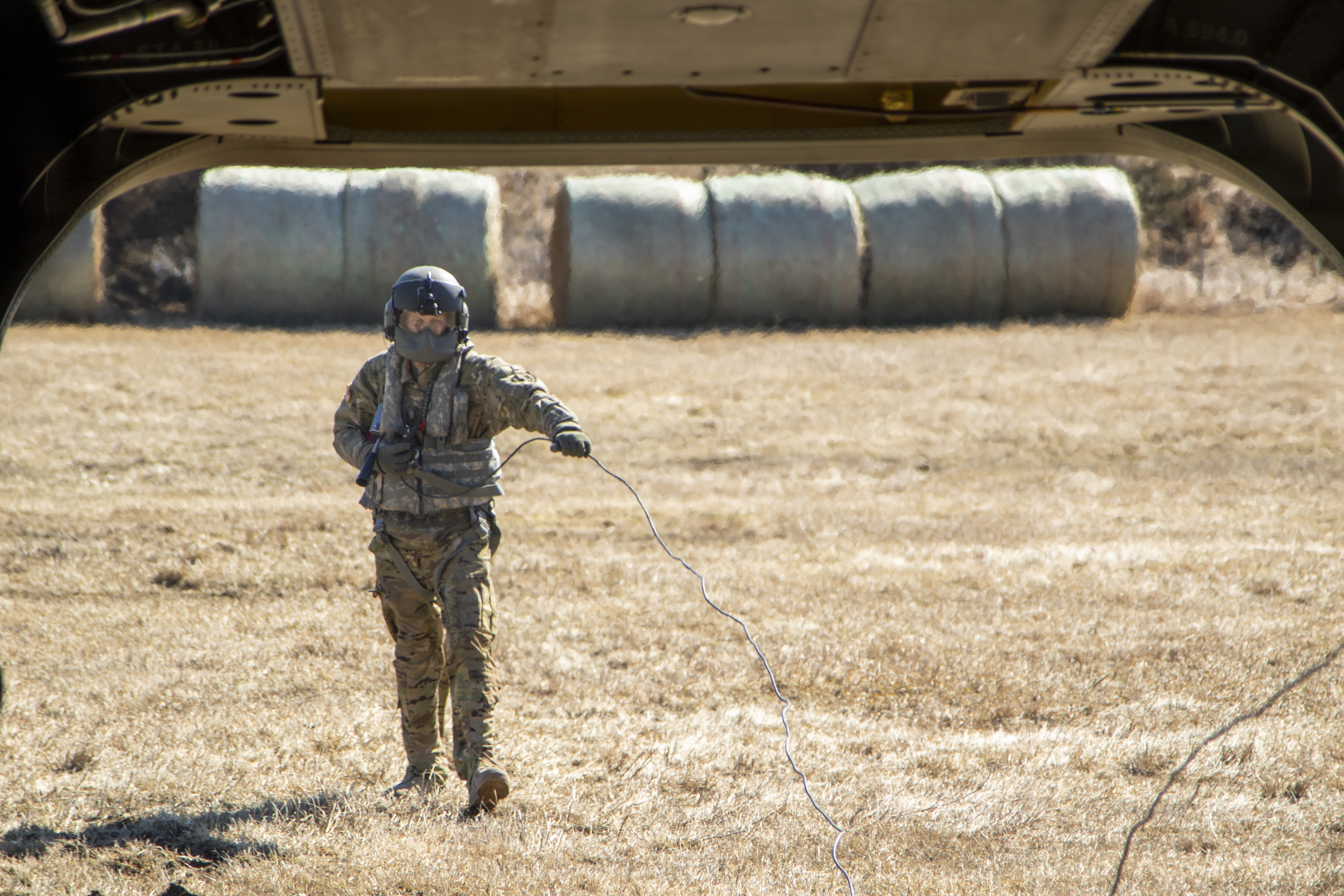
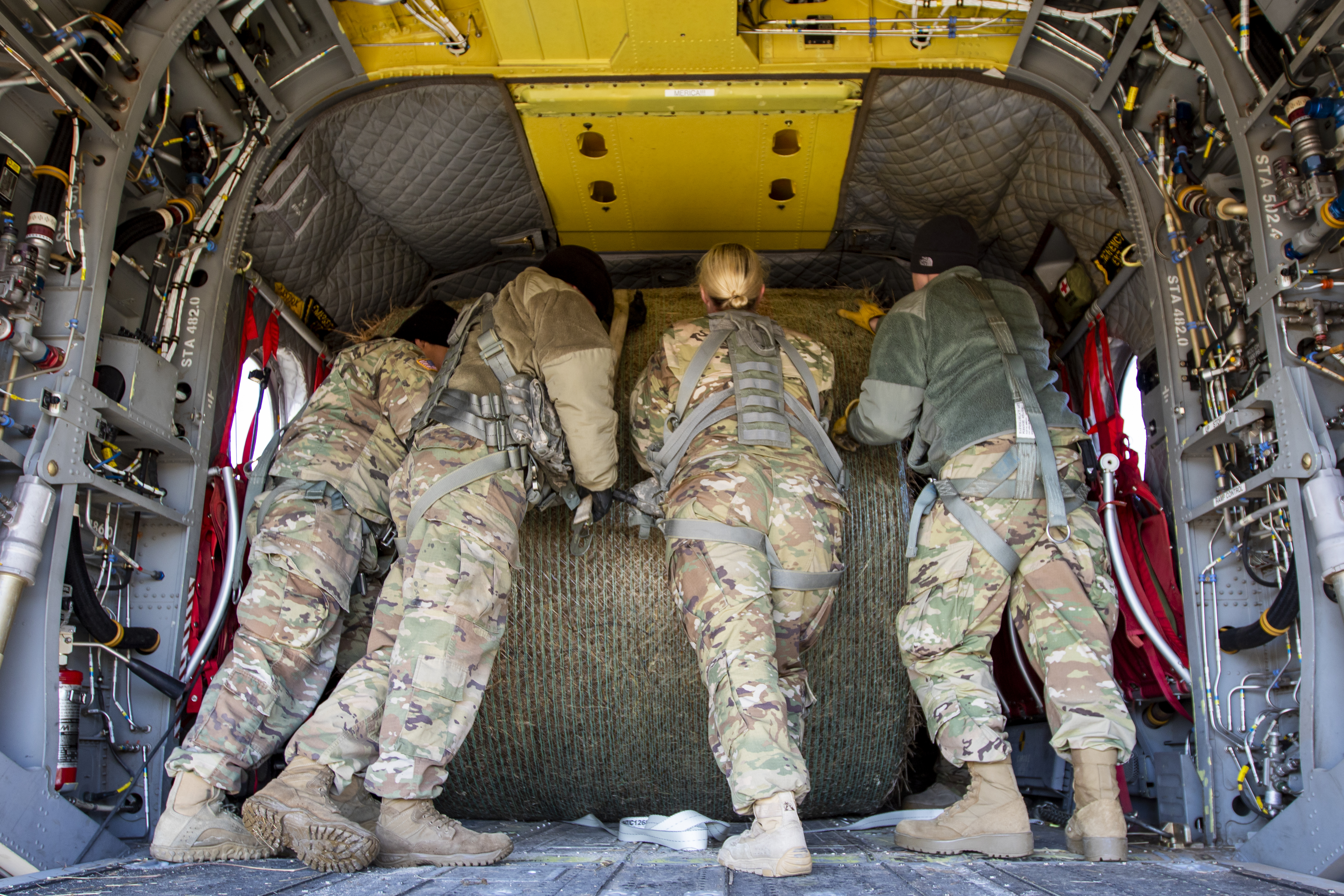
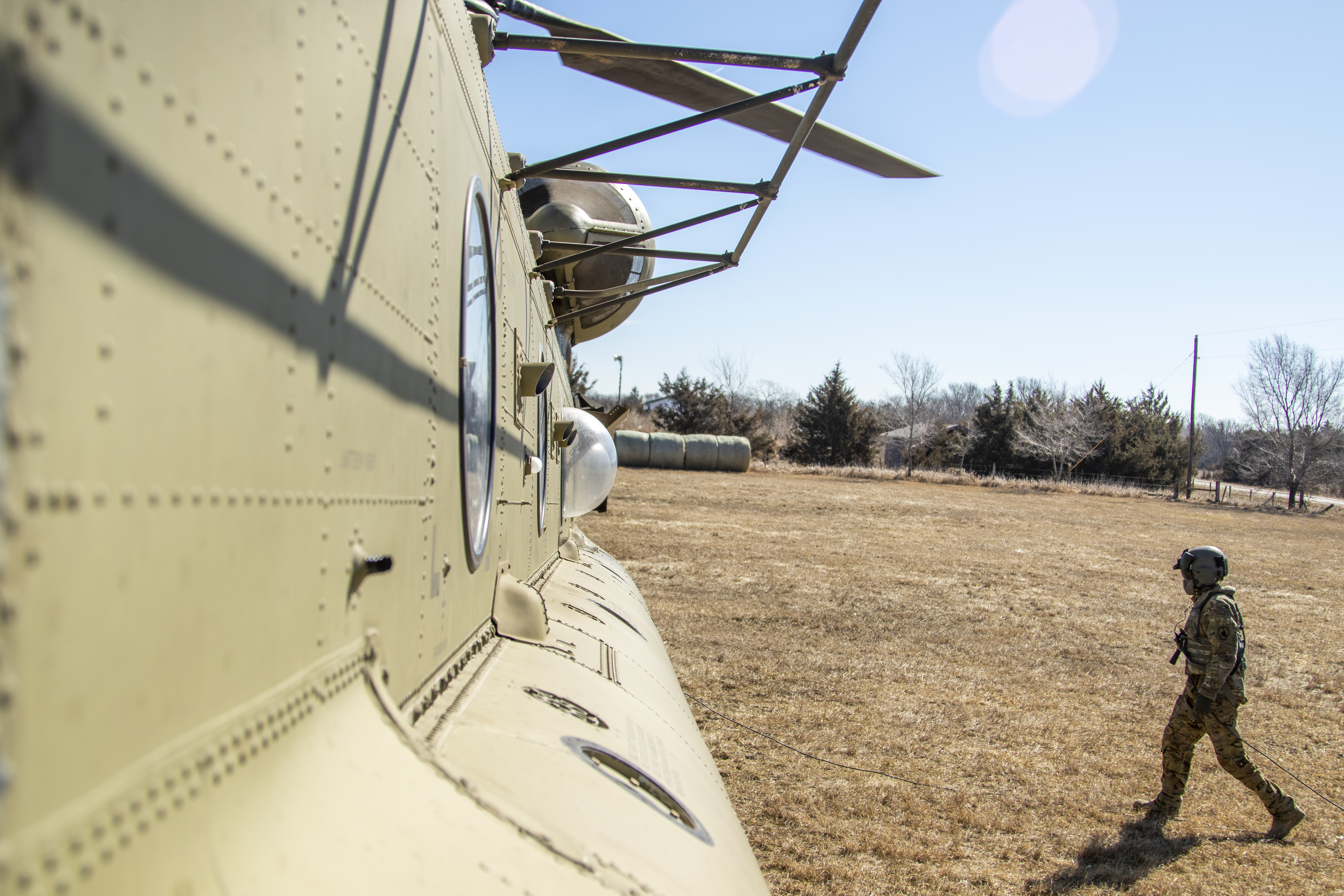
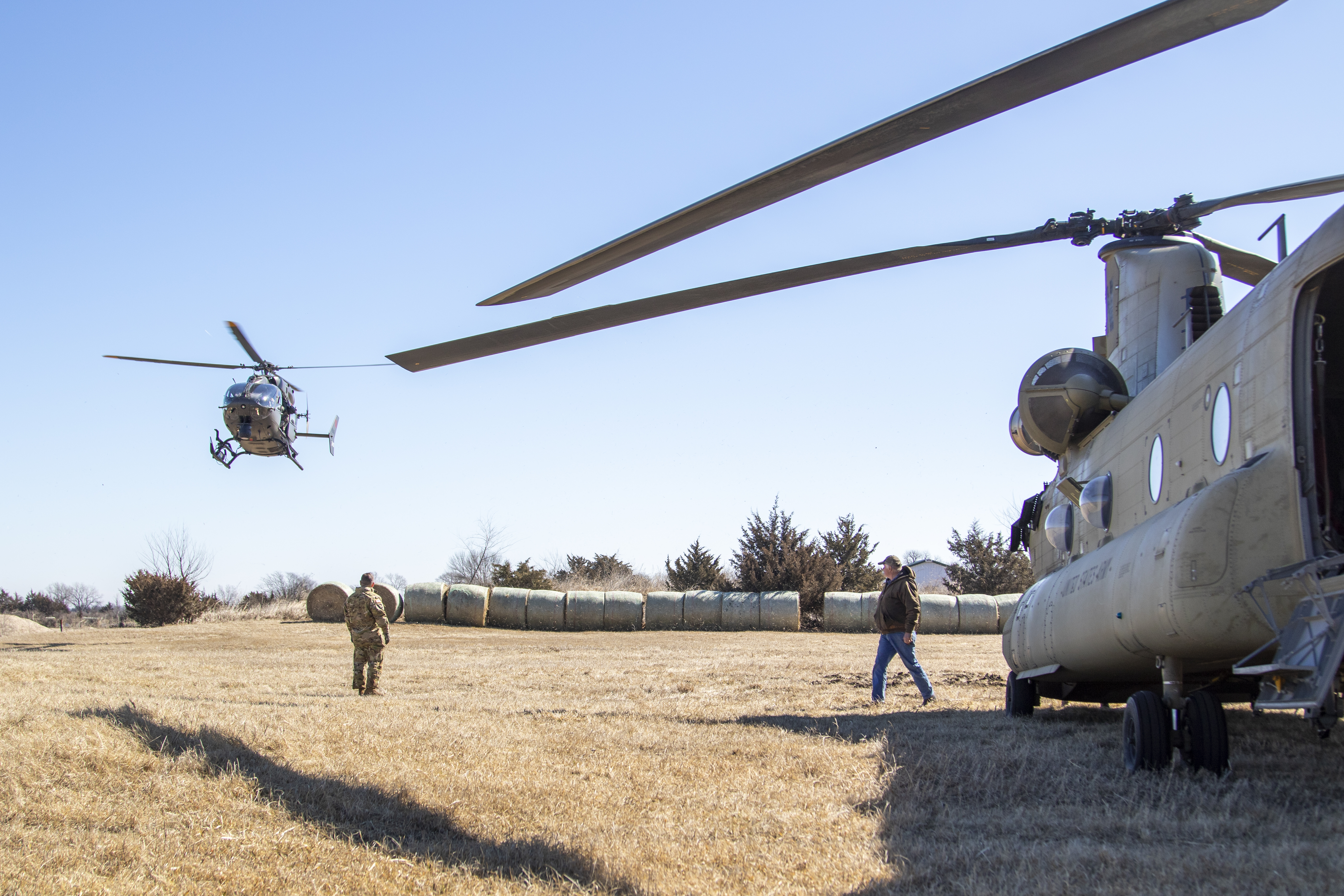
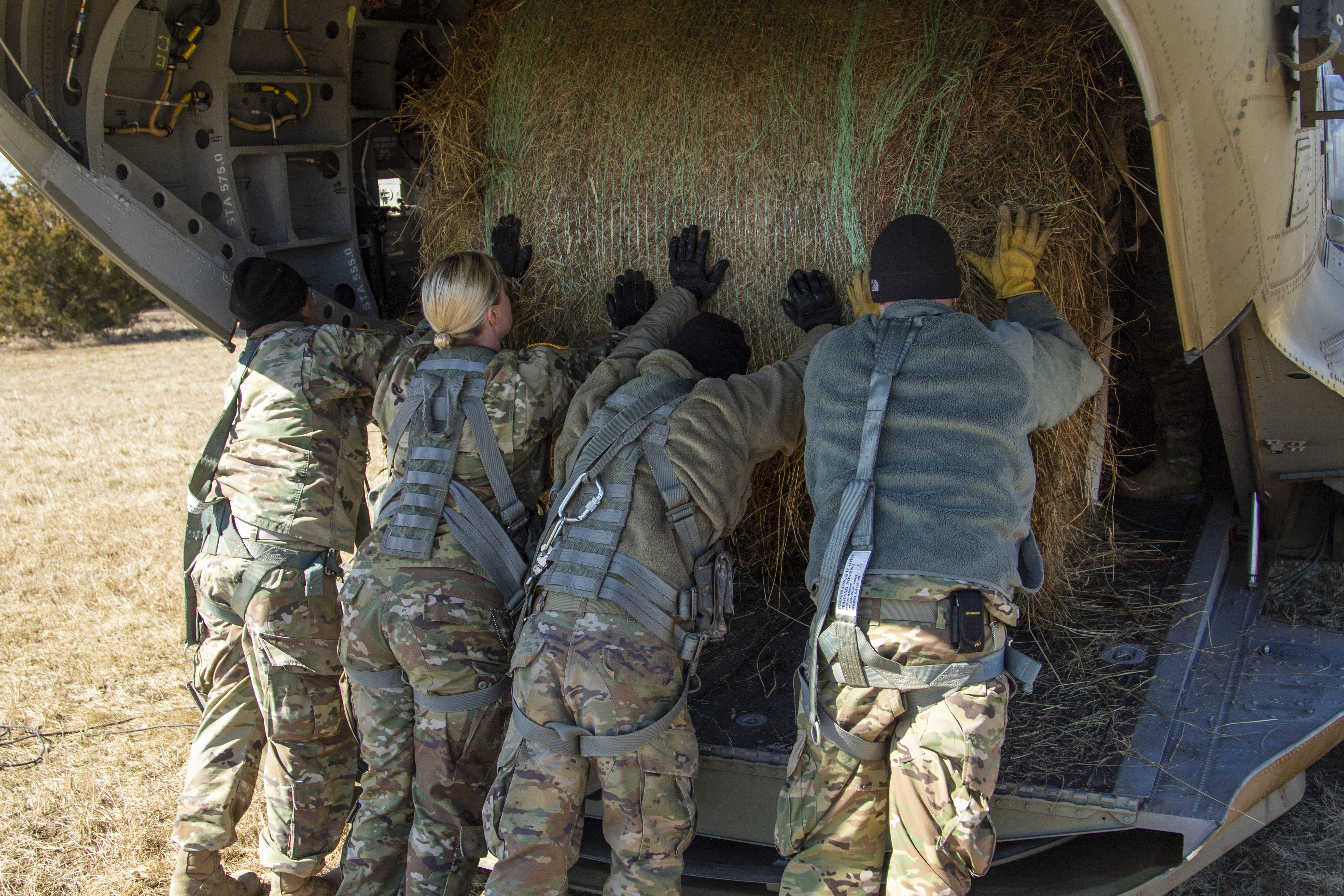
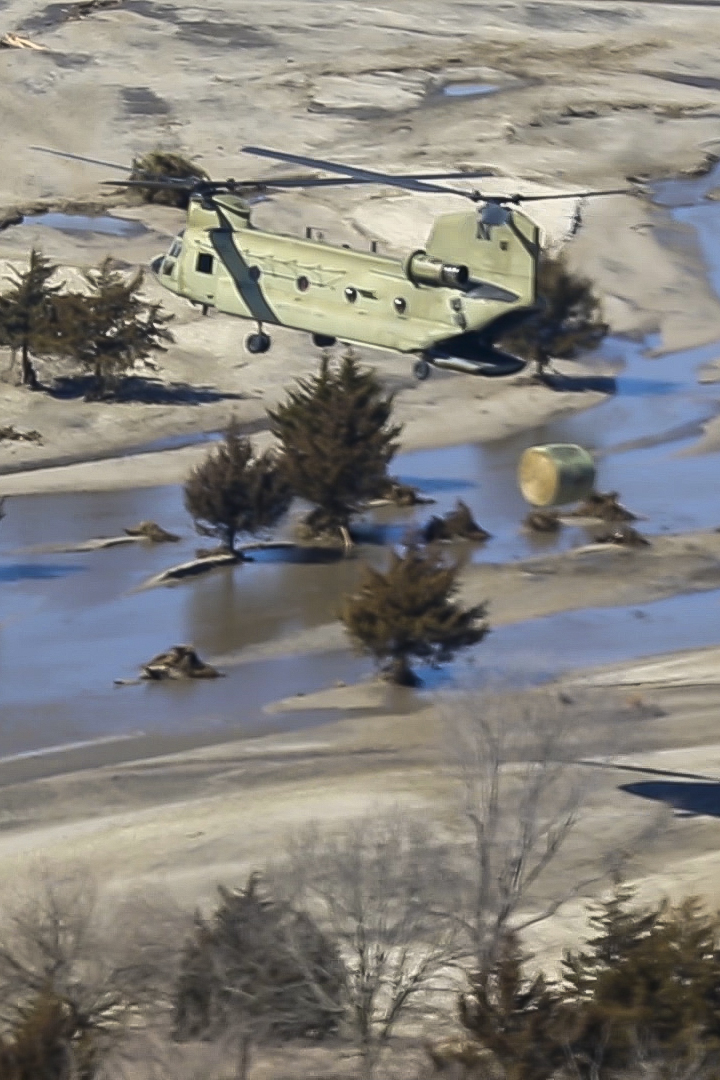
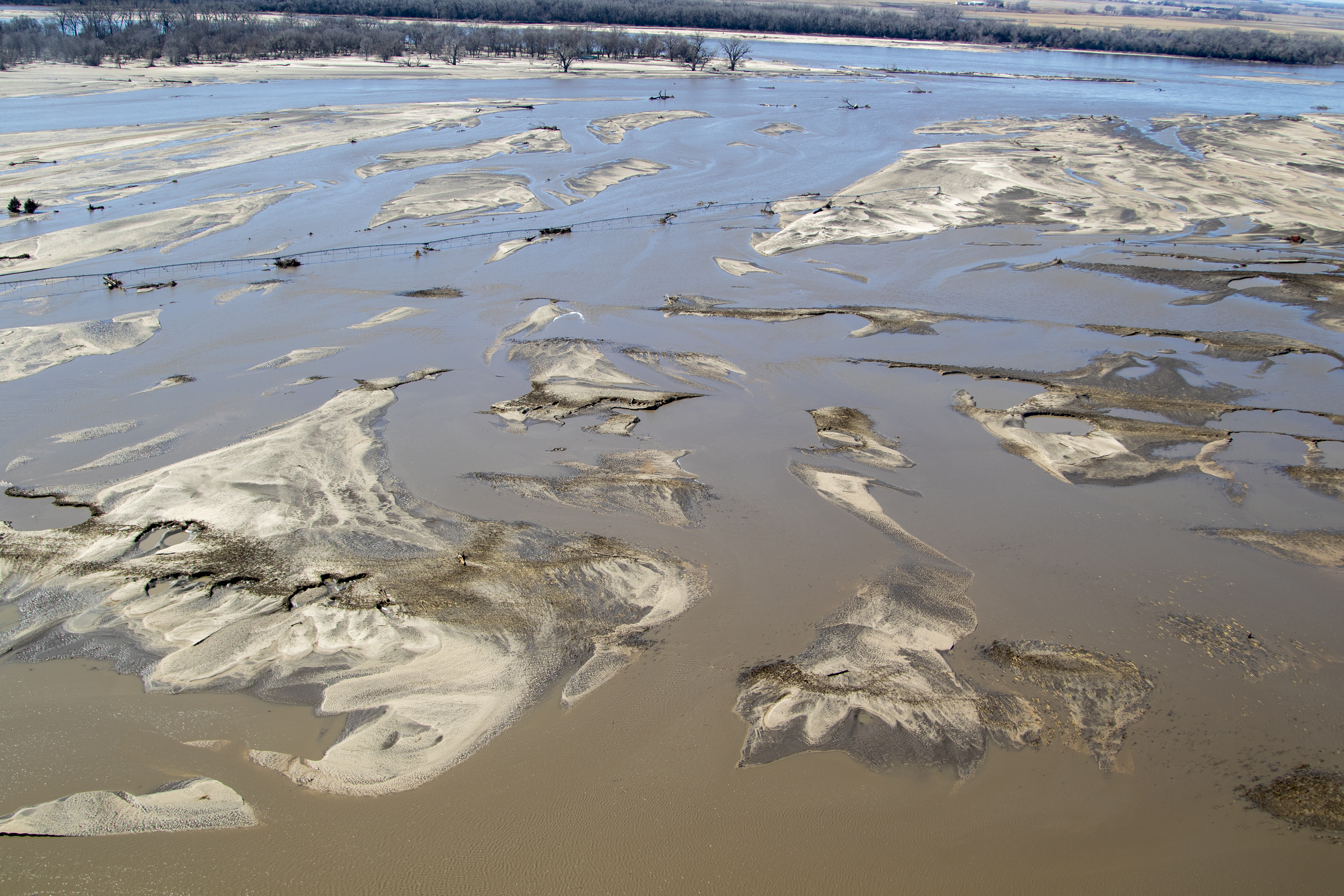
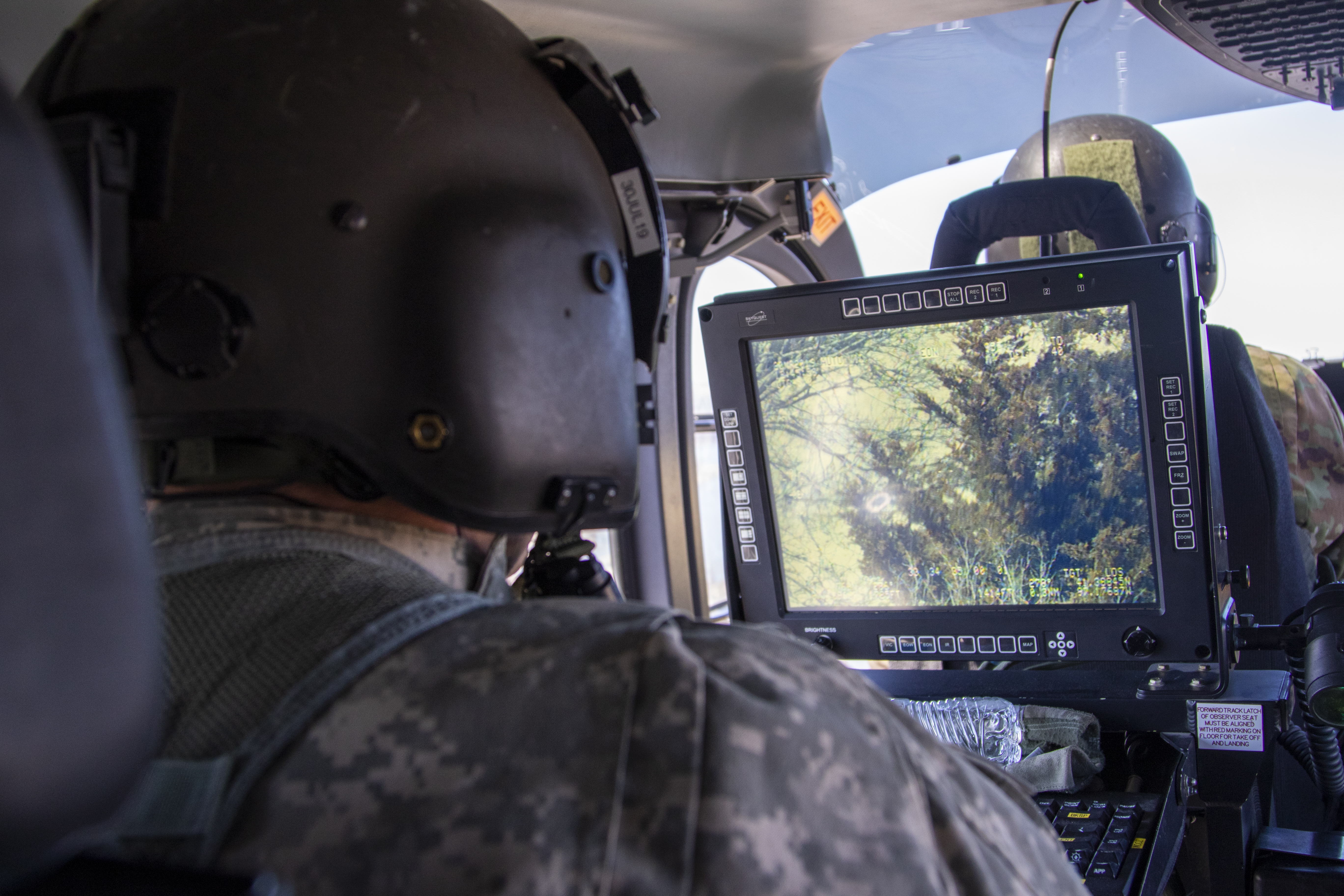
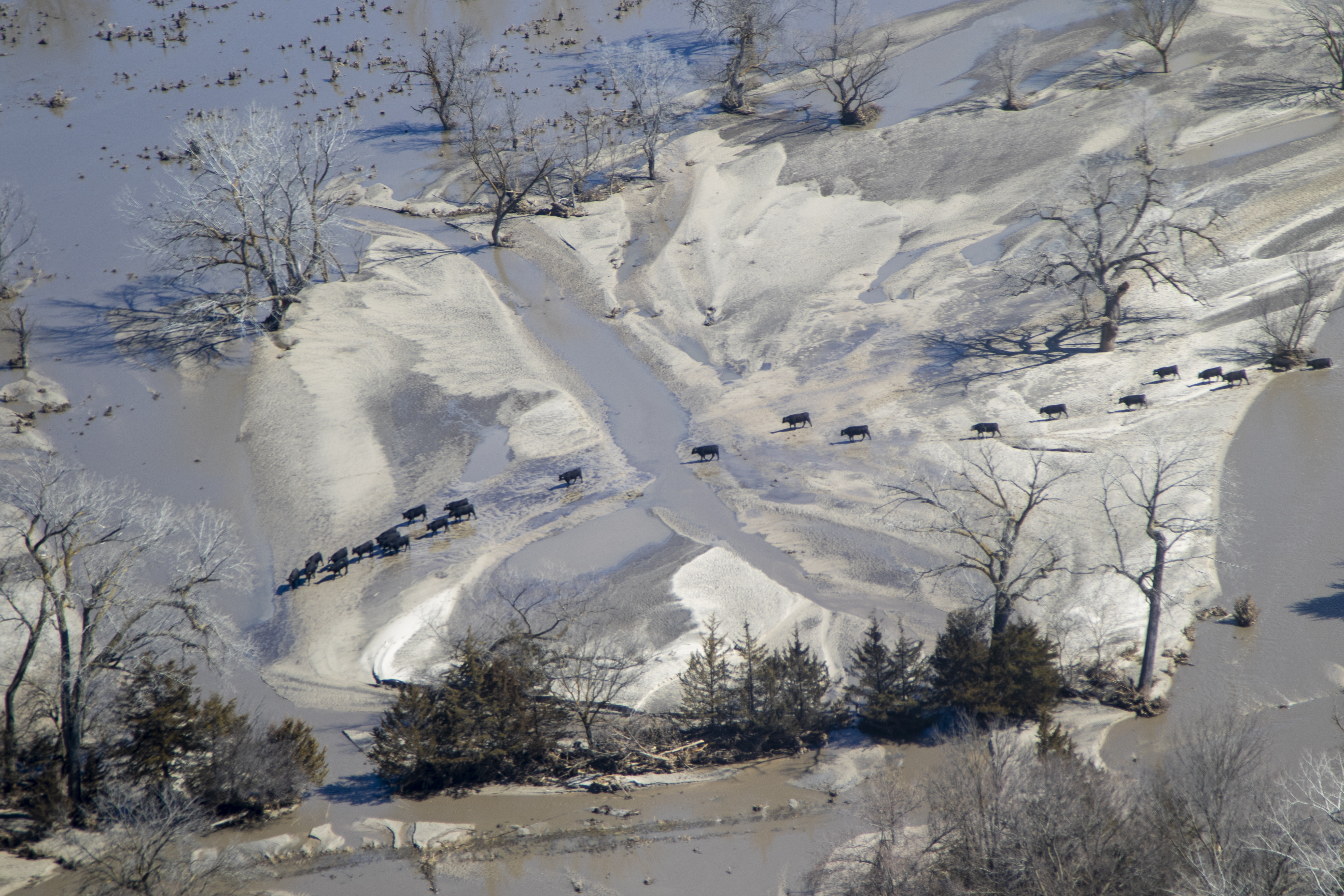
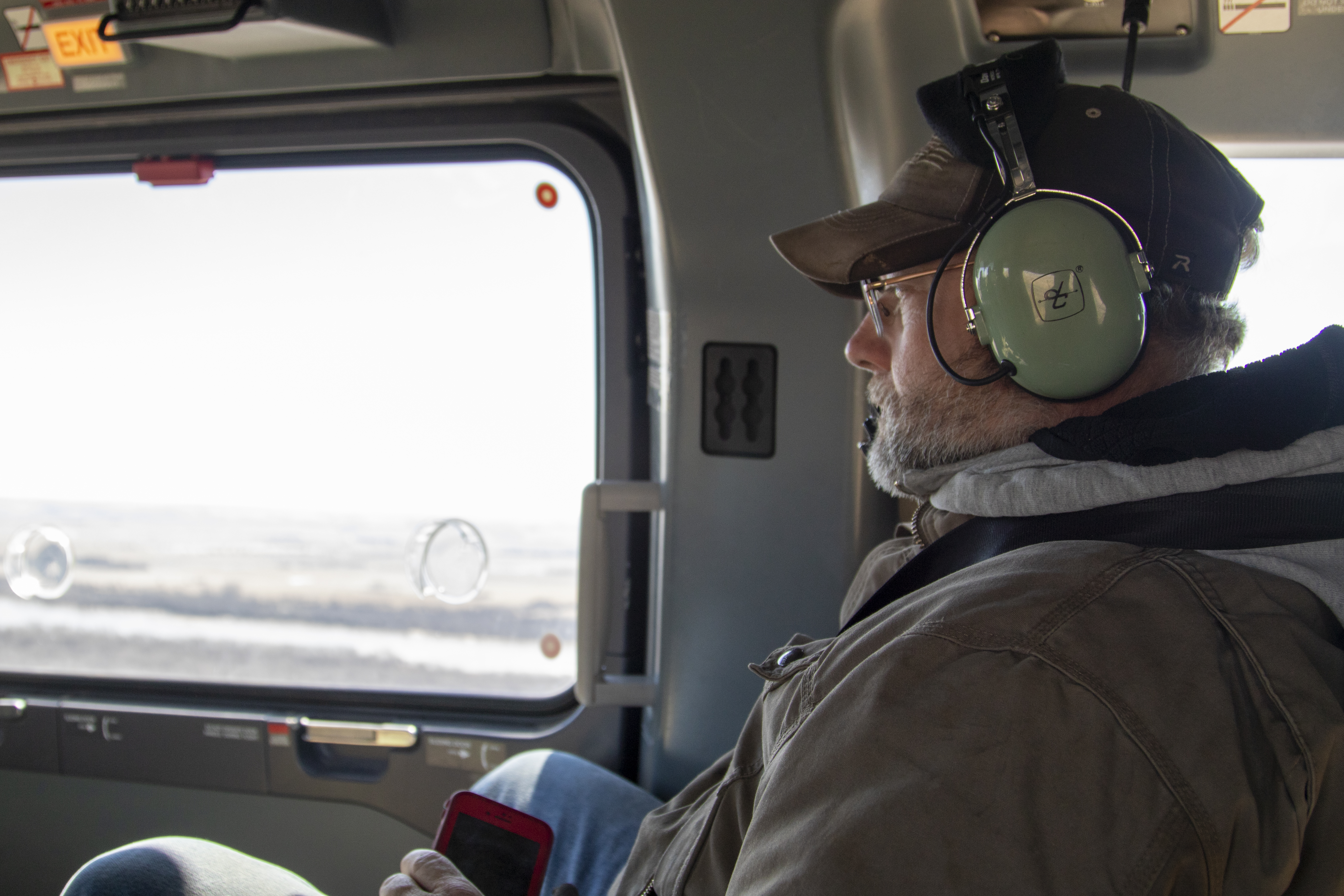
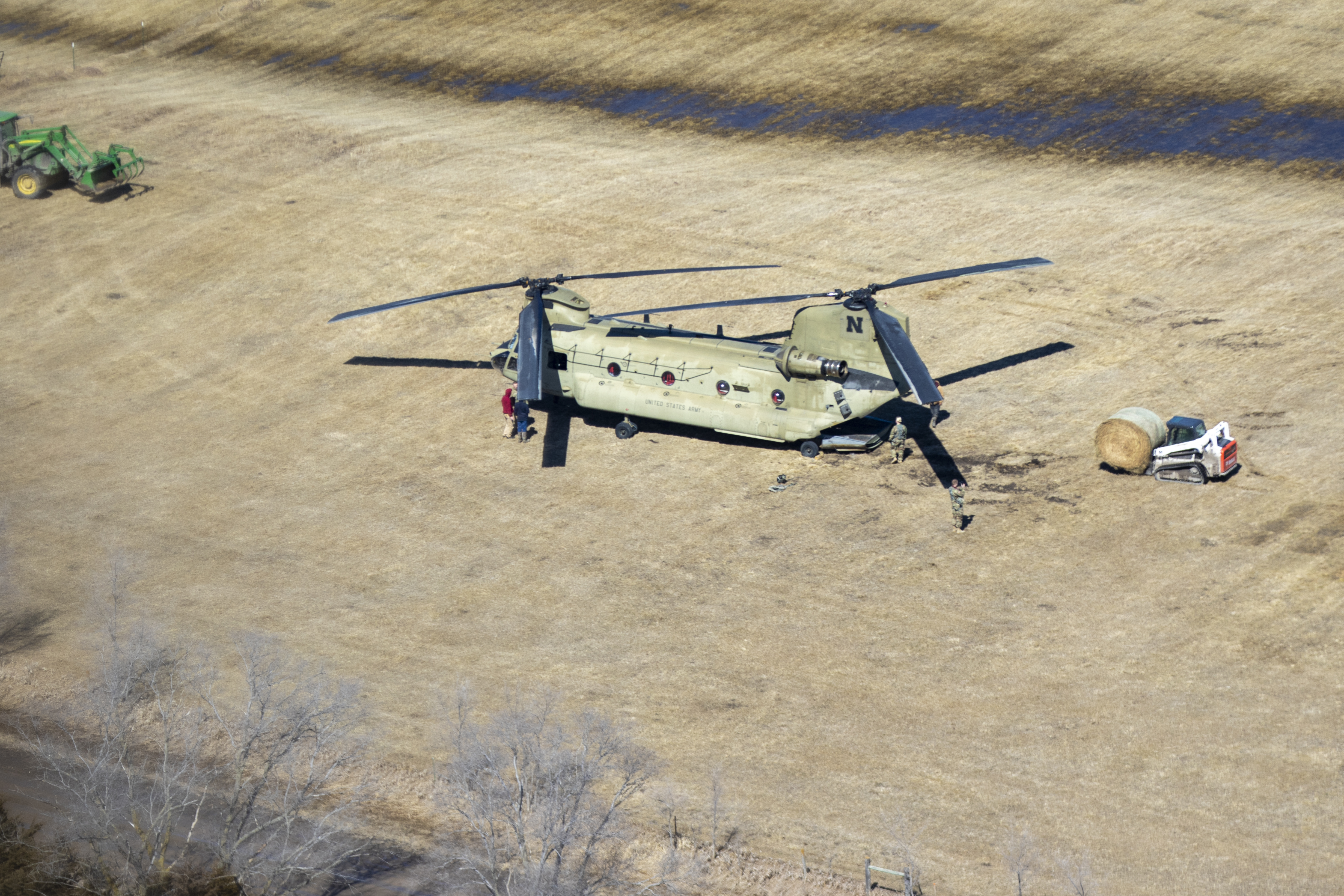
Nebraska Army National Guard Soldiers used a CH-47 Chinook helicopter with Company B, 2-135th General Support Aviation Battalion, to secure multiple bales of hay, March 20, 2019, and airdrop them to cattle isolated by historic flooding across the state. (Nebraska National Guard photos by Spc. Lisa Crawford)
Settles said her family appreciated all the assistance they have received. “(The) community has been wonderful. They’ve reached out, we’ve got cows at neighbors and other neighbors … Everybody has just been trying to help.”
Chief Warrant Officer 4 Jeff Caniglia, Nebraska National Guard, said the mission was critical, considering that Nebraska’s farmers are the “lifeblood of Nebraska.”
While speaking to Settles, Caniglia said: “That’s why we’re here, to help … don’t hold back, if you need resources, if you need help, please ask.”
Sgt. Kaela Croushorn from Newhaka, Nebraska, serves as a nurse with the 110th Multifunctional Medical Battalion and is a nurse in her civilian life as well.
When the floods began, Croushorn said she took time off from work to help the Nebraska Army National Guard, her first time on state active duty orders in her four years of service.
“I love helping people, that’s what I do, and whether it’s on the civilian side or the Army side, I’m here to offer my services,” she said.
Croushorn said some of the farmers near her village were heavily impacted by the floods, so when she had the opportunity to help aviation with the hay deliveries, she volunteered immediately.
“I’m really proud,” she said. “Everybody’s been affected by the floods, so it’s just awesome to be able to help the community in which we live in and serve.”
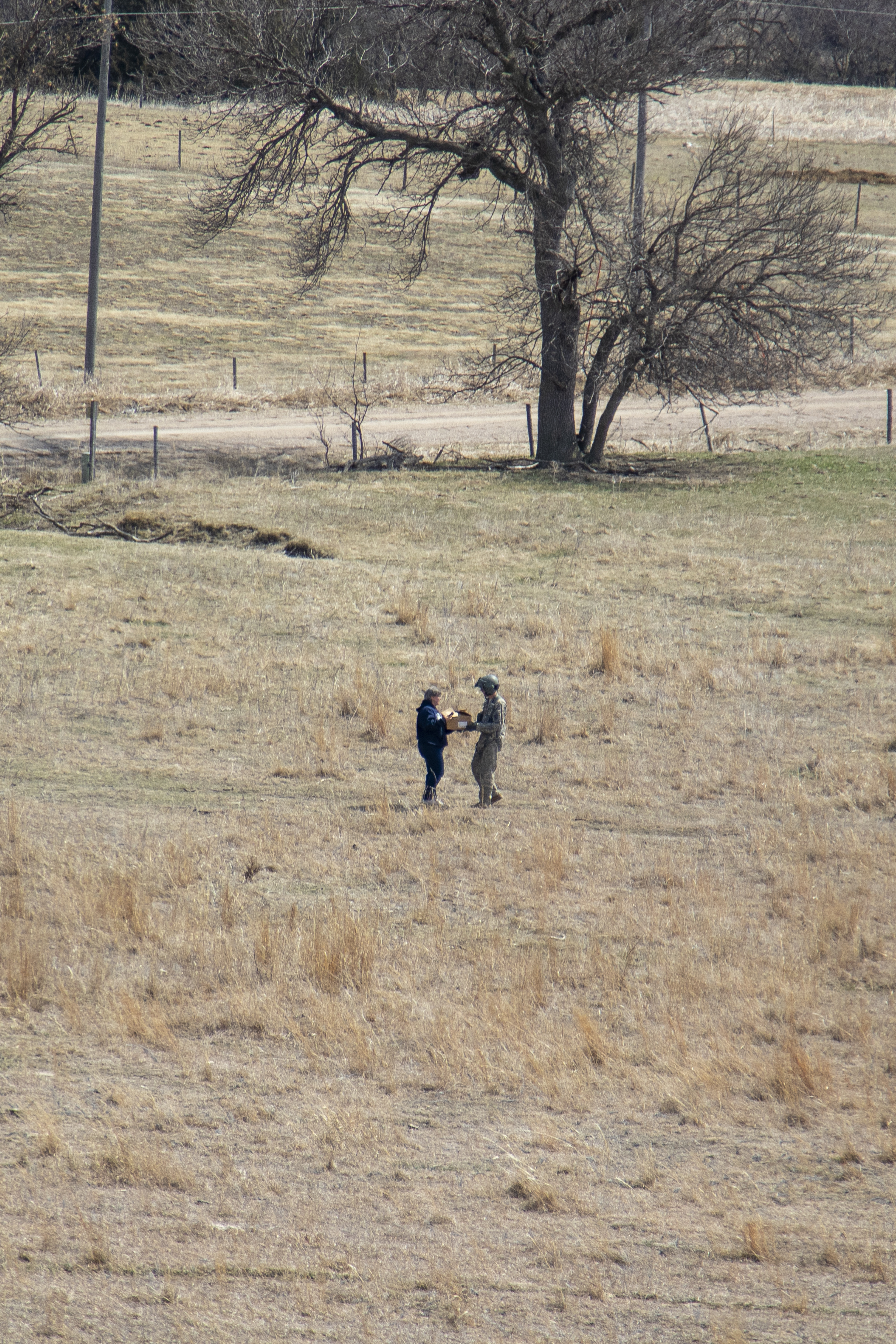
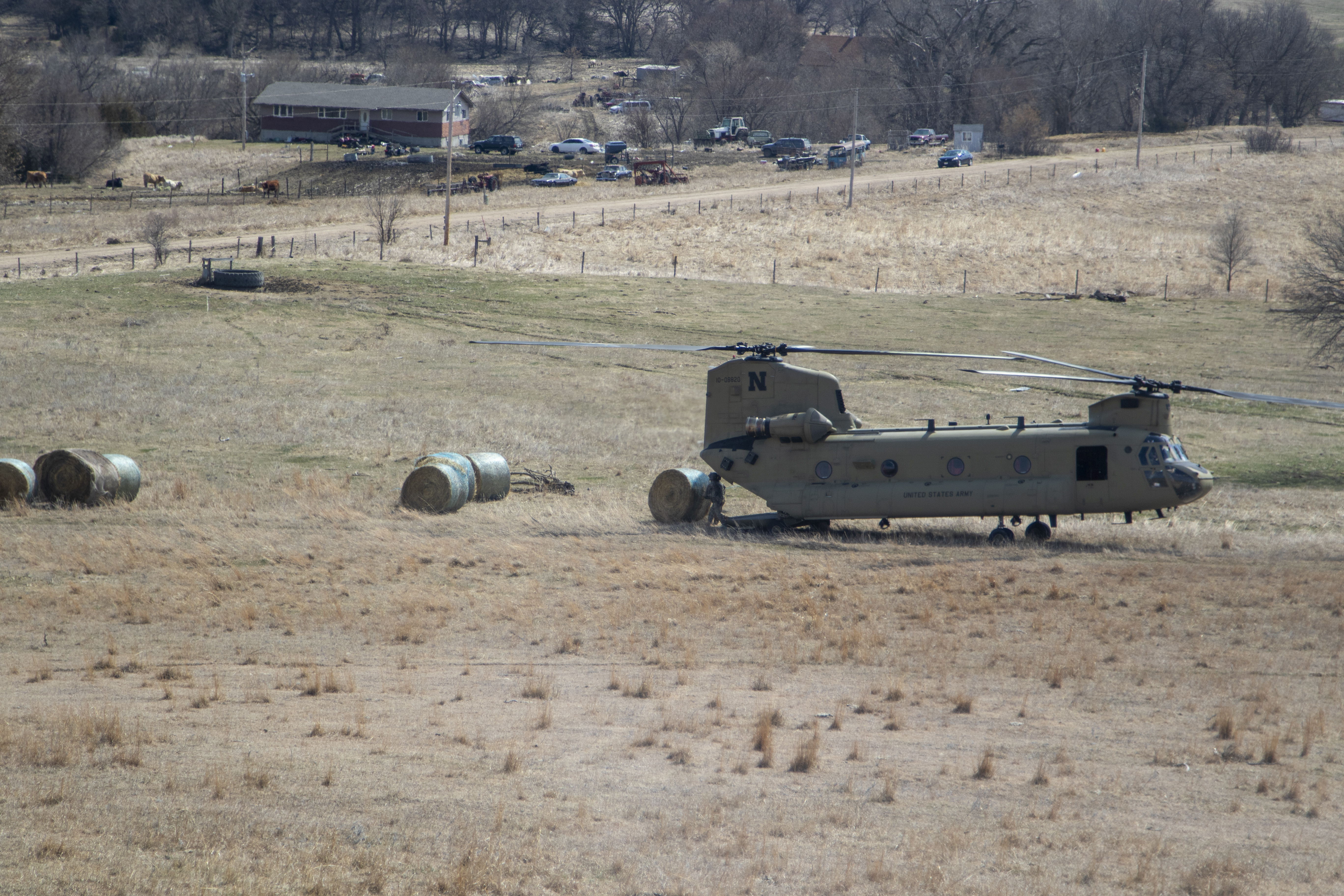
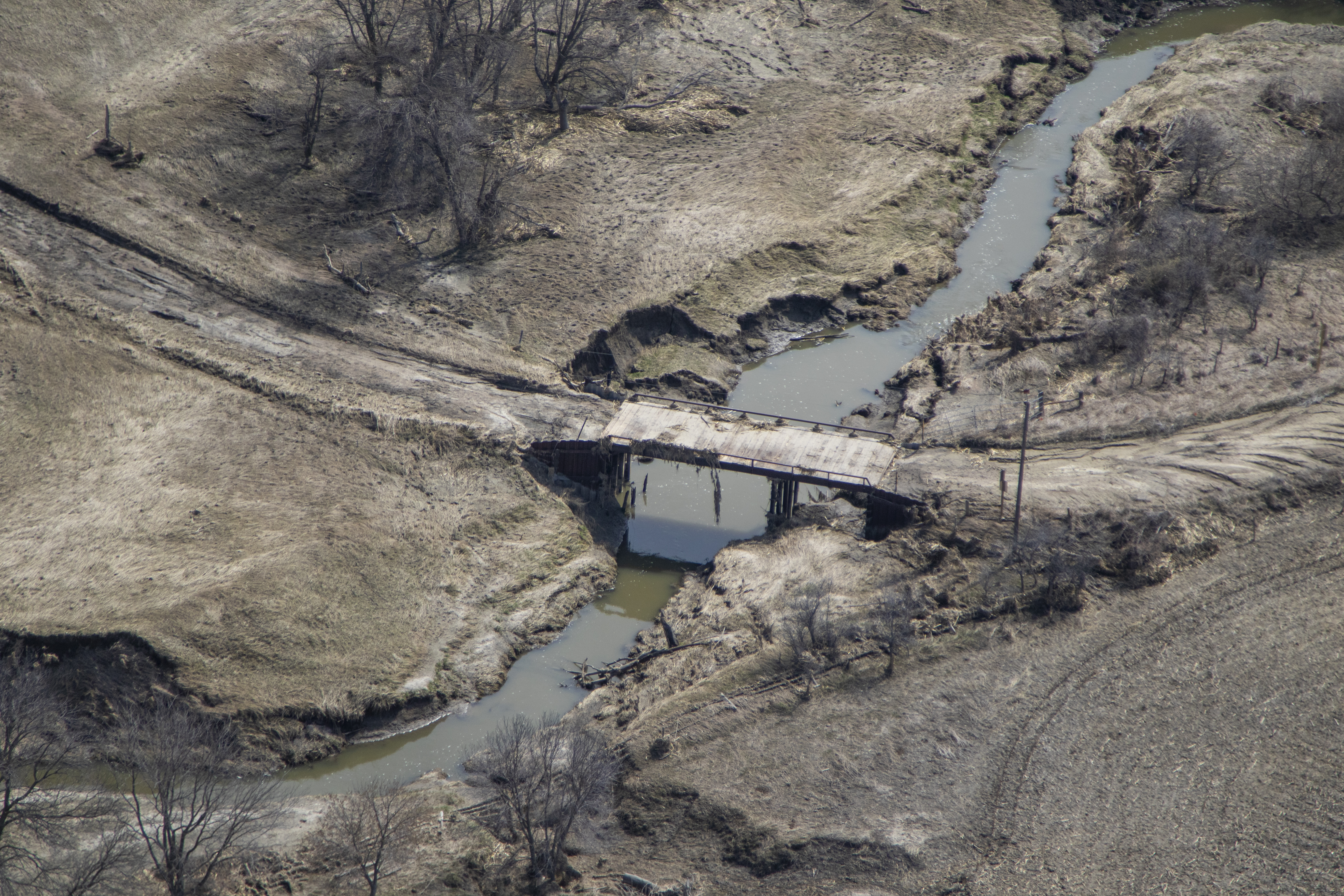
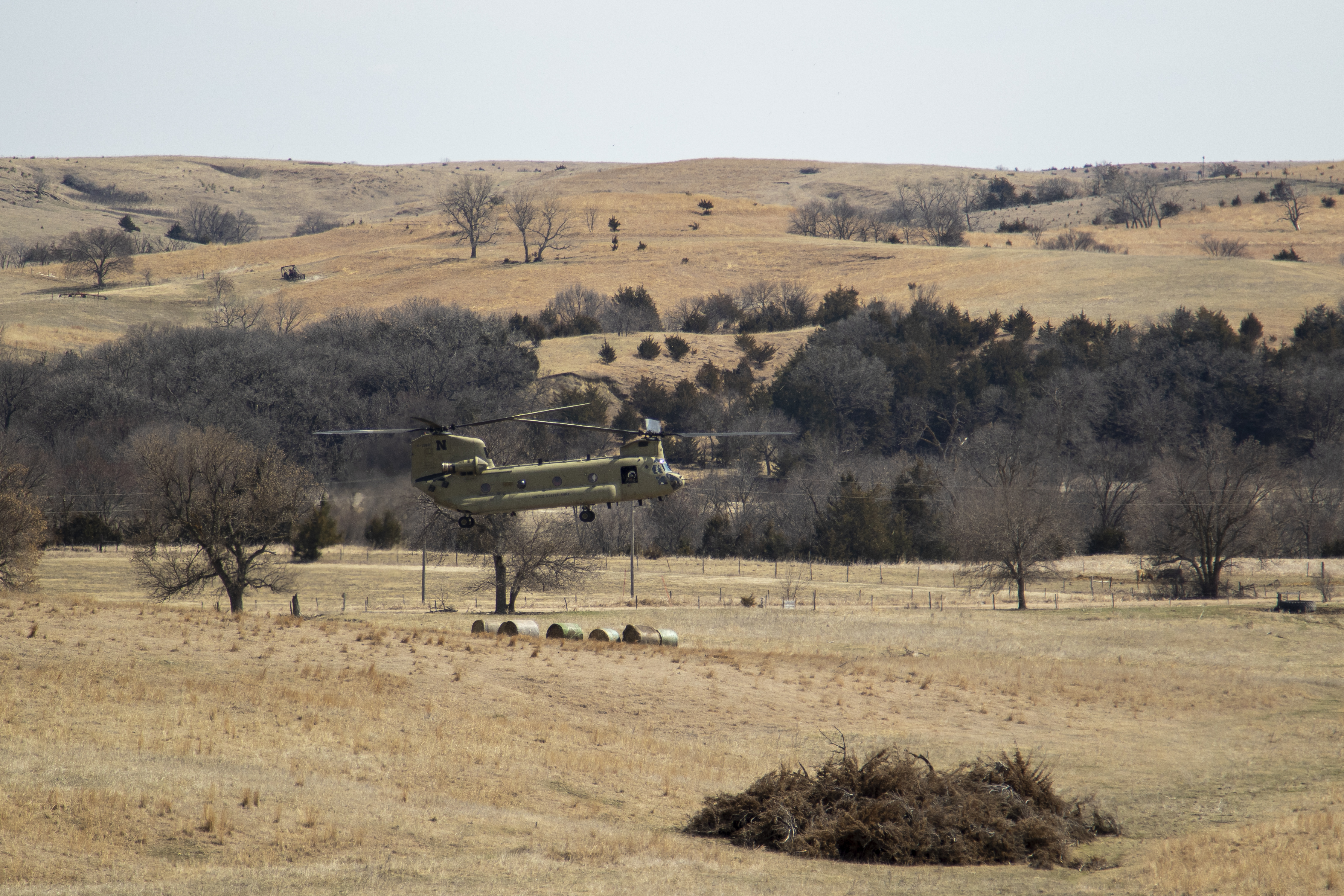
Using a Ch-47 Chinook helicopter from Company B, 2-135th General Support Aviation Battalion, Nebraska National Guard Soldiers continued to deliver hay, April 1, to farmers in need near Scotia, Nebraska. In appreciation, one of the farmers gifted a box of homemade chocolate chip cookies to the crew providing the hay drop. (Nebraska National Guard photos by Spc. Lisa Crawford)
The Nebraska National Guard would continue to conduct hay delivery operations using CH-47 Chinook helicopters through early April, with maintenance assistance by the Minnesota Army National Guard’s Company B, 2-211th General Support Aviation Battalion, who were brought in with an emergency management assistance compact. The Minnesota unit would also have the opportunity to crosstrain with the Nebraska National Guard and help conduct aerial hay drop operations March 23, 2019.
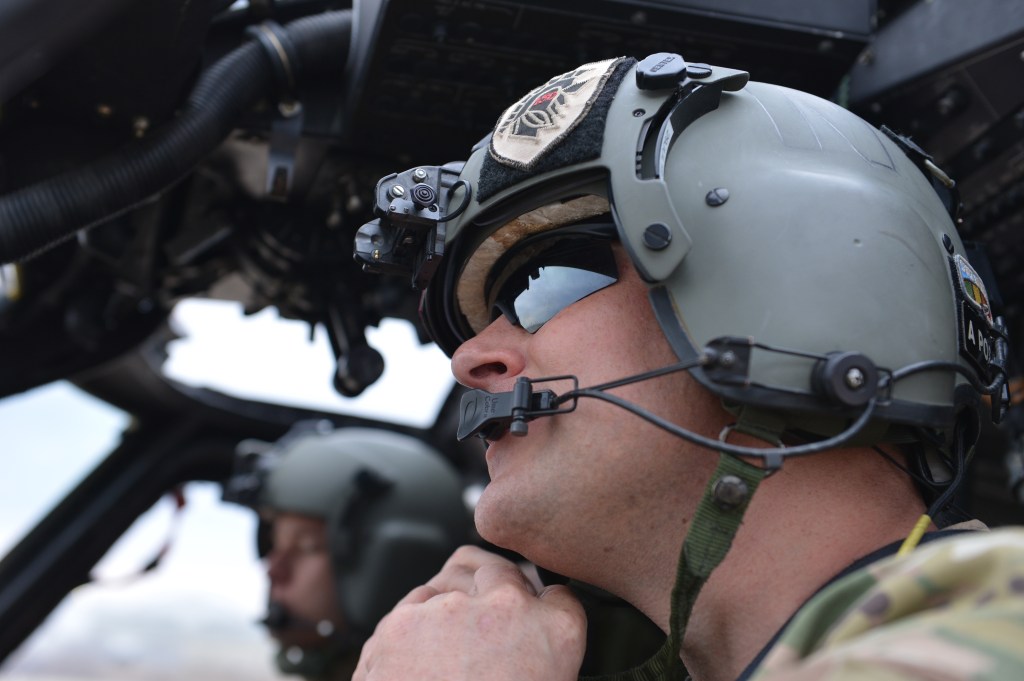
Chief Warrant Officer 3 Bill Score a UH-60 Blackhawk helicopter pilot with the 1-376th Aviation Battalion in Lincoln, Nebraska prepares engine start-up for the second Operation Hay Drop, March 23, 2019. The hay drop is a critically important mission to the farmers and ranchers that have been impacted by the flood. (National Guard photo by Senior Master Sgt. Shannon Nielsen) 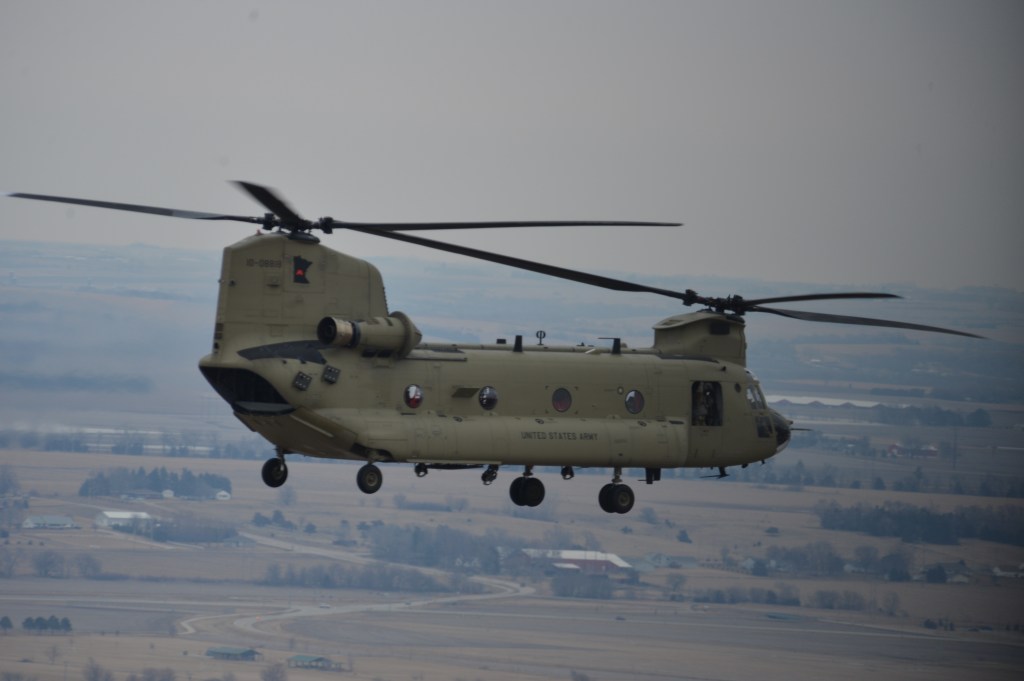
Minnesota National Guard members with the Bravo 2-221 General Support Aviation Battalion provide a CH-47 Chinook aerial support with members of the Nebraska National Guard on the second Operation Hay Drop March 23, 2019, near Columbus. The Chinook was loaded with three bales of hay that provided a total of nine round bales of hay to a farmer that is stranded from the flood. (National Guard photos by Senior Master Sgt. Shannon Nielsen) 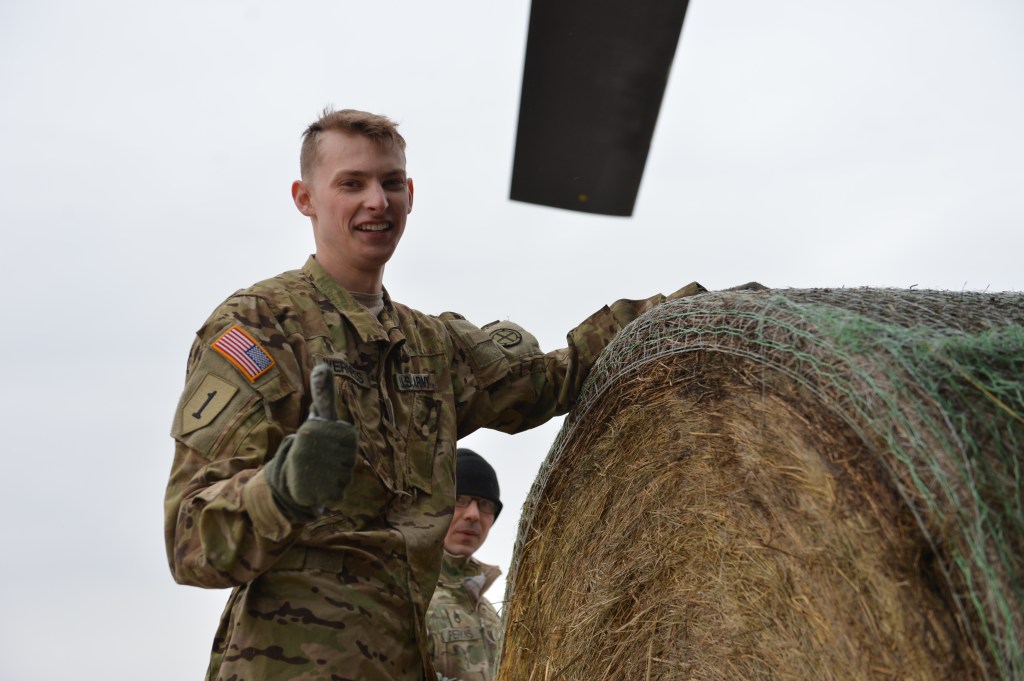
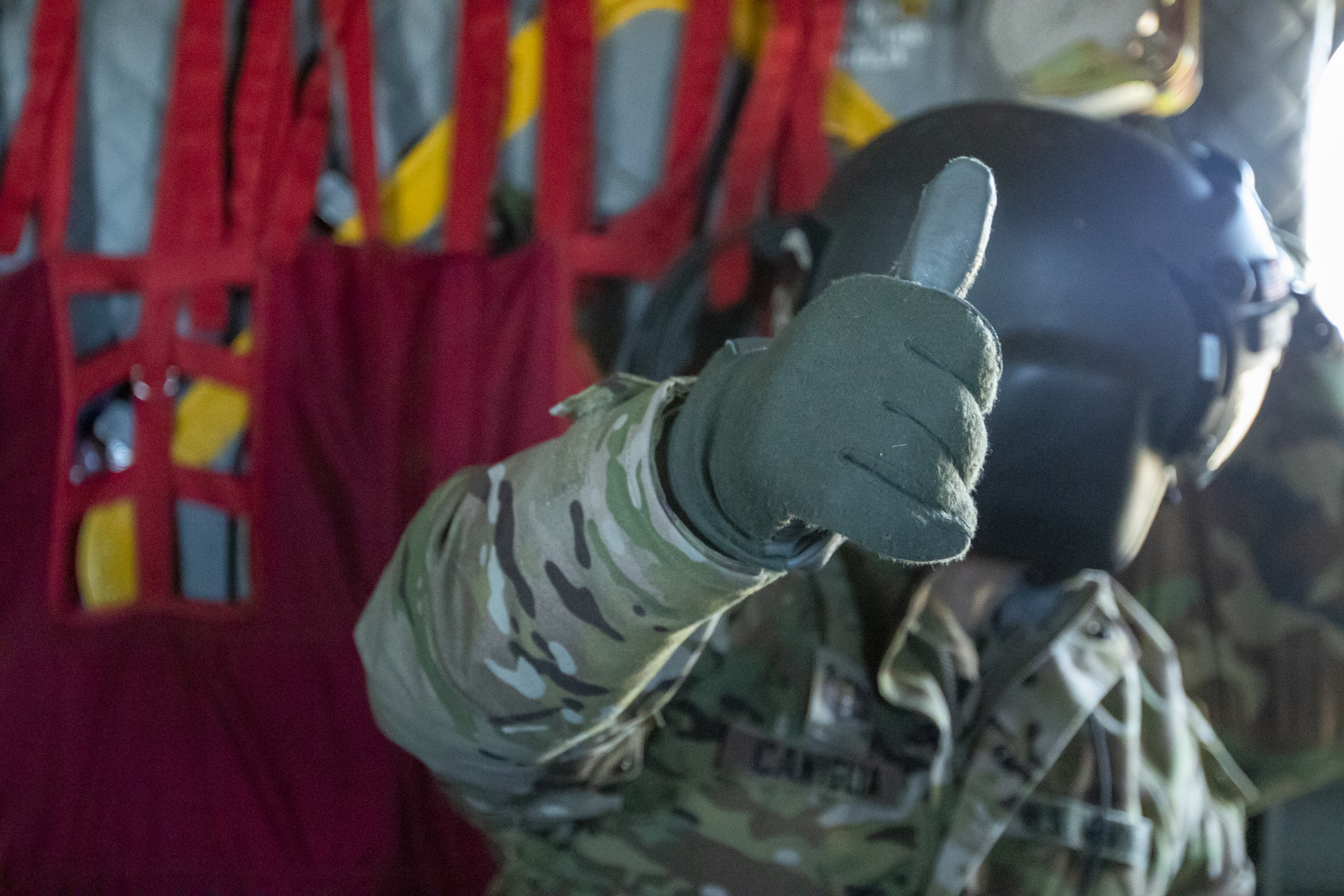
Spc. Spencer Werness with the Bravo 2-221 General Support Aviation Battalion, Minnesota National Guard gives a thumps-up in support the Operation Hay Drop from the flooding in Nebraska, March 23, 2019. The Minnesota National Guard collaborated with Nebraska National Guard in efforts to provide hay to stranded cattle across the State of Nebraska. (Nebraska National Guard photos by Senior Master Sgt. Shannon Nielsen) 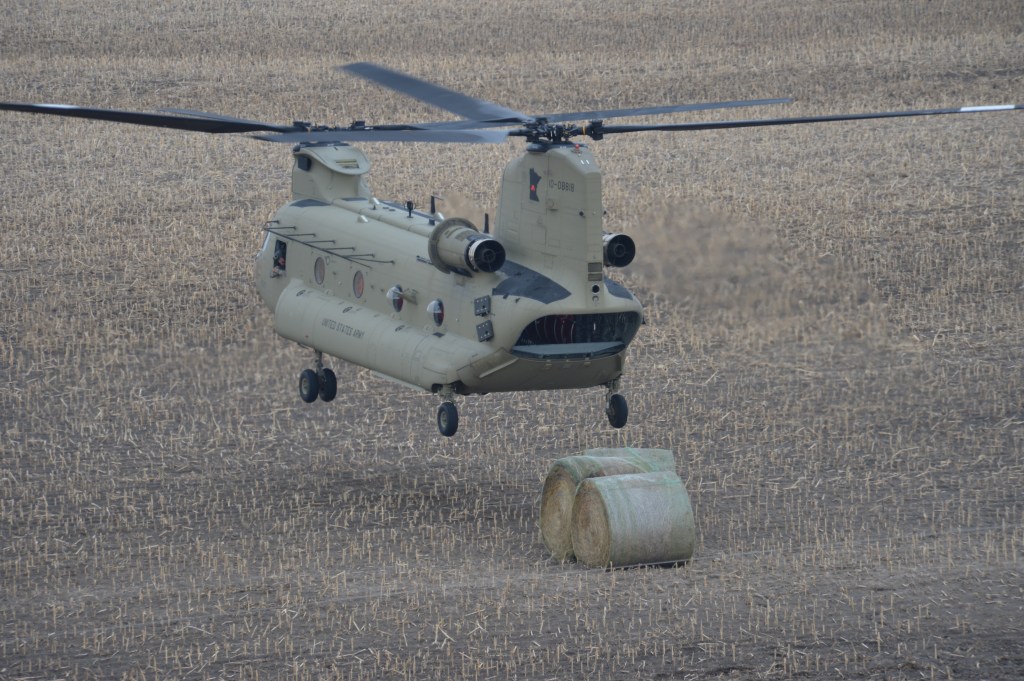
Minnesota National Guard members with the Bravo 2-221 General Support Aviation Battalion provide a CH-47 Chinook aerial support with members of the Nebraska National Guard on the second Operation Hay Drop March 23, 2019. They supported a farmer from Columbus, Nebraska who was affected by the flood and unable to reach hay to feed his cattle and horses. (National Guard photos by Senior Master Sgt. Shannon Nielsen) 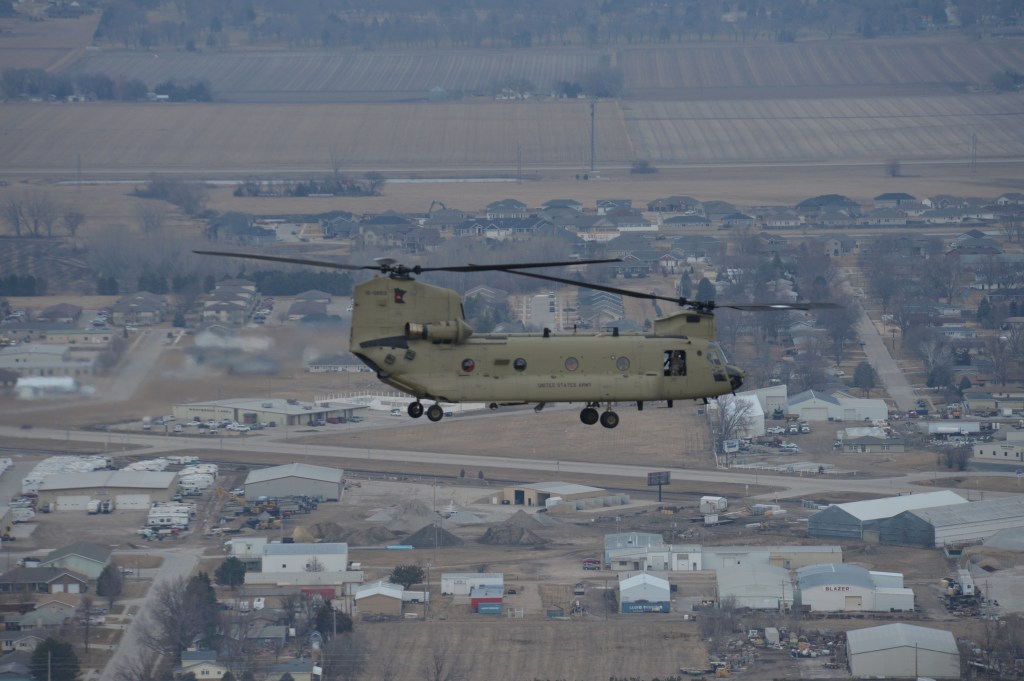
Minnesota National Guard members with the Bravo 2-221 General Support Aviation Battalion provide a CH-47 Chinook aerial support with members of the Nebraska National Guard on the second Operation Hay Drop March 23, 2019, near Columbus. The Chinook was loaded with three bales of hay that provided a total of nine round bales of hay to a farmer that is stranded from the flood. (National Guard photos by Senior Master Sgt. Shannon Nielsen) 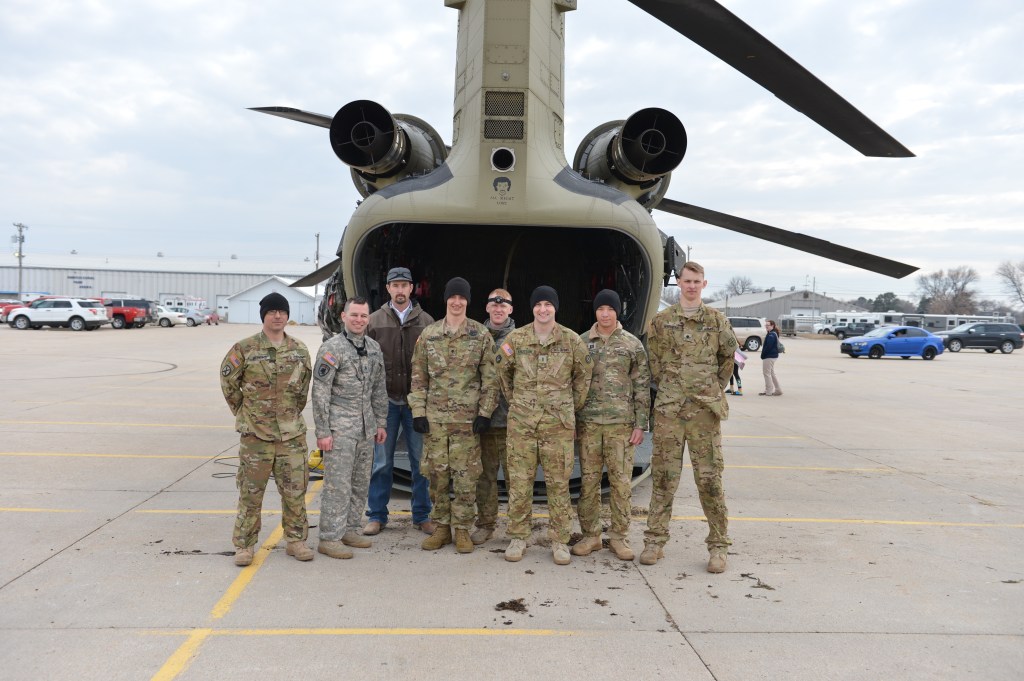
Minnesota National Guard members with the Bravo 2-221 General Support Aviation Battalion provide a CH-47 Chinook aerial support with members of the Nebraska National Guard on the second Operation Hay Drop March 23, 2019. Brian Palmer, general manager of the Platte Country Agicultrual Society who coordinated the relief efforts posed with the dream team who aided in this mission. (National Guard photos by Senior Master Sgt. Shannon Nielse) 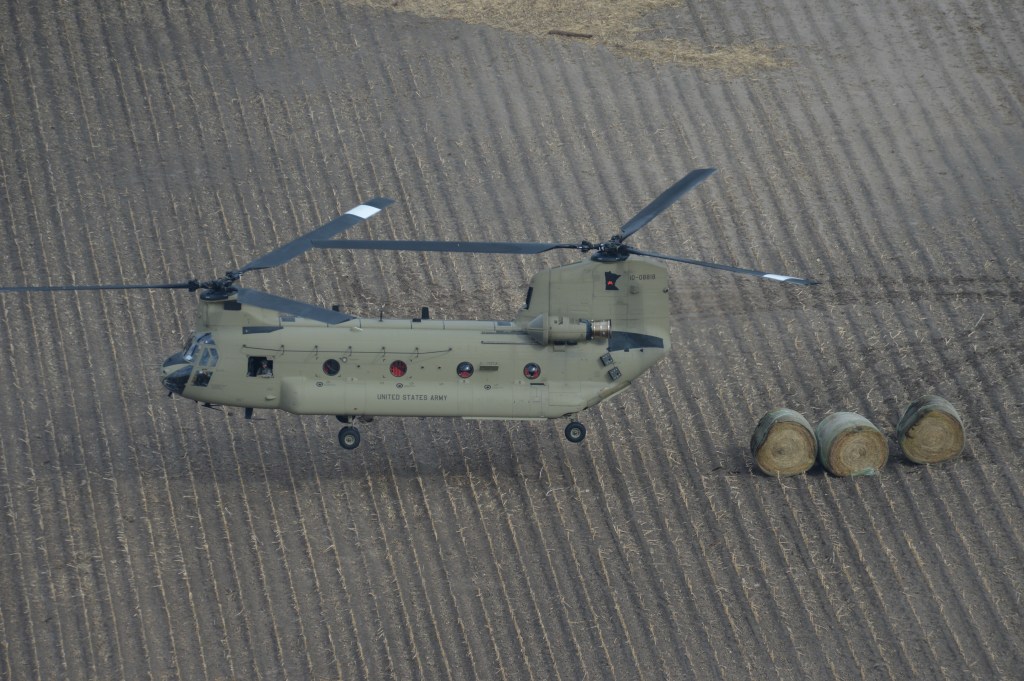
Minnesota National Guard members with the Bravo 2-221 General Support Aviation Battalion provide a CH-47 Chinook aerial support with members of the Nebraska National Guard on the second Operation Hay Drop March 23, 2019. They supported a farmer from Columbus, Nebraska who was affected by the flood and unable to reach hay to feed his cattle and horses. (National Guard photos by Senior Master Sgt. Shannon Nielsen)
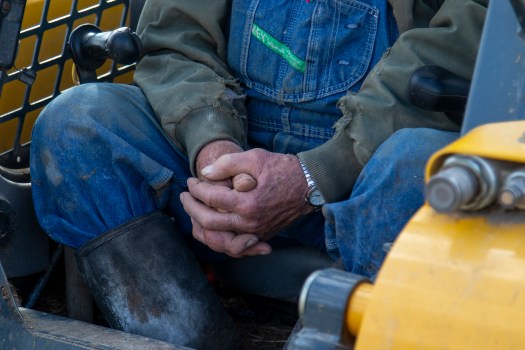
During one of the final aerial hay drops on April 1, 2019, an 81-year-old farmer near Columbus, Nebraska, patiently waited for his delivery by a Nebraska National Guard Ch-47 Chinook helicopter from Company B, 2-135th General Support Aviation Battalion, from Grand Island. The farmer here had lost cows to the winter storm, and was now running low on feed. With the roads washed out around him, he had no other way to get fresh hay to the 100-head of cattle that remained.
The Nebraska National Guard Soldiers picked up donated hay bales and delivered them to farmers unable to move feed to their livestock after historic flooding damaged infrastructure which limited heavy equipment movement. This time, the Soldiers were able to fly to the farm, land and then roll the large round hay bales out.
Using a Ch-47 Chinook helicopter from Company B, 2-135th General Support Aviation Battalion, the Nebraska National Guard Soldiers picked up donated hay bales collected at the Nebraska State Fair Grounds in Grand Island, April 1, 2019, and delivered them to farmers unable to move feed to their livestock after historic flooding damaged infrastructure and limited equipment movement. (Nebraska National Guard photo by Spc. Lisa Crawford) 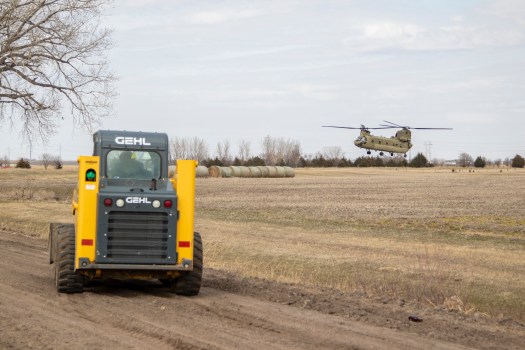
Using a Ch-47 Chinook helicopter from Company B, 2-135th General Support Aviation Battalion, the Nebraska National Guard Soldiers picked up donated hay bales collected at the Nebraska State Fair Grounds in Grand Island, April 1, 2019, and delivered them to farmers unable to move feed to their livestock after historic flooding damaged infrastructure and limited equipment movement. (Nebraska National Guard photo by Spc. Lisa Crawford) 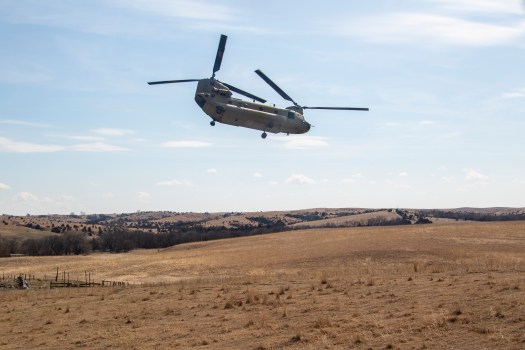
Using a Ch-47 Chinook helicopter from Company B, 2-135th General Support Aviation Battalion, the Nebraska National Guard Soldiers picked up donated hay bales collected at the Nebraska State Fair Grounds in Grand Island, April 1, 2019, and delivered them to farmers unable to move feed to their livestock after historic flooding damaged infrastructure and limited equipment movement. (Nebraska National Guard photo by Spc. Lisa Crawford) 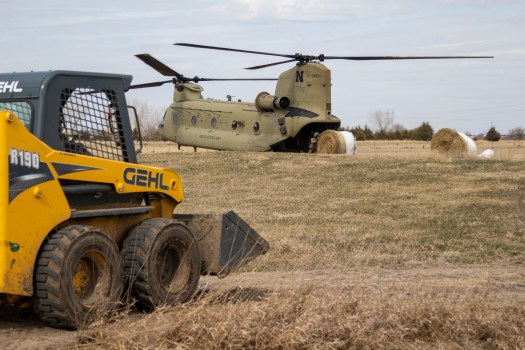
Using a Ch-47 Chinook helicopter from Company B, 2-135th General Support Aviation Battalion, the Nebraska National Guard Soldiers picked up donated hay bales collected at the Nebraska State Fair Grounds in Grand Island, April 1, 2019, and delivered them to farmers unable to move feed to their livestock after historic flooding damaged infrastructure and limited equipment movement. (Nebraska National Guard photo by Spc. Lisa Crawford) 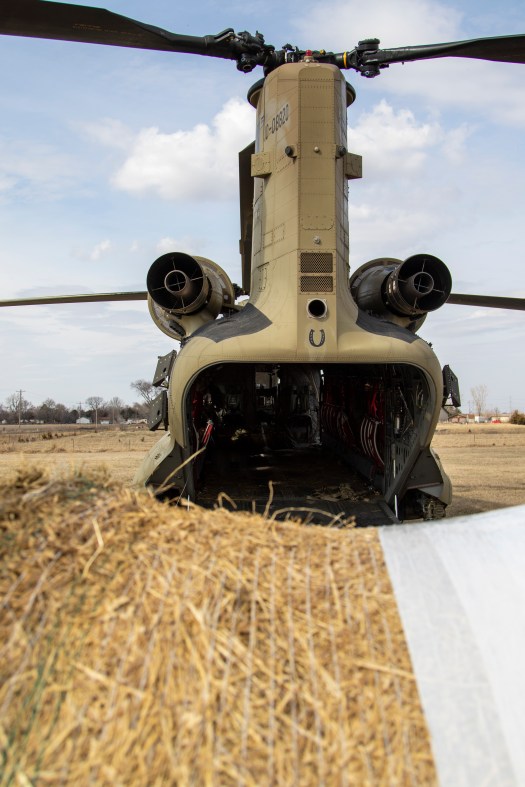
Using a Ch-47 Chinook helicopter from Company B, 2-135th General Support Aviation Battalion, the Nebraska National Guard Soldiers picked up donated hay bales collected at the Nebraska State Fair Grounds in Grand Island, April 1, 2019, and delivered them to farmers unable to move feed to their livestock after historic flooding damaged infrastructure and limited equipment movement. (Nebraska National Guard photo by Spc. Lisa Crawford) 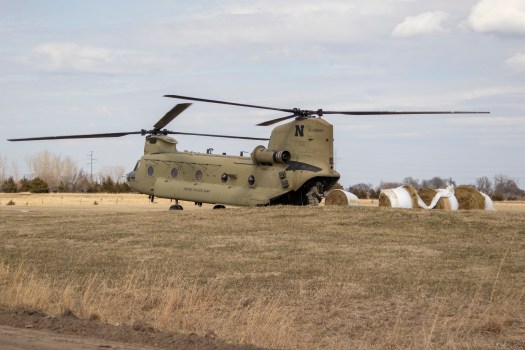
Using a Ch-47 Chinook helicopter from Company B, 2-135th General Support Aviation Battalion, the Nebraska National Guard Soldiers picked up donated hay bales collected at the Nebraska State Fair Grounds in Grand Island, April 1, 2019, and delivered them to farmers unable to move feed to their livestock after historic flooding damaged infrastructure and limited equipment movement. (Nebraska National Guard photo by Spc. Lisa Crawford) 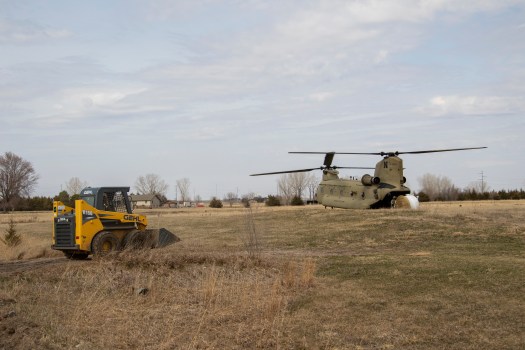
Using a Ch-47 Chinook helicopter from Company B, 2-135th General Support Aviation Battalion, the Nebraska National Guard Soldiers picked up donated hay bales collected at the Nebraska State Fair Grounds in Grand Island, April 1, 2019, and delivered them to farmers unable to move feed to their livestock after historic flooding damaged infrastructure and limited equipment movement. (Nebraska National Guard photo by Spc. Lisa Crawford) 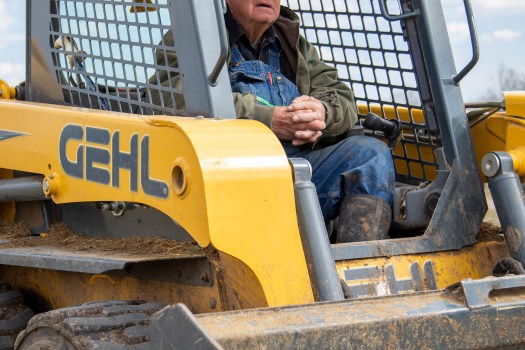
Using a Ch-47 Chinook helicopter from Company B, 2-135th General Support Aviation Battalion, the Nebraska National Guard Soldiers picked up donated hay bales collected at the Nebraska State Fair Grounds in Grand Island, April 1, 2019, and delivered them to farmers unable to move feed to their livestock after historic flooding damaged infrastructure and limited equipment movement. (Nebraska National Guard photo by Spc. Lisa Crawford) 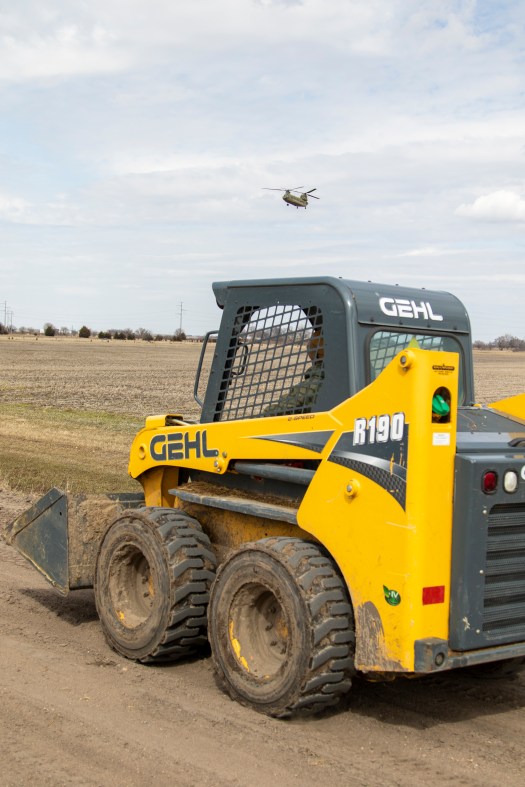
Using a Ch-47 Chinook helicopter from Company B, 2-135th General Support Aviation Battalion, the Nebraska National Guard Soldiers picked up donated hay bales collected at the Nebraska State Fair Grounds in Grand Island, April 1, 2019, and delivered them to farmers unable to move feed to their livestock after historic flooding damaged infrastructure and limited equipment movement. (Nebraska National Guard photo by Spc. Lisa Crawford) 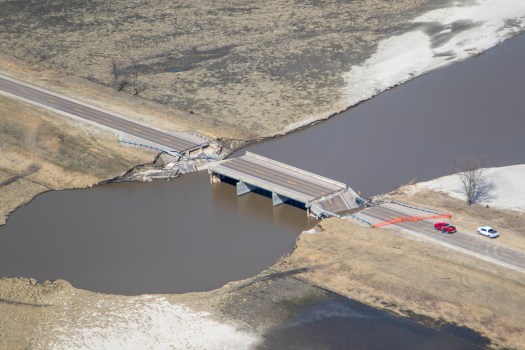
Using a Ch-47 Chinook helicopter from Company B, 2-135th General Support Aviation Battalion, the Nebraska National Guard Soldiers picked up donated hay bales collected at the Nebraska State Fair Grounds in Grand Island, April 1, 2019, and delivered them to farmers unable to move feed to their livestock after historic flooding damaged infrastructure and limited equipment movement. (Nebraska National Guard photo by Spc. Lisa Crawford) 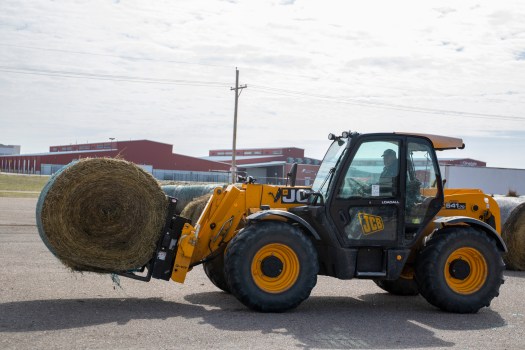
Using a Ch-47 Chinook helicopter from Company B, 2-135th General Support Aviation Battalion, the Nebraska National Guard Soldiers picked up donated hay bales collected at the Nebraska State Fair Grounds in Grand Island, April 1, 2019, and delivered them to farmers unable to move feed to their livestock after historic flooding damaged infrastructure and limited equipment movement. (Nebraska National Guard photo by Spc. Lisa Crawford) 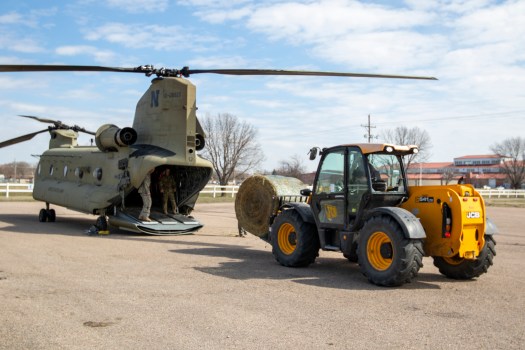
Using a Ch-47 Chinook helicopter from Company B, 2-135th General Support Aviation Battalion, the Nebraska National Guard Soldiers picked up donated hay bales collected at the Nebraska State Fair Grounds in Grand Island, April 1, 2019, and delivered them to farmers unable to move feed to their livestock after historic flooding damaged infrastructure and limited equipment movement. (Nebraska National Guard photo by Spc. Lisa Crawford) 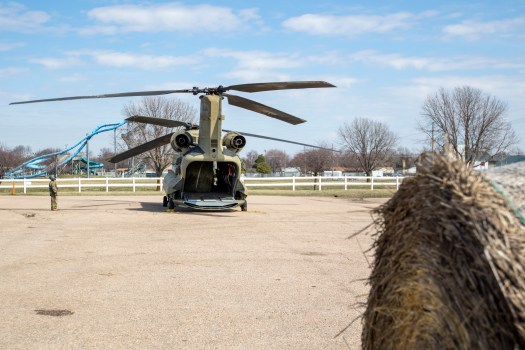
Using a Ch-47 Chinook helicopter from Company B, 2-135th General Support Aviation Battalion, the Nebraska National Guard Soldiers picked up donated hay bales collected at the Nebraska State Fair Grounds in Grand Island, April 1, 2019, and delivered them to farmers unable to move feed to their livestock after historic flooding damaged infrastructure and limited equipment movement. (Nebraska National Guard photo by Spc. Lisa Crawford) 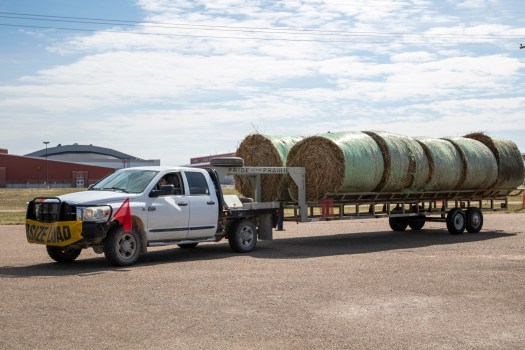
Using a Ch-47 Chinook helicopter from Company B, 2-135th General Support Aviation Battalion, the Nebraska National Guard Soldiers picked up donated hay bales collected at the Nebraska State Fair Grounds in Grand Island, April 1, 2019, and delivered them to farmers unable to move feed to their livestock after historic flooding damaged infrastructure and limited equipment movement. (Nebraska National Guard photo by Spc. Lisa Crawford) 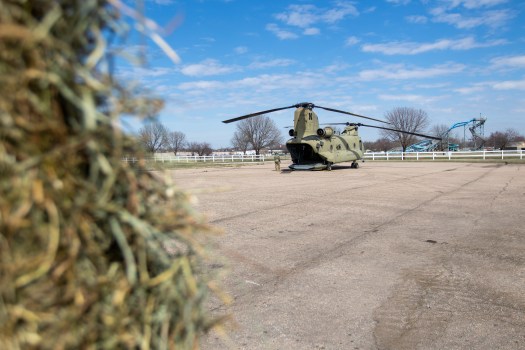
Using a Ch-47 Chinook helicopter from Company B, 2-135th General Support Aviation Battalion, the Nebraska National Guard Soldiers picked up donated hay bales collected at the Nebraska State Fair Grounds in Grand Island, April 1, 2019, and delivered them to farmers unable to move feed to their livestock after historic flooding damaged infrastructure and limited equipment movement. (Nebraska National Guard photo by Spc. Lisa Crawford) 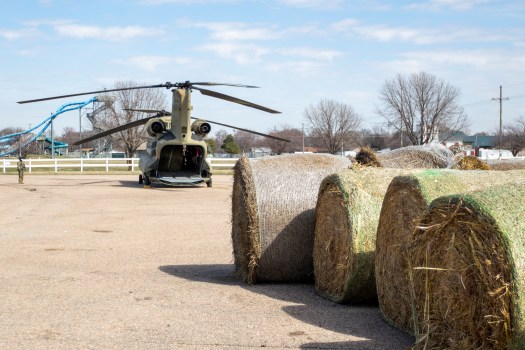
Using a Ch-47 Chinook helicopter from Company B, 2-135th General Support Aviation Battalion, the Nebraska National Guard Soldiers picked up donated hay bales collected at the Nebraska State Fair Grounds in Grand Island, April 1, 2019, and delivered them to farmers unable to move feed to their livestock after historic flooding damaged infrastructure and limited equipment movement. (Nebraska National Guard photo by Spc. Lisa Crawford) 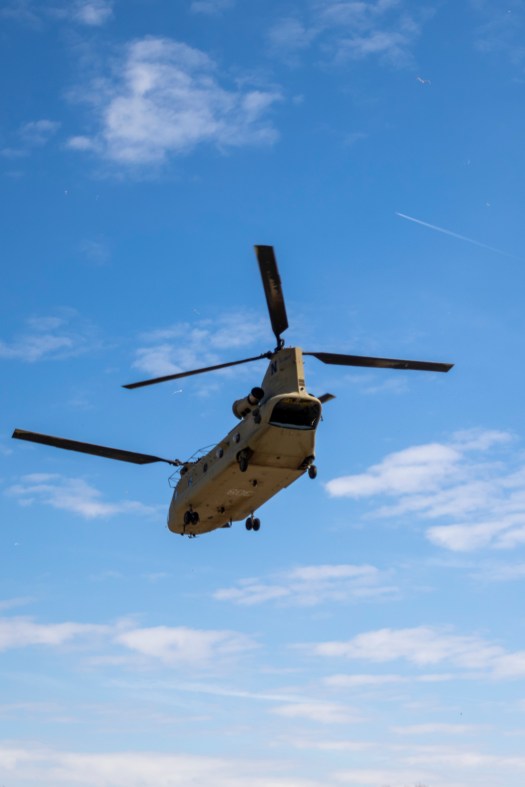
Using a Ch-47 Chinook helicopter from Company B, 2-135th General Support Aviation Battalion, the Nebraska National Guard Soldiers picked up donated hay bales collected at the Nebraska State Fair Grounds in Grand Island, April 1, 2019, and delivered them to farmers unable to move feed to their livestock after historic flooding damaged infrastructure and limited equipment movement. (Nebraska National Guard photo by Spc. Lisa Crawford) 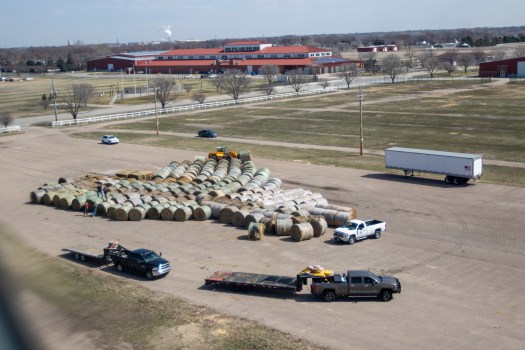
Using a Ch-47 Chinook helicopter from Company B, 2-135th General Support Aviation Battalion, the Nebraska National Guard Soldiers picked up donated hay bales collected at the Nebraska State Fair Grounds in Grand Island, April 1, 2019, and delivered them to farmers unable to move feed to their livestock after historic flooding damaged infrastructure and limited equipment movement. (Nebraska National Guard photo by Spc. Lisa Crawford) 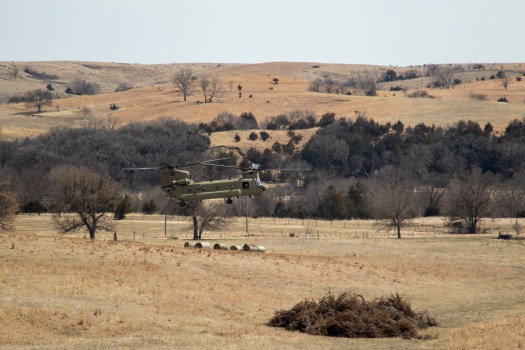
Using a Ch-47 Chinook helicopter from Company B, 2-135th General Support Aviation Battalion, the Nebraska National Guard Soldiers picked up donated hay bales collected at the Nebraska State Fair Grounds in Grand Island, April 1, 2019, and delivered them to farmers unable to move feed to their livestock after historic flooding damaged infrastructure and limited equipment movement. (Nebraska National Guard photo by Spc. Lisa Crawford)
Hay Drop (Ground)
The very wet weather system, catastrophic levee and dam failures, and disastrous high-water levels left many scrambling for safety and shelter. Such was the case for James Palmer, a Nebraska farmer whose Winslow home and farm were nearly destroyed March 14.
“It pretty much wiped everything out,” Palmer said. “The only thing it didn’t [completely] take was my house, my car and my truck.”
Icy flood waters and general river debris created terrifying circumstances that were only compounded by the speed at which the river rose. Palmer said the flood wasn’t there when he went to bed at 10:30 p.m., but when the dog woke him up four hours later, water was already two feet over the lane.
“It killed half my livestock; it took all my feed; it took all my fences; it gave me a lot of debris and trash that I don’t really need.”
Born three miles from where his flood-ravaged farm is now, Palmer has been farming this area of Nebraska for 20 years. It’s what he does, and with the help of the Nebraska Army National Guard, which delivered much-needed hay by truck for his remaining livestock on March 25, and other private and government organizations, it’s what he’ll continue to do.
“A farm service agency gave me the number to the Department of Agriculture and the Department of Agriculture probably contacted [the Nebraska National Guard] for assistance—it was very easy,” Palmer said. “The thing of it is, if someone needs help, all they have to do is ask.”
Residents in and around the town of Winslow suffered tremendous loss. Palmer estimated his initial losses to be in the tens of thousands of dollars. Palmer, who nearly lost his farm once before in 2017 after a tornado came through the area, said he was grateful for all the help.
“I’ve had more help than what I ever expected,” Palmer said. “This time here, you know what, people came together—that’s what this country’s all about.”
In total, the Nebraska National Guard would deliver 80 square hay bales by ground vehicles to help feed livestock in need.

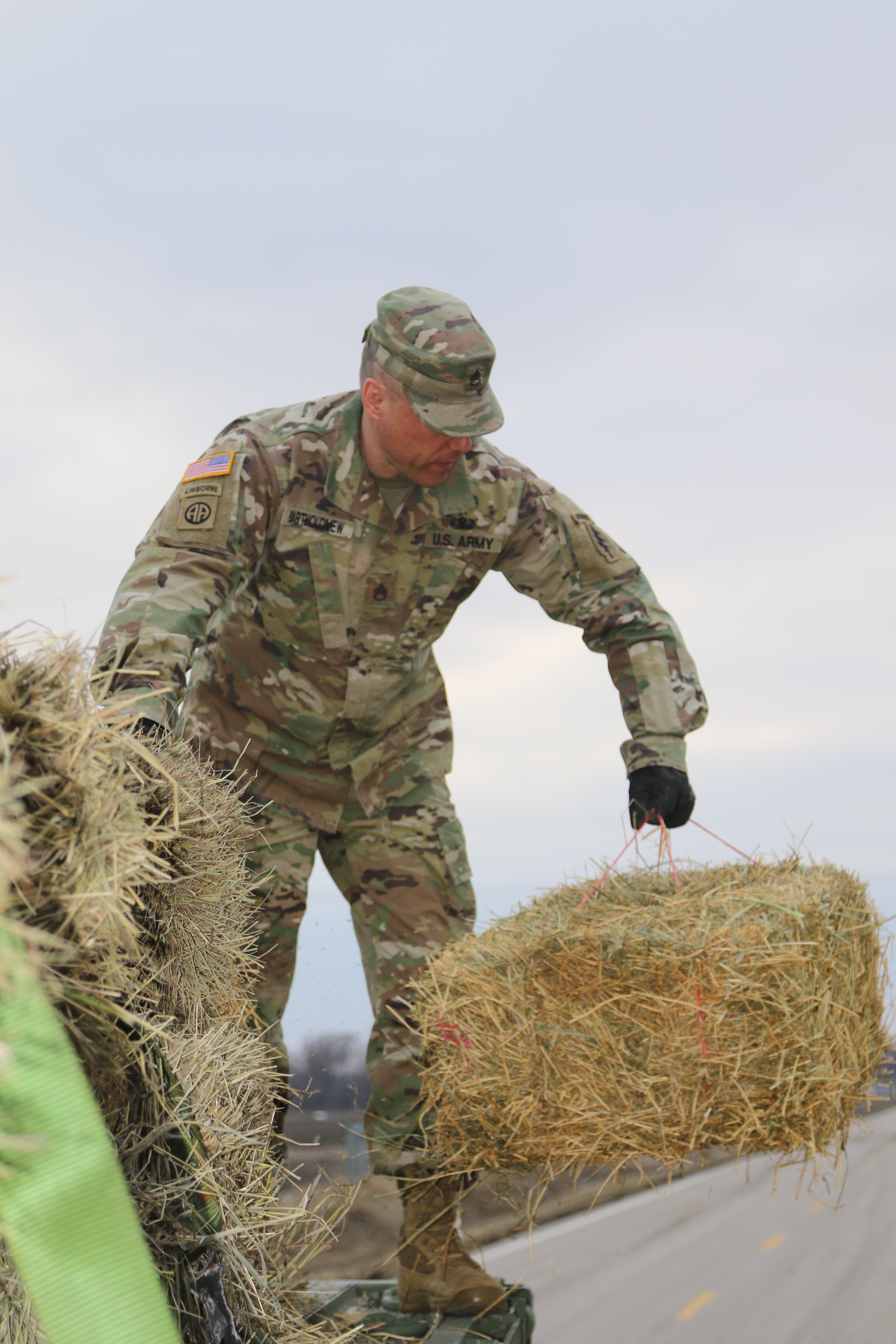
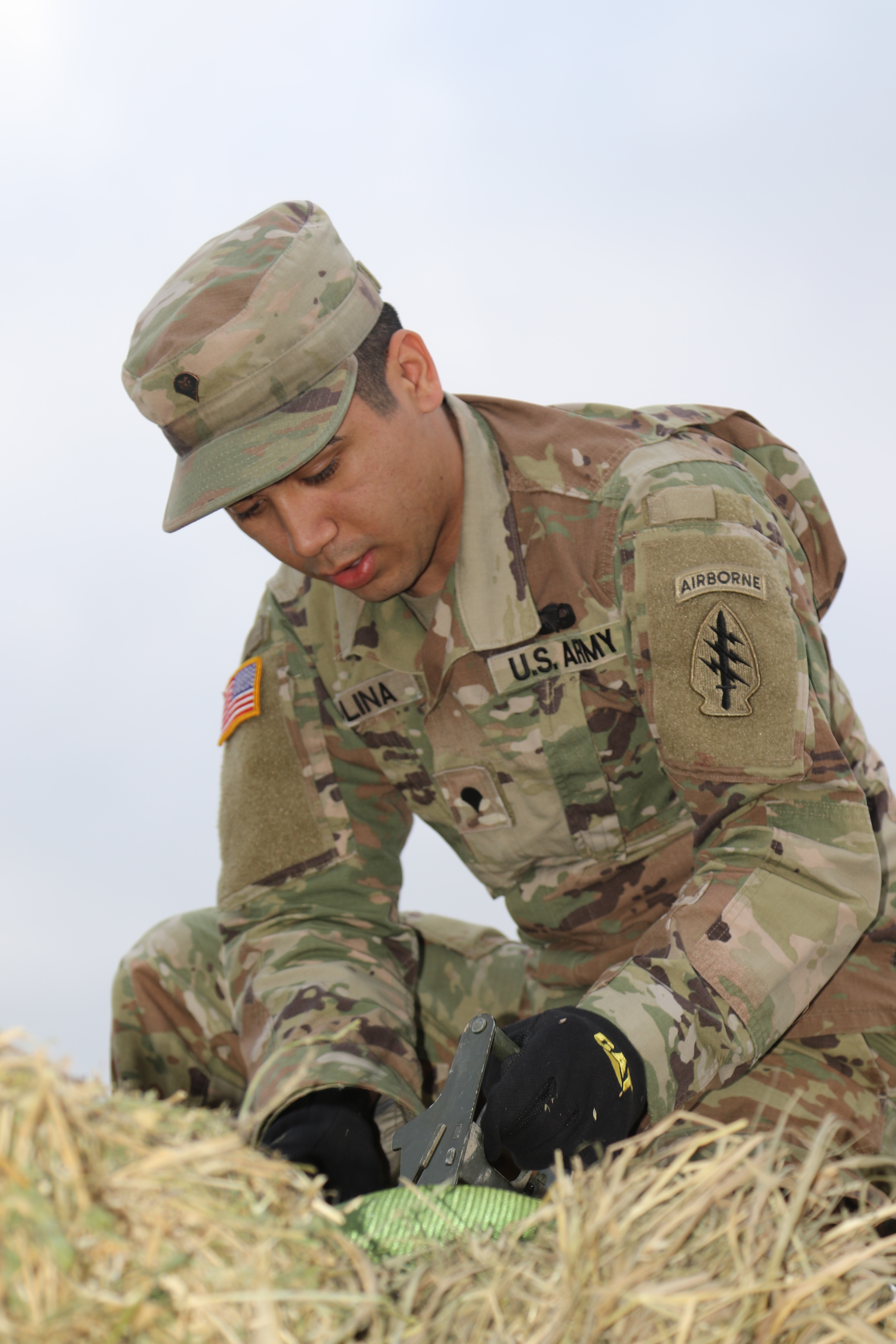
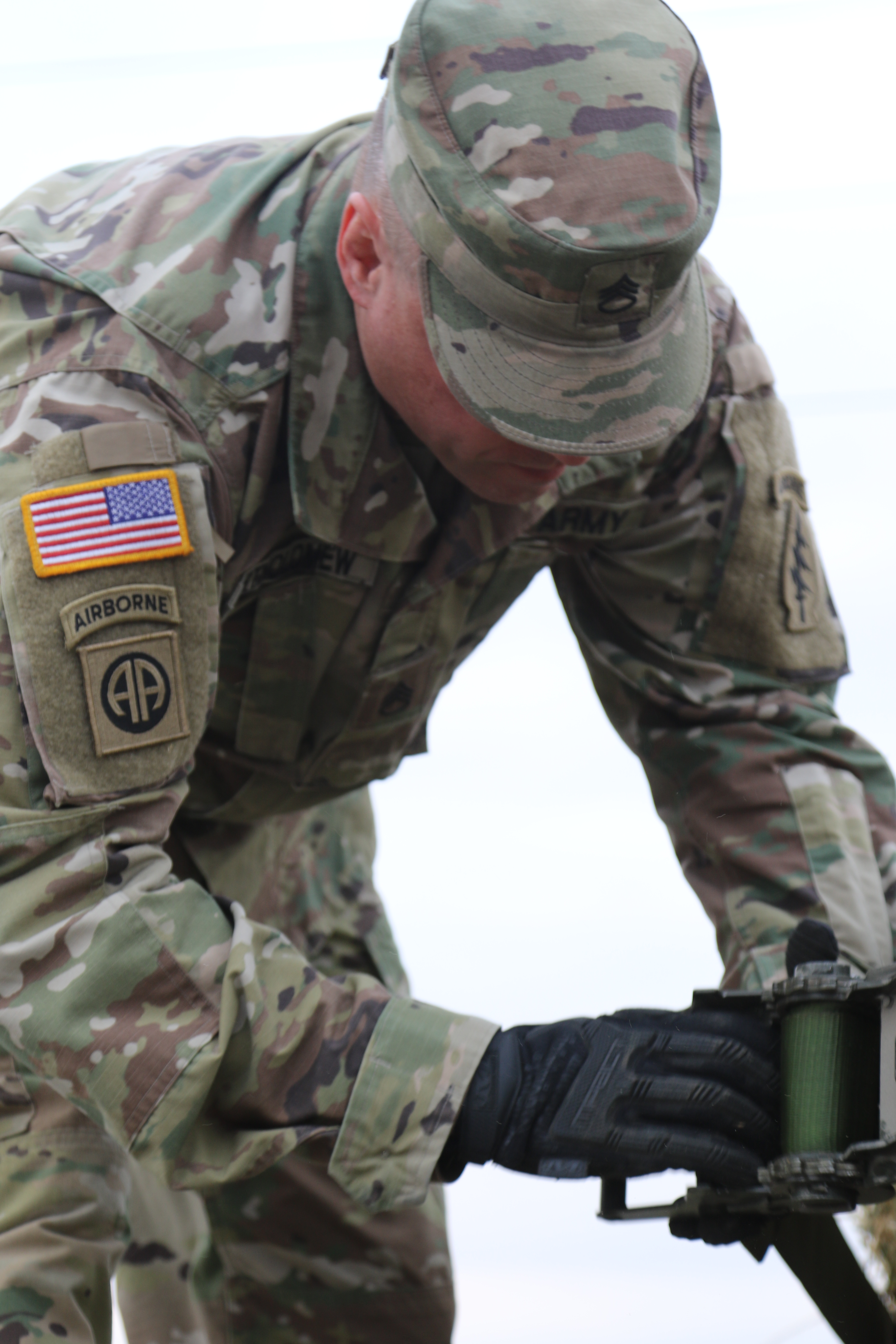
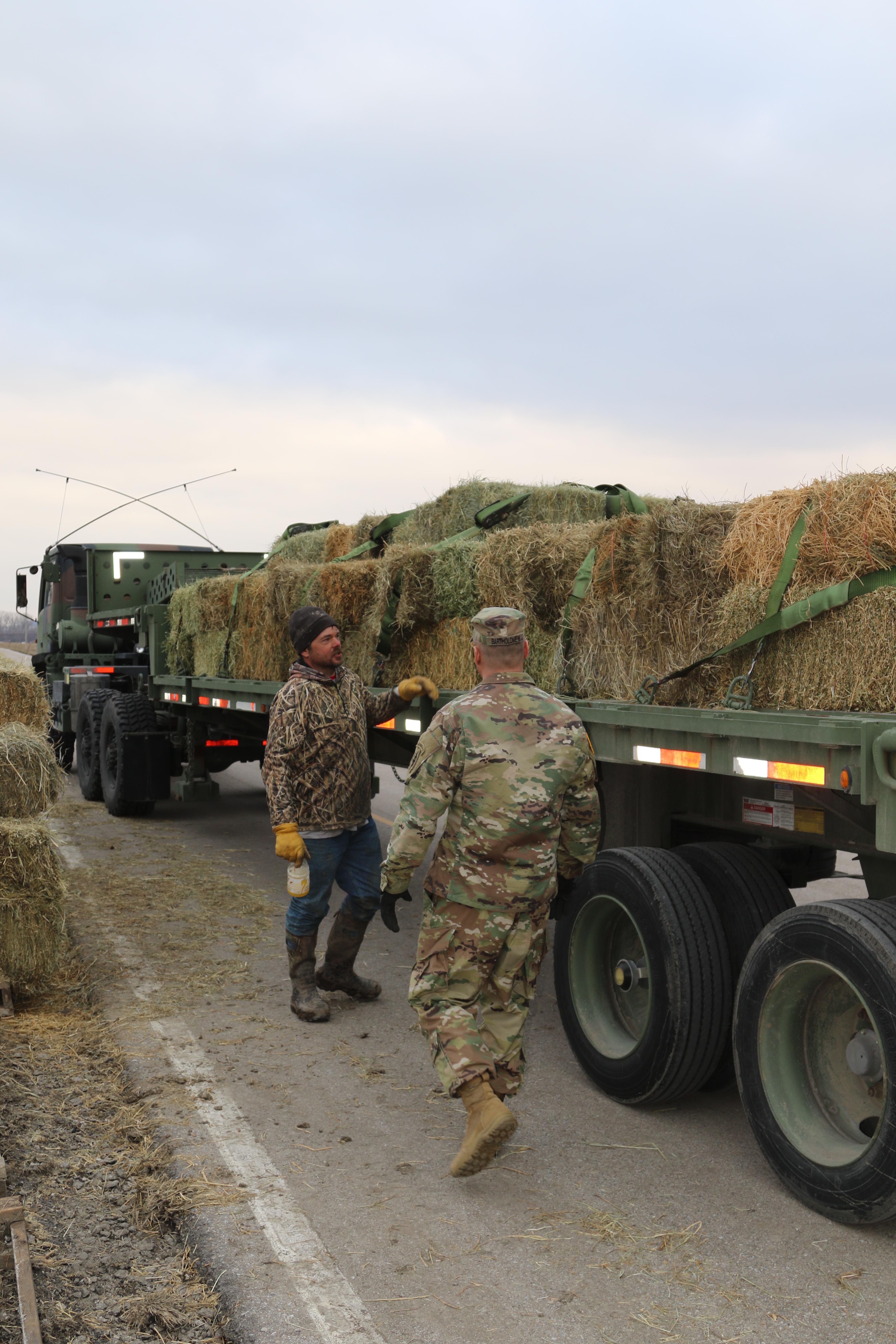
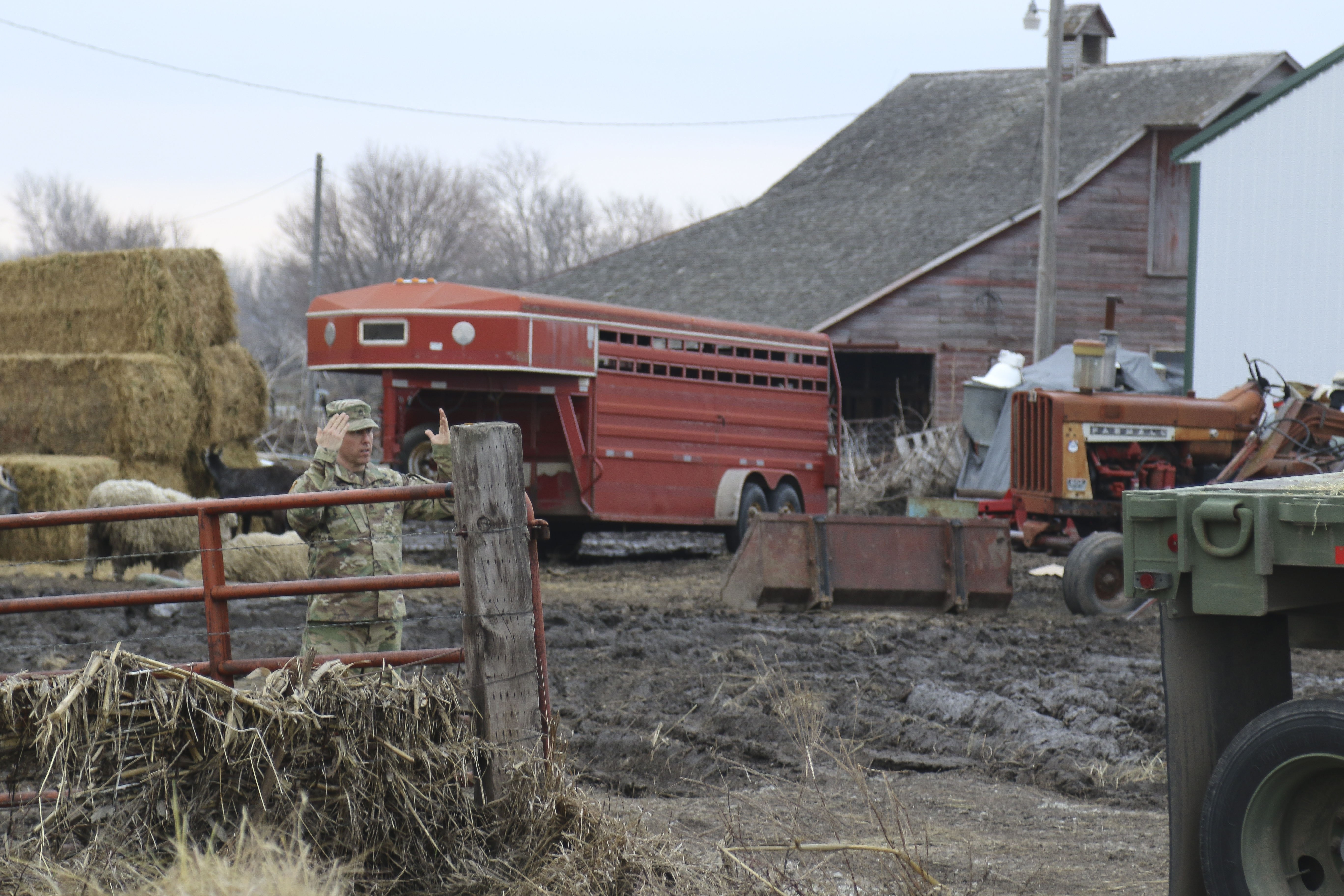
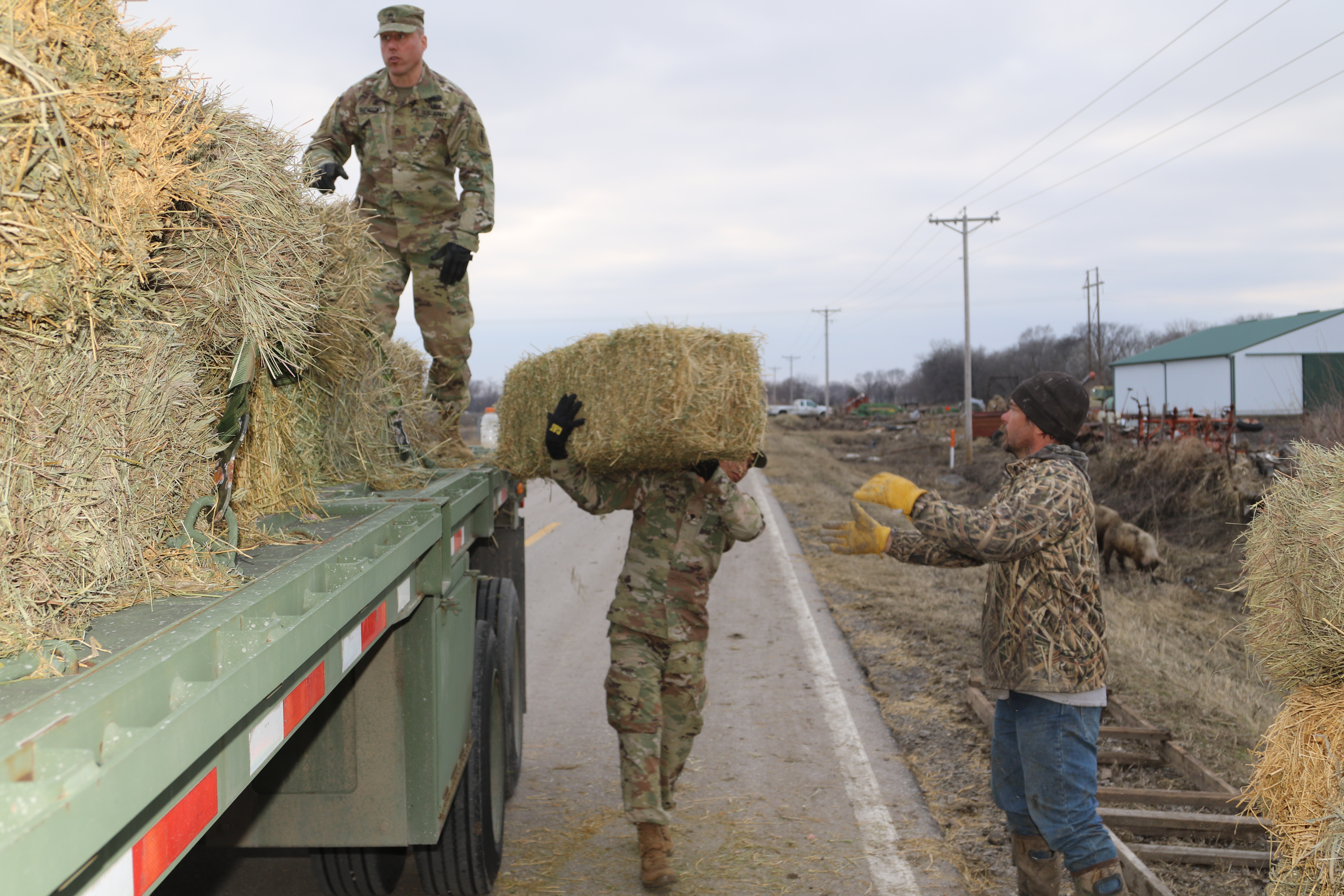

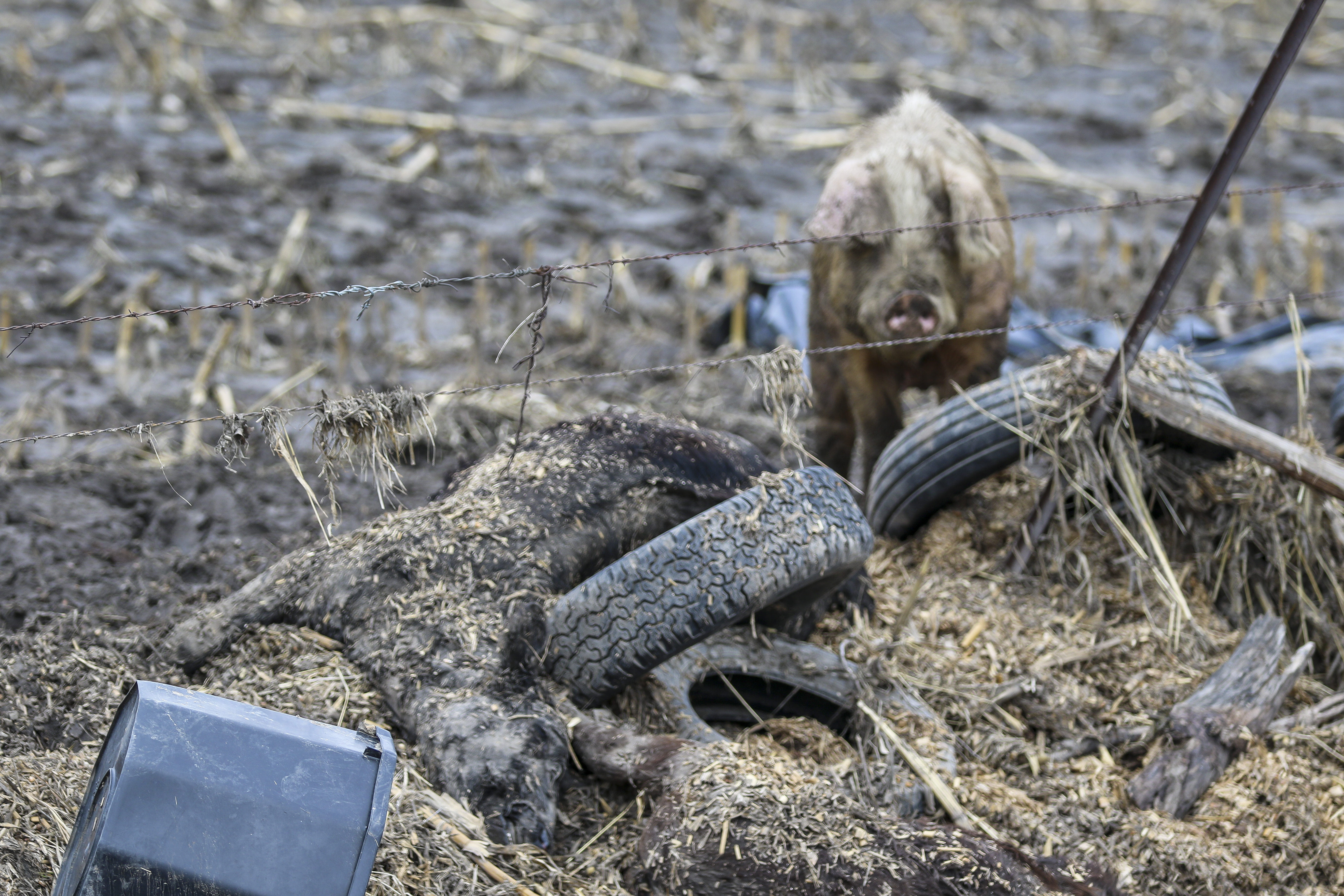
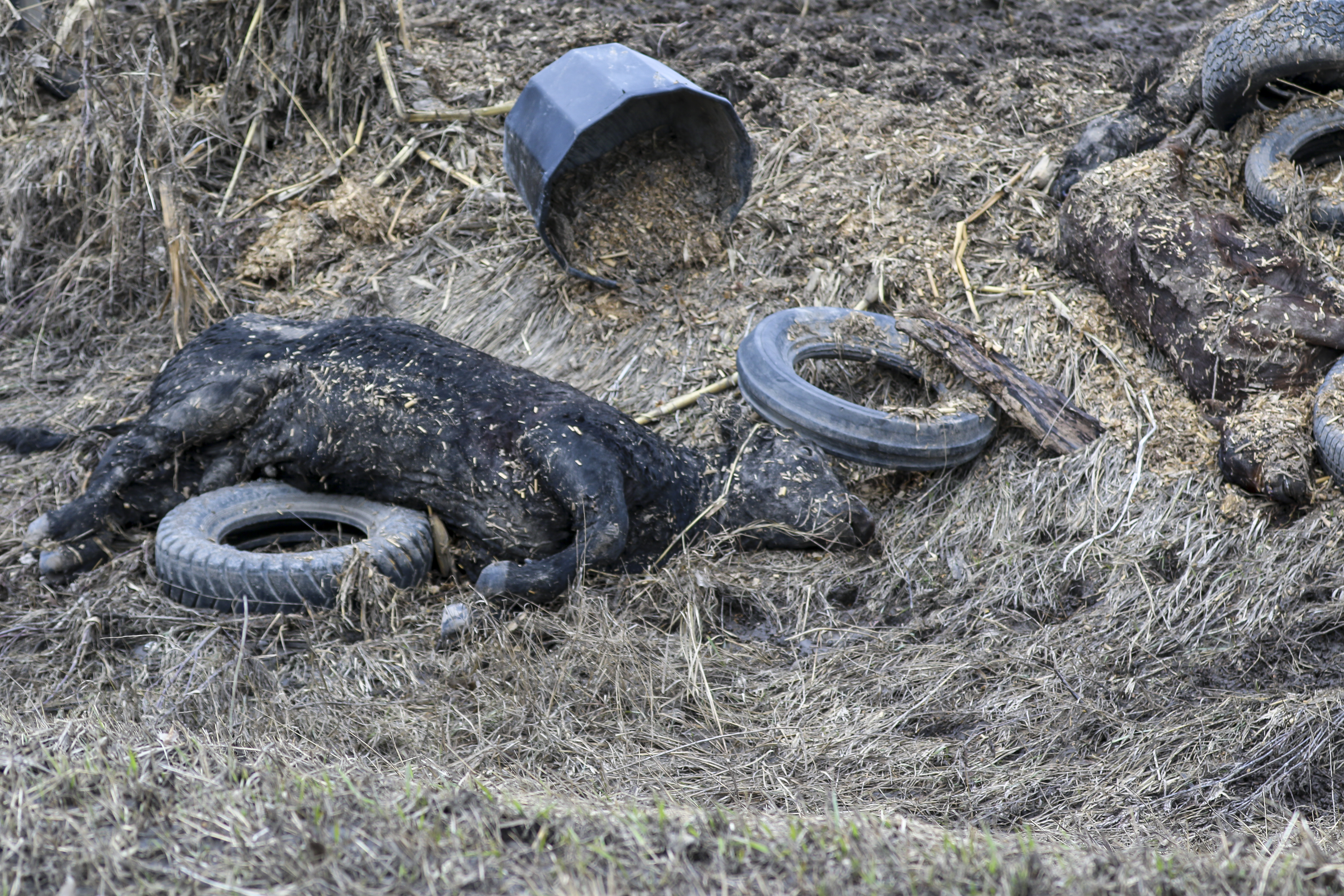
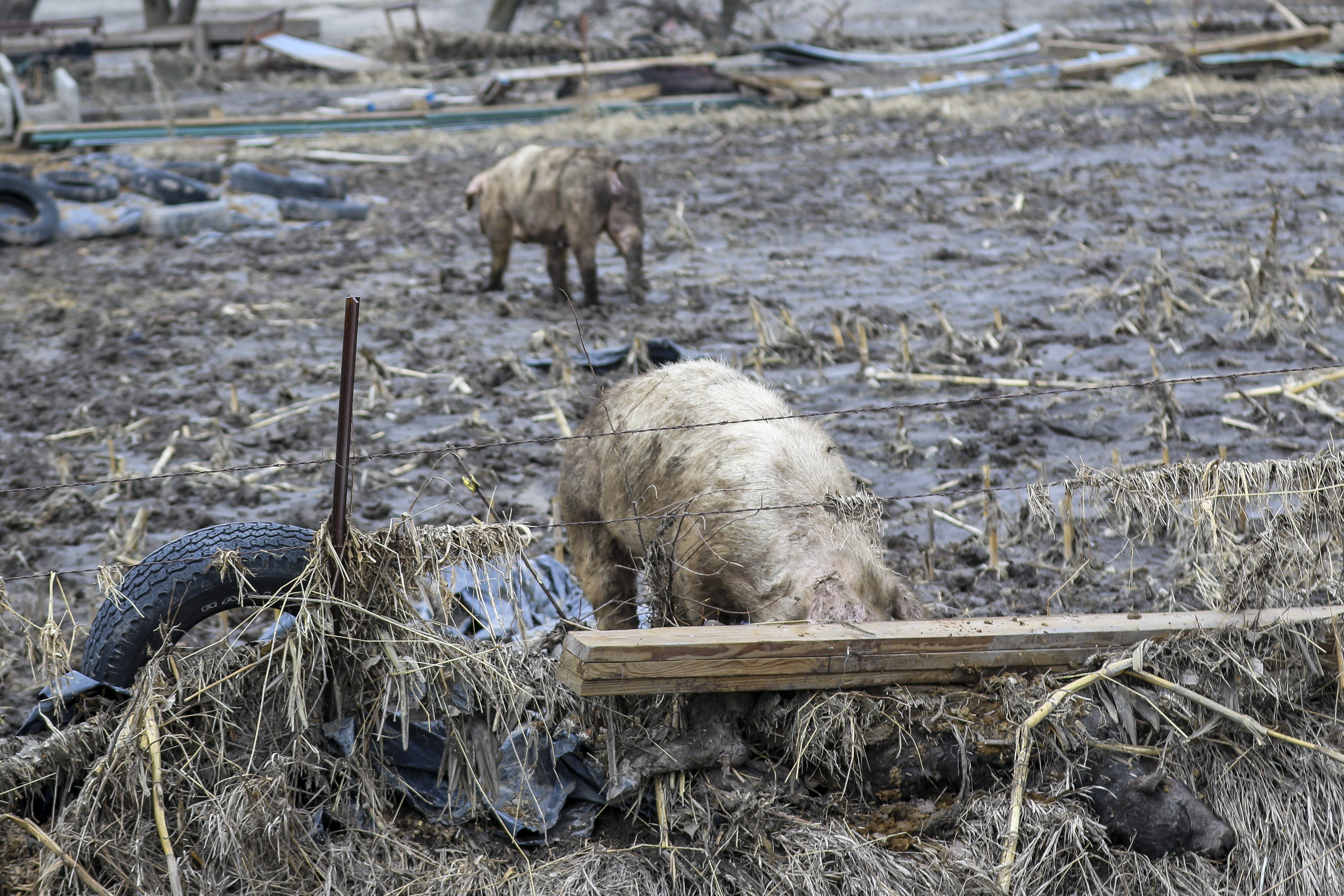
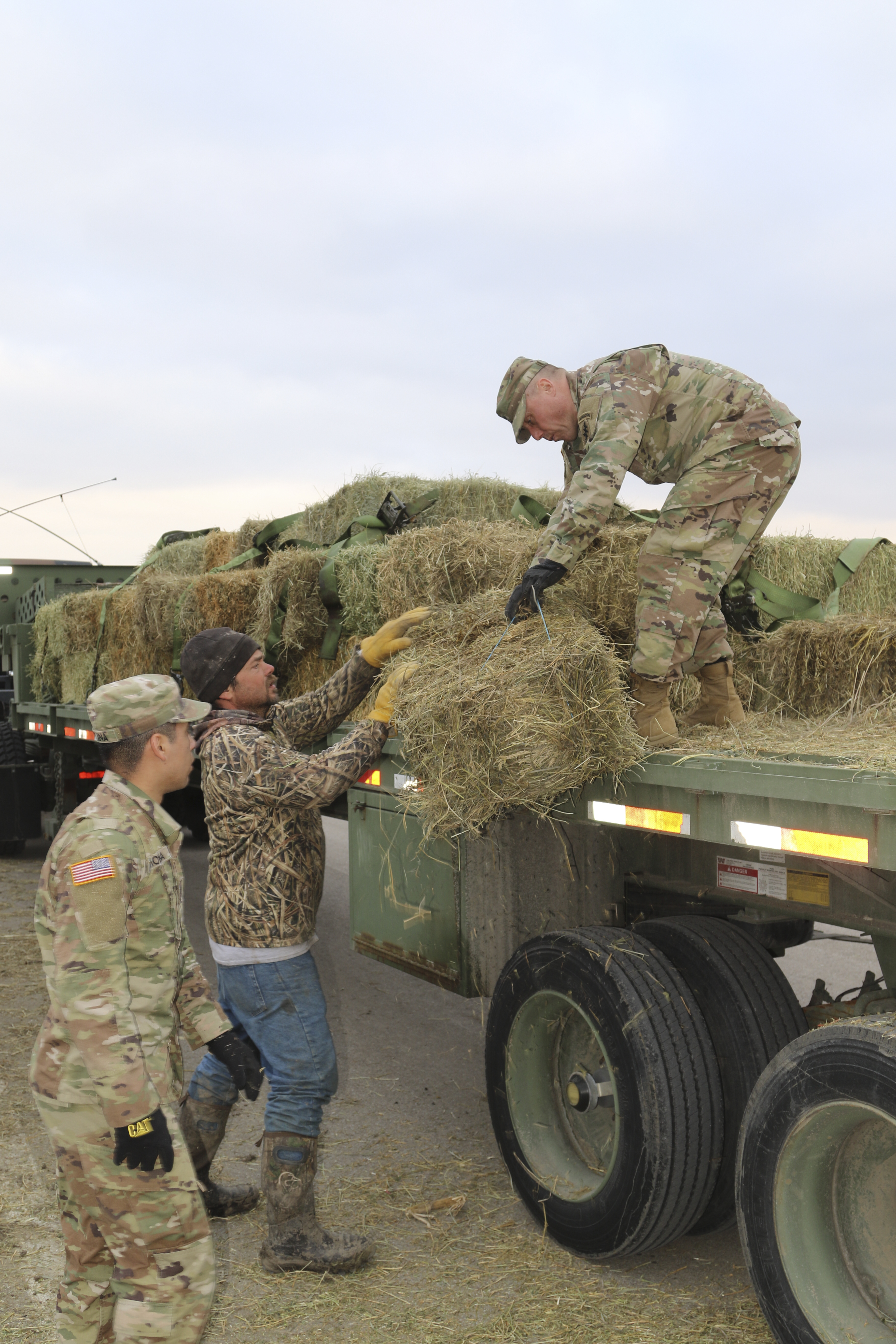
Nebraska Army National Guard Soldiers deliver a load of square bale hay to Nebraska farmer James Palmer in Winslow, Nebraska, March 25, 2019. Palmer needed hay for his livestock after catastrophic flooding destroyed much of his property, including vehicles, feed reserves and killing dozens of calfs. (Nebraska National Guard photos by Staff Sgt. Koan Nissen)
At the conclusion of the response effort, the National Guard helped deliver 94 round hay bales, or approximately 188,000 pounds of hay to more than 900 head of livestock.
Prior to the missions in 2019, the most recent historically confirmed aerial hay bale drop the Nebraska National Guard executed was during the blizzard of 1949: Operation Snowbound.
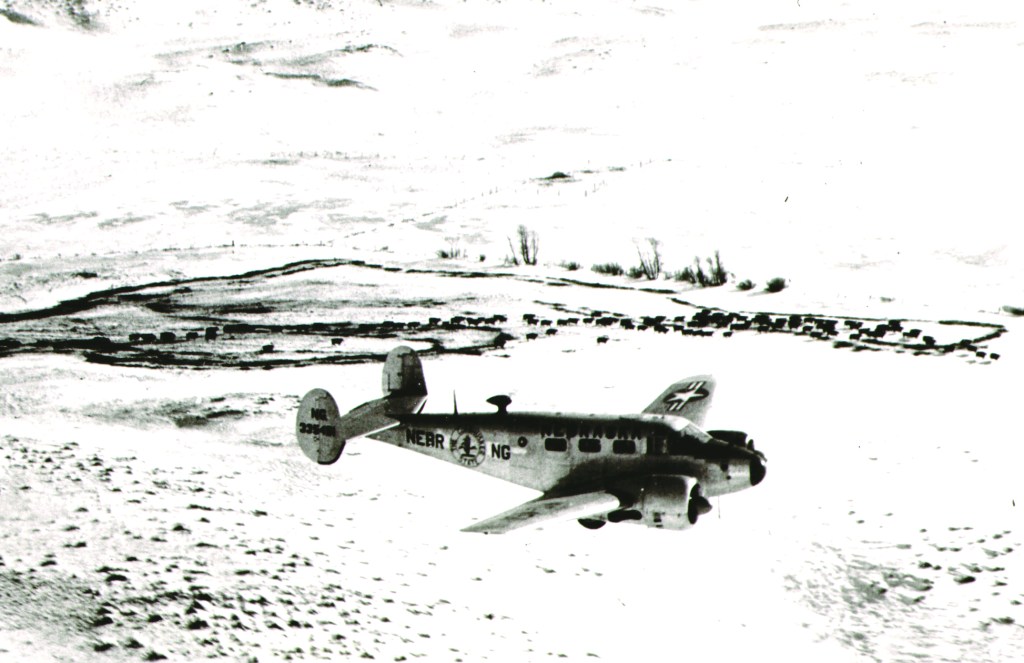
The most recent confirmed hay bale ground delivery was performed via 18-wheeler in the year of 1979, where the Nebraska National Guard hauled 500 tons of critically needed hay.
 Good Life, Great Strength